In recirculating aquaculture systems (RAS), the waste generated is closely related to the amount of feed used. Since RAS is an almost closed system, all forms of this matter originate from the metabolism of the feed used, so the amount of waste generated can be completely calculated and treated.
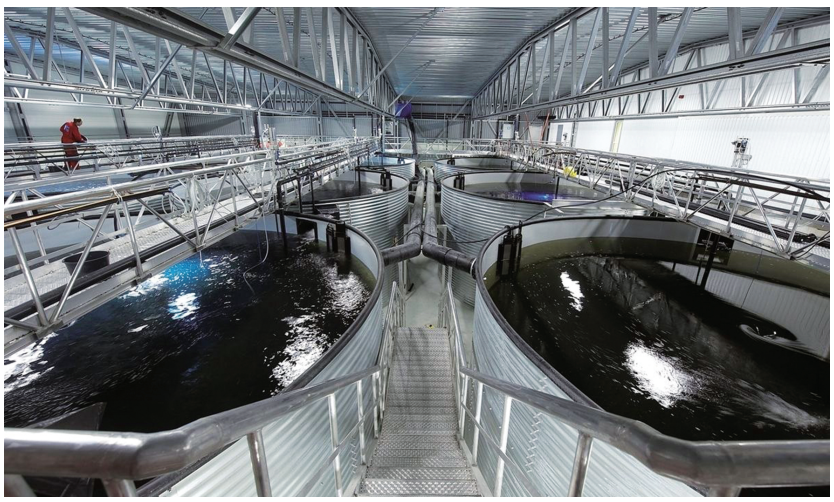
Modern RAS in aquaculture Photo: Intrafish
General Structure of RAS
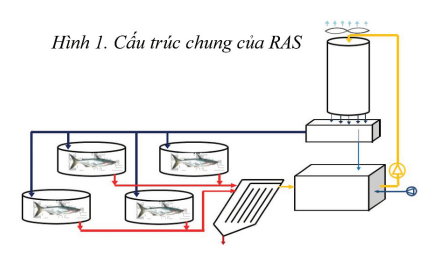
RAS consists of several aquaculture tanks, a total suspended solids (TSS) separation tank, a sump with pumps, and a biofilter. Additionally, one or more components such as a denitrification tank (also known as an anoxic filter), disinfection devices, periphyton tanks, or duckweed tanks can be added.
Calculating the Design Load of RAS
To calculate the system's load capacity, the designer needs to gather detailed information about the cultured species, determine the desired production, and the peak biomass in the system. Additionally, information on the type of feed used and the maximum daily feed consumption of the system is also required.
Information about the cultured species is usually gathered from reference materials, with as much detail as possible. The most important information pertains to the nutritional and growth characteristics of the cultured species, along with their ecological limits. Nutritional characteristics help farmers select feed types with appropriate feed ingredients. The growth characteristics of the cultured species help the designer determine stocking size, stocking density, harvest size, culture period, feeding rate, etc. Furthermore, limits on temperature, oxygen, CO2, pH, TSS, TAN, salinity, etc., are also essential parameters for maintaining water quality in the culture system.
Based on the desired harvest production from the system, the stocking plan, the number of stocking and harvesting cycles per year can be determined, thereby establishing the maximum fish biomass in the system. To stabilize daily feed consumption and waste generation, fish in RAS are often stocked multiple times simultaneously with different harvest cycles in various culture tanks. Therefore, the fish biomass in the system is the cumulative biomass from all stocking events.
Since the amount of feed used is closely related to the cultured fish biomass, the designer can calculate the feed consumption when the fish biomass is at its peak. This represents the maximum feed load the system can handle. From the maximum daily feed consumption, the maximum amount of waste generated in the system can also be scientifically estimated. The most important types of waste to consider in the system include: TAN, CO2, generated TSS, and the daily dissolved oxygen (DO) supply for the system.
There are various formulas to determine the amount of waste matter discharged from the feed used. More detailed and complex formulas generally offer higher accuracy. Some simple formulas that can be used are as follows:
- TAN generated = feed consumed x feed protein x 0.092;
- O2 required = feed consumed x 0.5;
- CO2 generated = 1.375 x O2 required;
- TSS generated = 0.25 x feed consumed.
From the maximum daily feed consumption, based on the formulas above, RAS designers can calculate the maximum amount of waste generated in the system. With the known culture water volume in the system, the concentrations of these wastes can also be calculated and compared with the adaptation limits of the cultured species.
Selecting Appropriate Waste Treatment Methods
Many waste treatment methods can be applied in RAS. These methods are divided into two types: solid waste (TSS) filtration and biofiltration. Common TSS filtration methods include sedimentation filters, screen filters, foam fractionation, and oxidation filters. Common biofiltration methods include trickling filters, moving bed biofilters, submerged filters, and combined sedimentation filters (granular filters).
For gaseous CO2 waste and the system's oxygen demand, farmers can use aeration and degassing (stripping) devices.
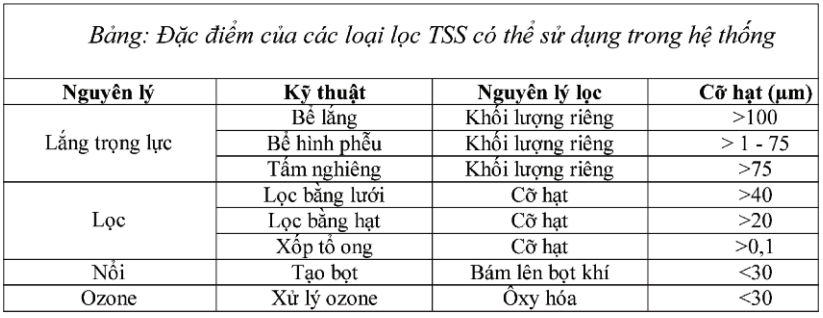
Waste Treatment in RAS
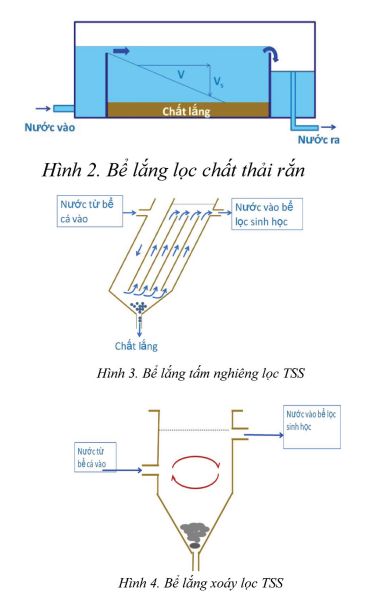
After calculating the waste concentrations and selecting appropriate treatment methods for each type of waste, the designer must determine the optimal water flow rate for efficient waste treatment in the system. The necessary water flow rate for each treatment unit to process the generated waste must be calculated. Subsequently, the designer will adjust the type, number, and size of the treatment units to achieve the optimal system waste treatment flow rate.
General formula for calculating water flow rate: Q = P/(C1 - C2)
Where: Q is the water flow rate through the equipment (m3/day); P is the maximum daily waste production (g/day); C1 is the maximum waste concentration in the system (g/m3); C2 is the waste concentration after treatment (also the adaptation threshold of the cultured species).
Source: Vietnam Fisheries Review
M.Sc. Phung The Trung - Nha Trang University