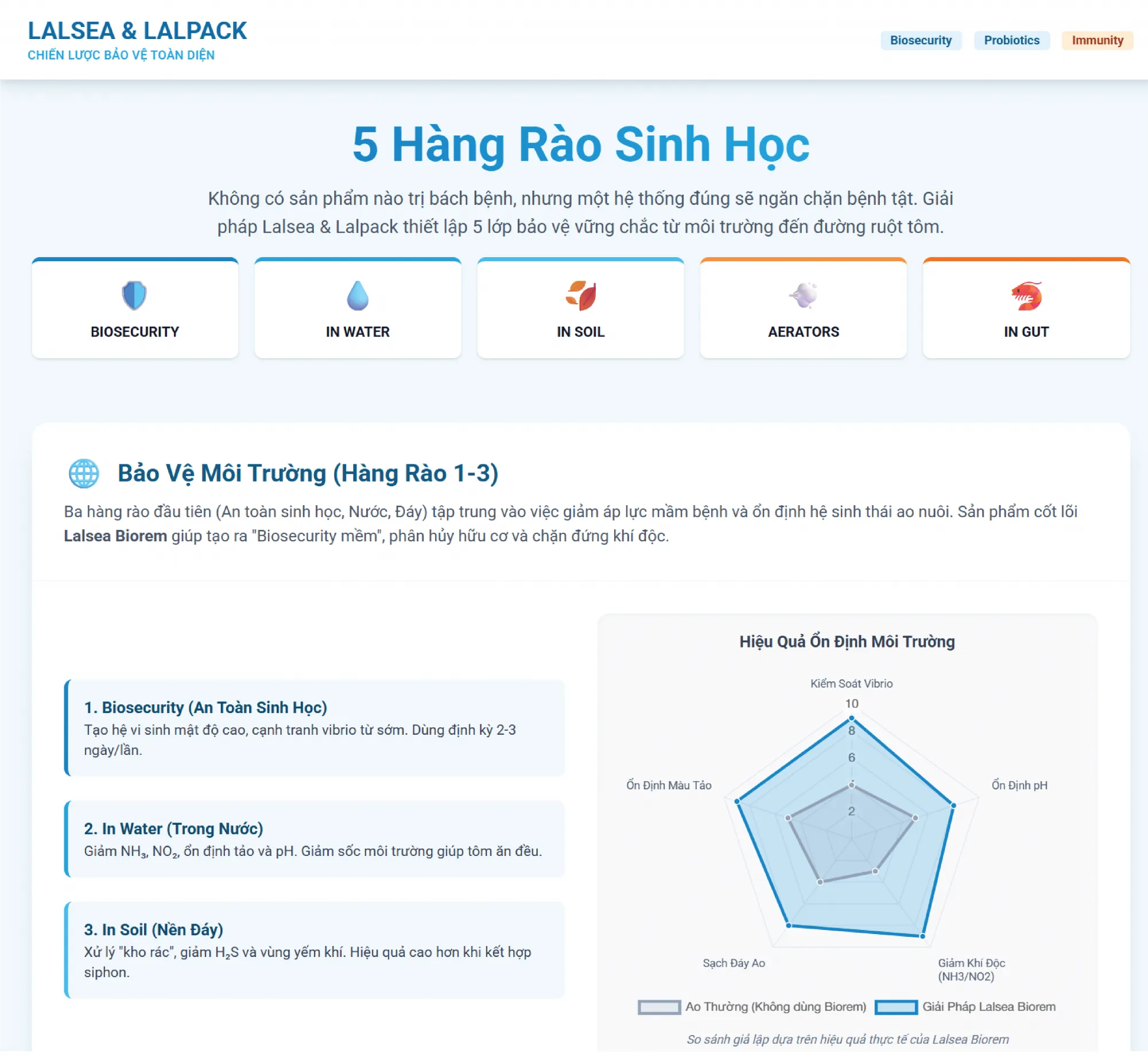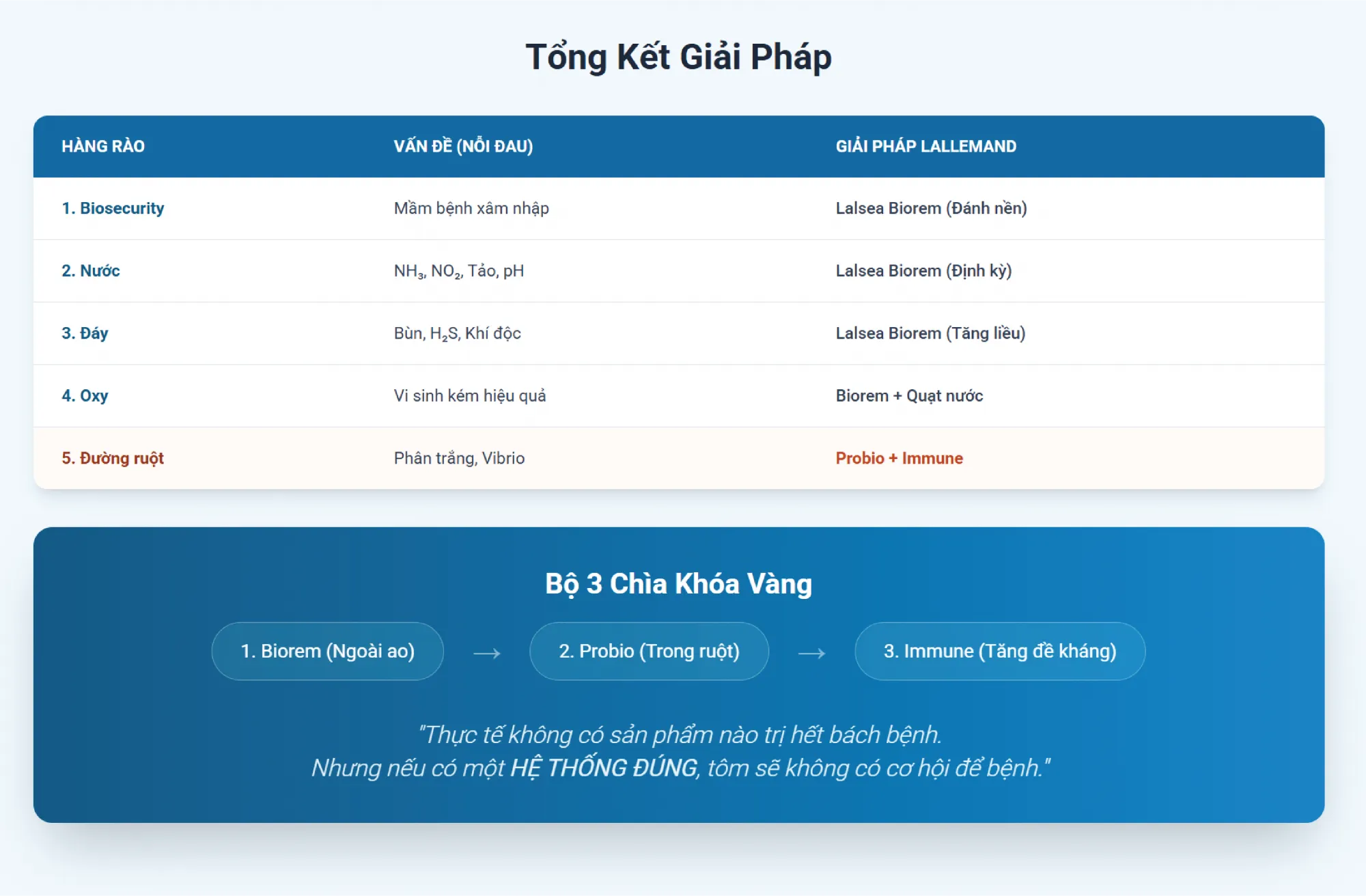
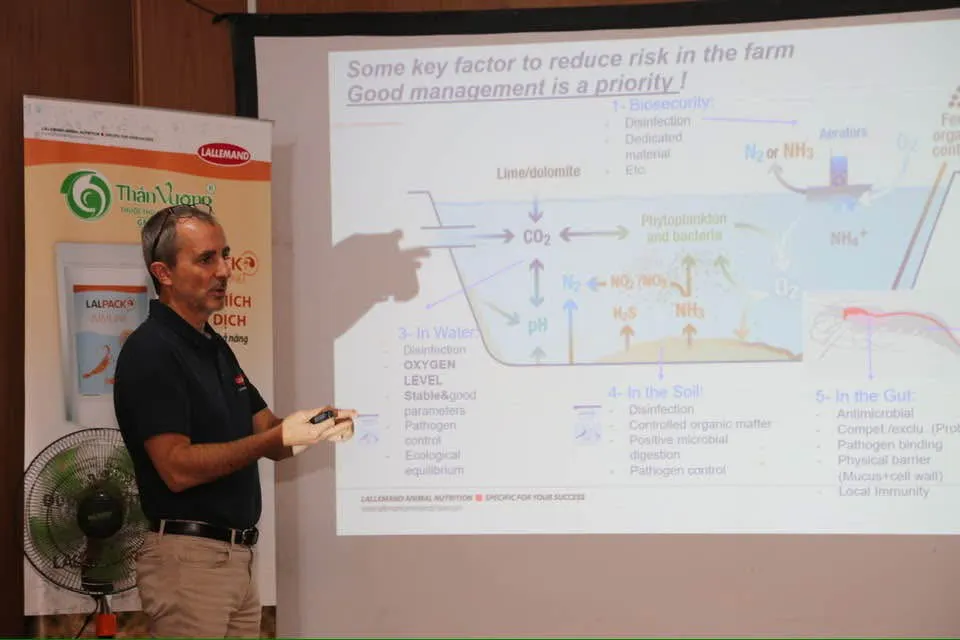
In the modern shrimp farming industry, there is a rather "painful" reality that many farmers have yet to accept: Risk mitigation does not lie in a single bottle of specific medicine, but in the capability of system management. When disease outbreaks occur, we often frantically search for a new chemical or antibiotic. But according to the philosophy "Good management is a priority", success does not come from troubleshooting, but from establishing 5 solid protective barriers.
1. Biosecurity: Discipline Is More Important Than Cure
The first and most important barrier is Biosecurity. The ultimate goal is to cut off the entry route of pathogens right from the farm gate.
- Disinfection: It's not just about spraying chemicals into the pond, but thoroughly controlling incoming water, equipment, and vehicles.
- Dedicated material: A common mistake is sharing nets and scoops between ponds. "Carrying disease around" is the fastest way to destroy a crop.
- Control of intermediate hosts: Bird nets, crab barriers, disinfection pits... must be operated with daily discipline, not just done for show when a neighbor has an outbreak.
2. Water Management: Stability Is Key
The second barrier focuses on the living environment. A key concept emphasized is Oxygen Level.
Oxygen is not just for shrimp to breathe; it is the "conductor" coordinating:
• Rate of organic decomposition and toxin levels.
• Feeding capacity and shrimp's metabolic ability.
• Ecological balance between algae and bacteria.
Water considered "good" by experts is not crystal clear water, but water with stable parameters. When pH, alkalinity, and algae parameters maintain a balanced state, opportunistic bacteria (like Vibrio) will have no opportunity to thrive.
3. Pond Bottom Management: Managing the Huge "Waste Storage"
The pond bottom is the ideal refuge for toxic gases and pathogens. If a shrimp pond is considered a house, then the pond bottom is the waste storage area.
• Organic control: Sludge, shrimp feces, and uneaten feed need to be collected and siphoned out or treated with beneficial microbial/enzymes.
• Buffering system (Lime/Dolomite): The use of lime and dolomite is not only to increase alkalinity but also to manage the relationship between CO₂ and pH. A dirty pond bottom will cause strong pH fluctuations, leading to a chain shock for shrimp.
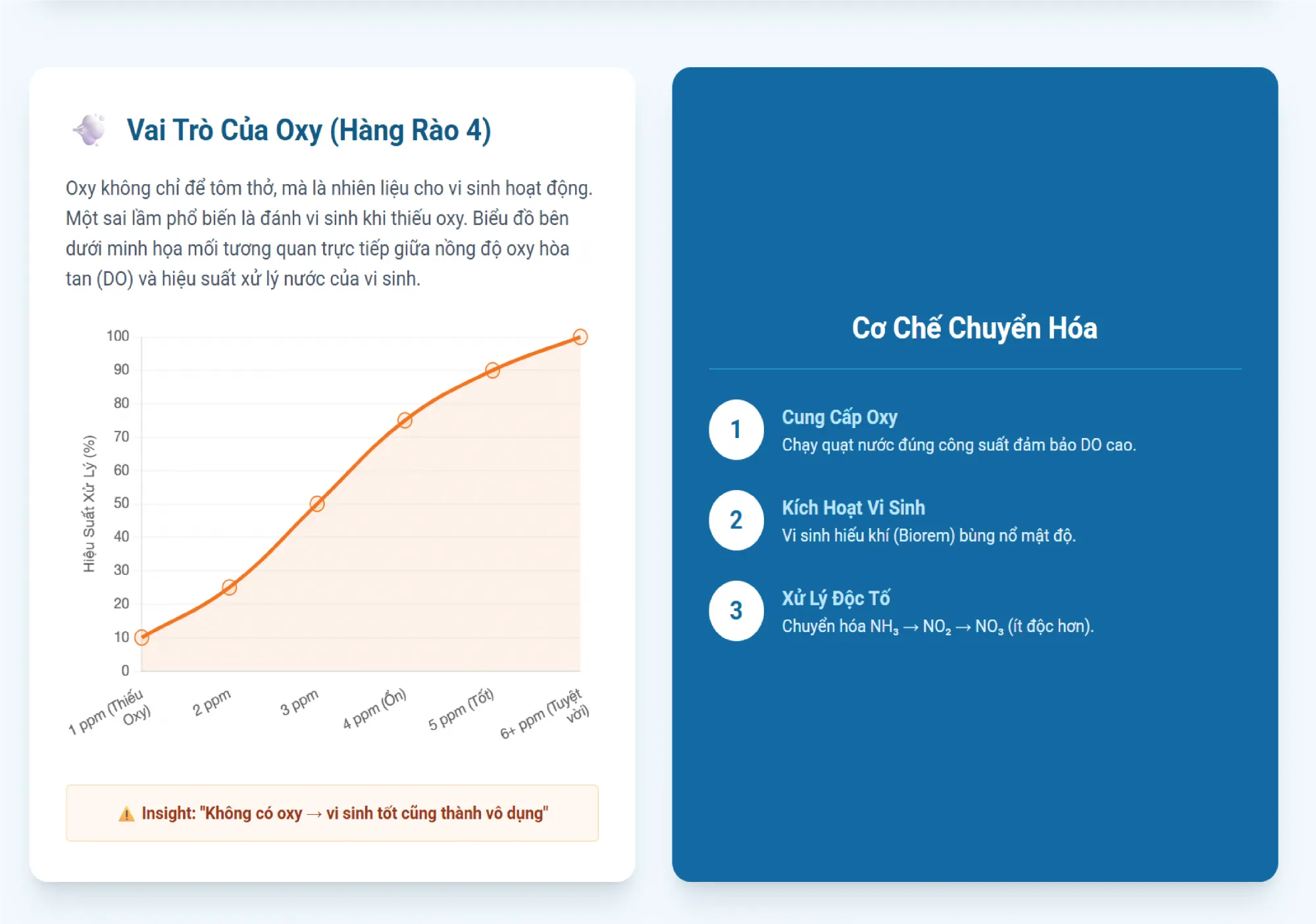
4. Aeration System: The "Heart and Lungs" of the Pond
Don't misunderstand that aerators are only for oxygen production. In the risk management scheme, aerators play a versatile role:
• Releasing toxic gases: Expelling CO₂ from the water, limiting H₂S formation in anaerobic zones.
• Chemical transformation: Supporting the transformation process from NH₃ (highly toxic) to NH₄⁺ (less toxic) depending on pH.
• Creating water flow: Collecting waste in the center of the pond for easy removal.
Improperly configured aerators means risks increase exponentially.
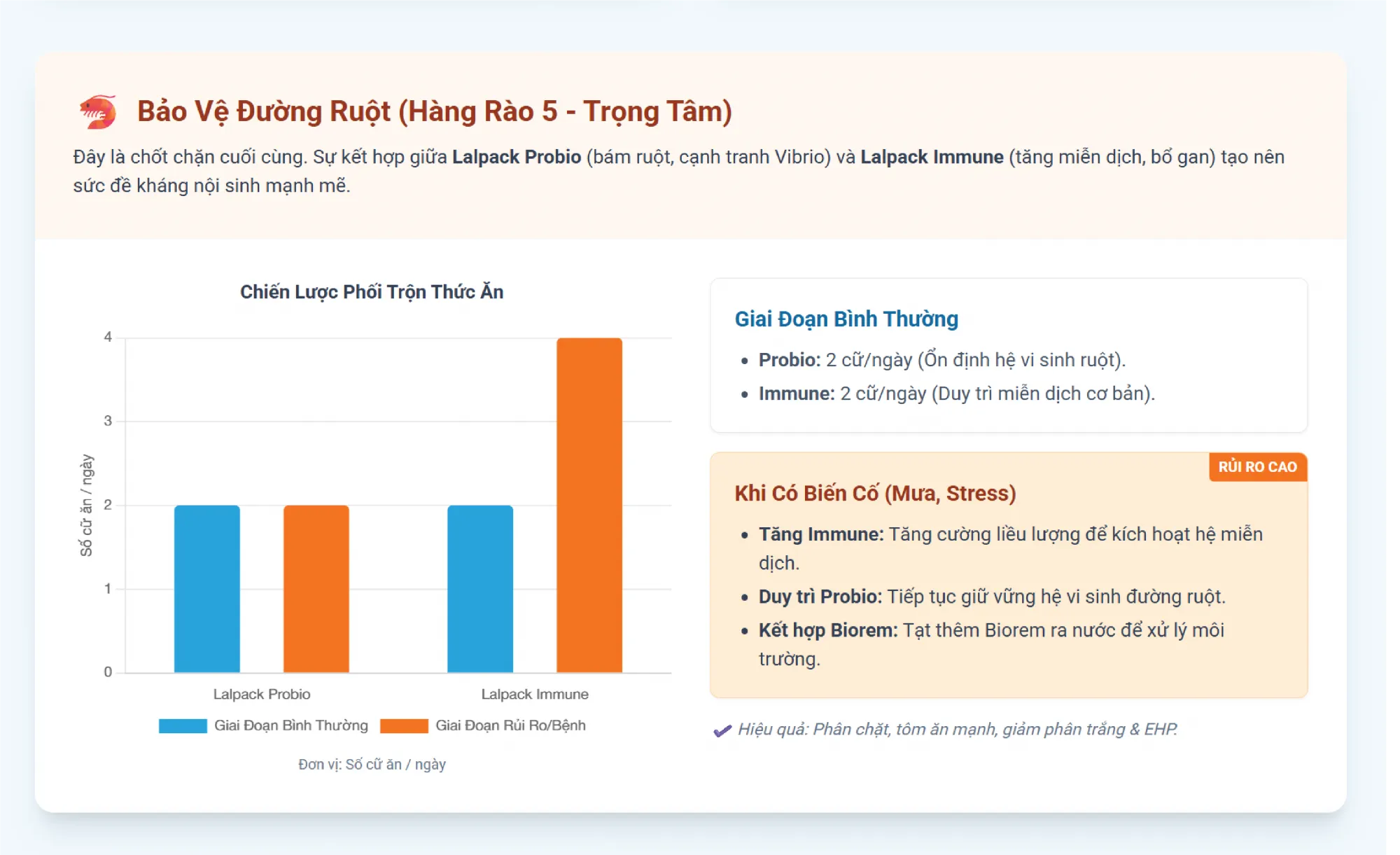
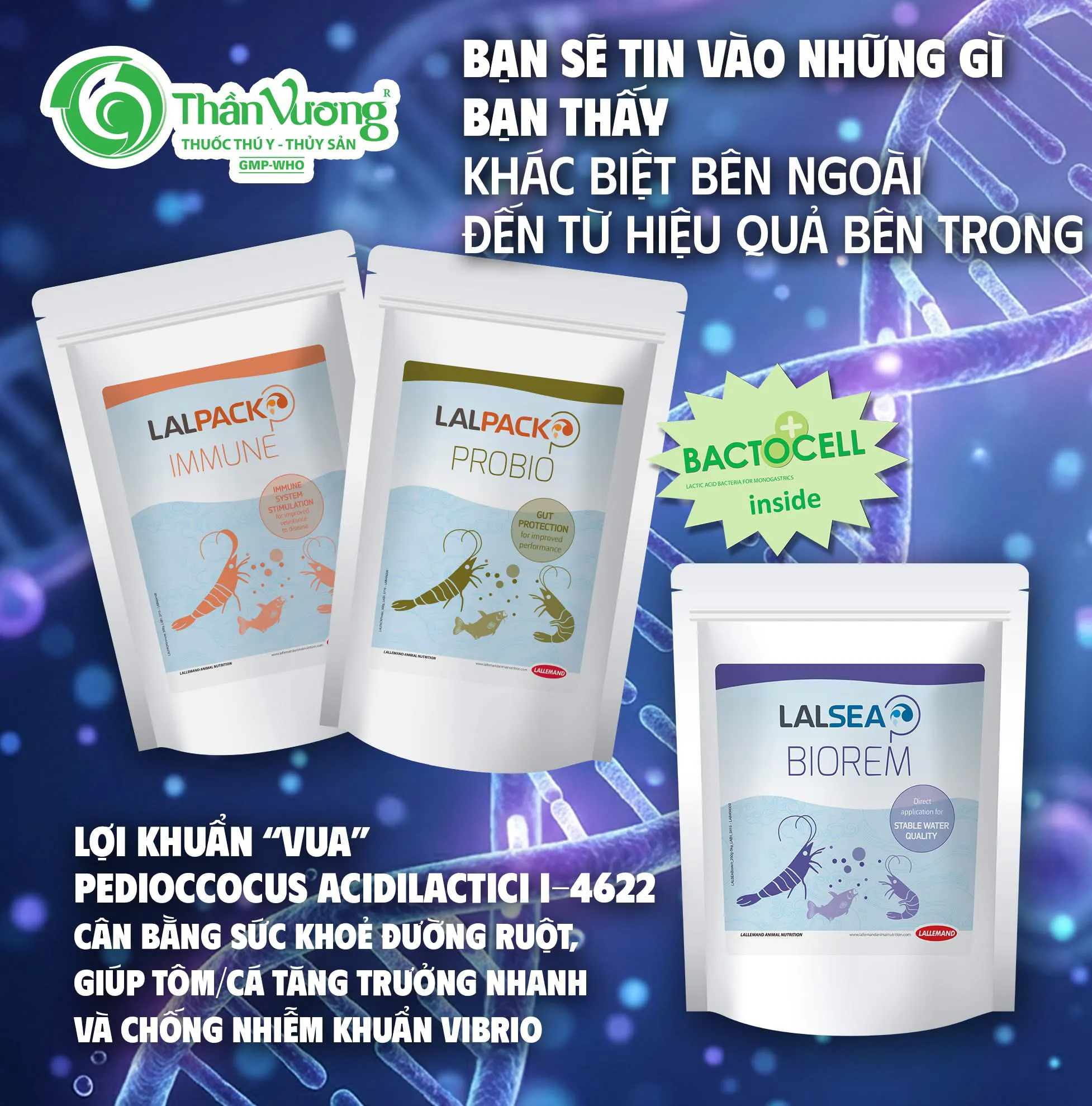
5. Gut Health: The Last Biological Barrier
When pathogens have overcome the 4 barriers above to reach the shrimp's body, the gut is the final "fortress". A healthy digestive system requires:
• Competitive exclusion: Beneficial microbes occupy the intestinal lining, preventing harmful bacteria from colonizing.
• Pathogen binding: Using active ingredients like Mannans or yeast cell walls to "trap" bad bacteria and expel them with feces.
• Enhancing local immunity: A thick layer of mucus and intestinal epithelium helps shrimp resist toxin invasion.
Conclusion: Shrimp farming is not a race for medicine, but a race for meticulous management. When these 5 barriers are established synchronously, risks will naturally stay away from your pond.