Diseases are a major threat in the shrimp farming industry. In addition to pond sanitation measures, farmers are seeking solutions to mitigate them. Factors related to disease incidence include: high stocking density, environmental stressors, stress during transportation, improper feed management…
Antioxidants are chemical compounds that prevent other substances from unwanted oxidation. An excess of free radicals leading to oxidative stress has affected farmed animals. It causes inflammation, such as the formation of melanization in shrimp, leading to cell necrosis, black spots, and darkening of the gills. It reduces egg production and broodstock quality in reproduction. Or, oxidation leads to changes in taste and color, resulting in reduced meat quality.
Reactive free radicals can be inactivated by antioxidants. Some commonly used antioxidants include Enzymes (SOD…), Vitamin C&E; Carotenoids; Glutathione; Flavonoids. Flavonoid-rich feed additives can act as natural anti-inflammatory agents by down-regulating the NF-kB gene factor.
Experiment Procedure:
Whiteleg shrimp postlarvae PL12 were cultured for 60 days. They were divided into 2 groups: a control group and a group supplemented with 800 ppm of flavonoid-rich phytogenic feed additive.
The flavonoid-rich feed additive used in the treatment group contained polyphenolic secondary plant compounds from hops, grapes, and green tea. The purpose was to inhibit the formation of pro-inflammatory cytokines, leading to fewer inflammatory responses in the body. This results in less energy expenditure for other purposes and more energy focused on growth. It also leads to less pathological damage and better health protection.
After the experiment concluded, 60 individuals from each group were taken for examination. The hepatopancreas was dissected, bacterial counts were checked on TCBS plates, combined with histological observation of the shrimp.
Bacterial Research Results
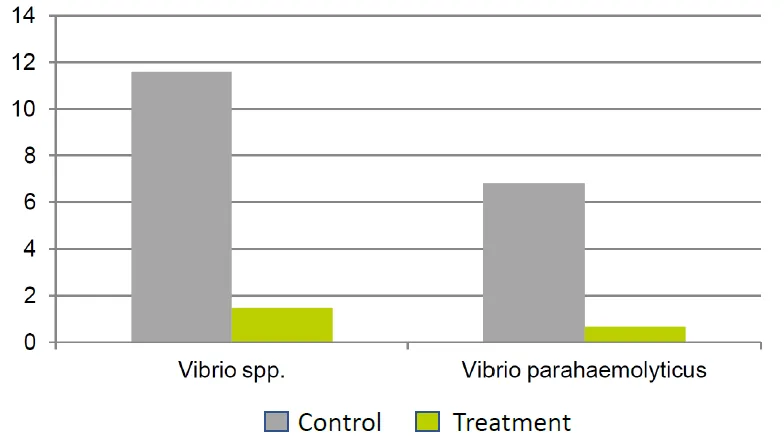
Bacterial count in the hepatopancreas of whiteleg shrimp after 60 days of experiment
The total number of Vibrio spp and Vibrio parahaemolyticus bacteria in the Flavonoid-supplemented group was significantly lower than in the unsupplemented control group.
Histological Research Results
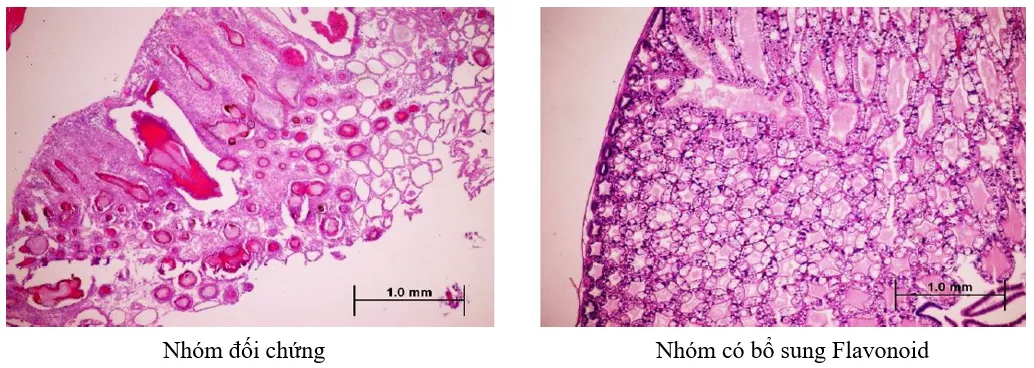
Histological results of shrimp hepatopancreas
The hepatopancreas of shrimp in the control group showed signs of atrophy and bacterial infection causing damage to 20-80% of cells. The hepatopancreas of shrimp supplemented with Flavonoid was normal, with infected cells only within the range of 0-10%.
Results of Survival Rate and Feed Conversion Ratio
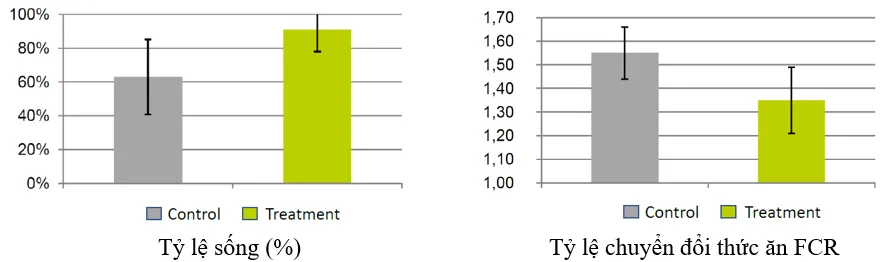
There was a difference in survival rate and feed conversion ratio (FCR) between the two experimental groups. The group supplemented with Flavonoid had a higher survival rate and a lower FCR compared to the control group.
The above results show that the treatment group, supplemented with Flavonoid in the feed during culture, helped reduce bacterial load in shrimp, improved pond performance, and enhanced immune status, leading to improved survival rate and FCR.
Natural feed additives rich in Flavonoids have high antibacterial activity and good bacteriostatic effects against Vibrio spp. They act as natural anti-inflammatory agents, reducing the negative impacts of inflammation and saving significant energy for growth. This improves survival rate and FCR in shrimp ponds.
Source: Alex Diana – Dr.Eckel Animal Nutrition (ThaiLand) Co., Ltd