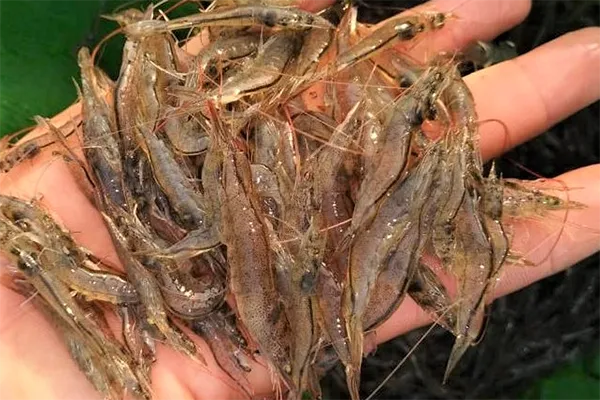
 Photo by Fernando Huerta.
Whiteleg shrimp (Litopenaeus vannamei) is the most important farmed shrimp species in our country. One of the diseases causing significant damage to the whiteleg shrimp farming industry is gill fungus – leg fungus (originally still commonly referred to as black spot disease) caused by Fusarium fungus. This disease is common in the Central and Northern regions, especially during colder months. When infected, shrimp show signs such as: brown or black lesions appearing on the gills and legs, which gradually erode, necrotize, and spread. Additionally, shrimp may exhibit other signs such as muscle opacity, swollen gills, etc. Infected shrimp have a relatively high infection rate and mortality rate, approximately 10–30% after 3 days. Currently, there is no treatment for the disease.
Fusarium spp. is a common fungus often found on plants, in soil, freshwater, and brackish water. They can cause several diseases in plants and animals, leading to reduced crop yields, secreting mycotoxins that cause illness and even death in livestock. L. vannamei is highly susceptible to gill fungal disease, with most naturally infected shrimp exhibiting black gills and severe tissue damage with high mortality rates. The pathogenic fungus Fusarium solani also affects many farmed shrimp species, including green tiger shrimp (Penaeus semisulcatus) in Israel, Kuruma shrimp (Marsupenaeus japonicus) in Japan, and whiteleg shrimp in China.
Prebiotics (indigestible food ingredients found in the digestive tract that stimulate the growth or activity of beneficial bacteria and thus improve the gut balance of organisms) are effective in preventing various infections from spreading during shrimp farming, as well as having the potential to enhance growth performance, innate immunity, and disease resistance. Prebiotics also improve the host's nutrient absorption capacity and enhance the efficacy of probiotics in the form of synbiotics. Among these, fructooligosaccharides (FOS) and β-1,3 glucan are promising prebiotics that have demonstrated their immunomodulatory activity in several species.
Study Setup
The study was conducted at a private shrimp farm in Damietta, Egypt, where 360 whiteleg shrimp (3 ± 0.5 grams over 75 days) were cultured at 22 ppt salinity in a rectangular pond equipped with 12 identical hapas (net enclosures). Shrimp were randomly distributed into 12 net enclosures at a density of 30 individuals/enclosure, and the 75-day experiment was conducted in triplicate.
Shrimp were fed 4 experimental energy- and nitrogen-rich diets with different levels of β-1,3 GF (0; 0.5; 1.0; and 1.5 grams per kg), with three replicates per treatment. They were fed twice daily at a rate of 6% of body weight. Shrimp were weighed every two weeks, and feed amounts were adjusted accordingly. All water quality parameters were maintained near permissible levels for shrimp farming.
Results and Discussion
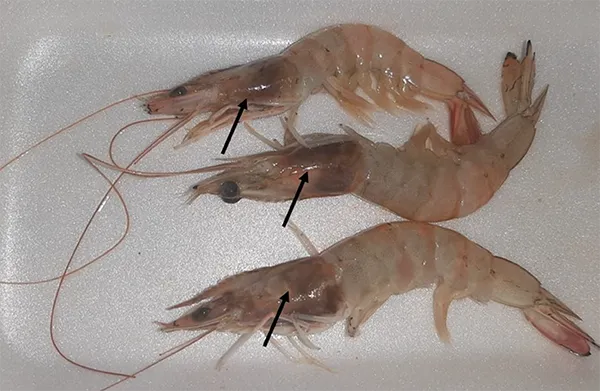 Gills of L. vannamei whiteleg shrimp experimentally infected with F. solani showing noticeable black to brown (highly pigmented) gills (black arrow).
Prebiotics are considered one of the most important and practical supplements for sustainable shrimp farming. Prebiotic supplementation in shrimp feed is currently one of the most widely used alternative disease prevention and control strategies in aquaculture. However, their effectiveness can vary depending on the species, dosage, and synergy of combined compounds. In this study, β-1,3 GF enhanced the growth performance and feed utilization of whiteleg shrimp L. vannamei at 1.5 grams/kg. Additionally, shrimp had a significantly lower feed conversion ratio and higher weight gain compared to the control. These findings are consistent with previous findings showing that feeding β-glucans increased the growth rate and feed utilization of whiteleg shrimp, seabream, and tilapia.
In aquaculture, β-glucans and fructooligosaccharides are among the main prebiotics chosen for integration with probiotics. Several studies have elucidated the positive effects of both compounds on the gut microbiota and have firmly verified their role as growth promoters in aquaculture. The principle of prebiotics is that these compounds are broken down into their respective sugars in the shrimp gut and utilized by beneficial bacteria as a carbon source.
A significant increase in the activity of digestive enzymes in L. vannamei fed with β-1,3 GF suggests that prebiotics can encourage the growth of endogenous probiotic bacteria, followed by an increase in the secretion of exogenous hydrolytic enzymes in shrimp, improving the digestion of ingested feed.
The gut microbiota is essential for many physiological and nutritional processes as it reduces the loss of digestive enzymes, enhances their activity, and promotes growth. The shrimp digestive tract contains enzymes (glucanase) that can break down glucose polymer-glucan to release energy and convert glucose into glycogen. Shrimp can obtain energy by digesting glucan through this mechanism, which helps them grow faster. And gut bacteria belonging to the genera Bifidobacterium and Lactobacilli selectively digest FOS oligosaccharides, which promotes the growth and activates the metabolic processes of these bacteria. This enhances the prebiotic properties of FOS and benefits host health.
Regarding antioxidants and immune biomarkers, the main role of β-1,3 GF as a potential antioxidant is due to its high phenolic compound content, which is likely responsible for its strong antioxidant activity. Previous studies have also shown that diets including β-glucans and other oligosaccharides can mitigate and improve shrimp antioxidant enzymes and innate immune parameters.
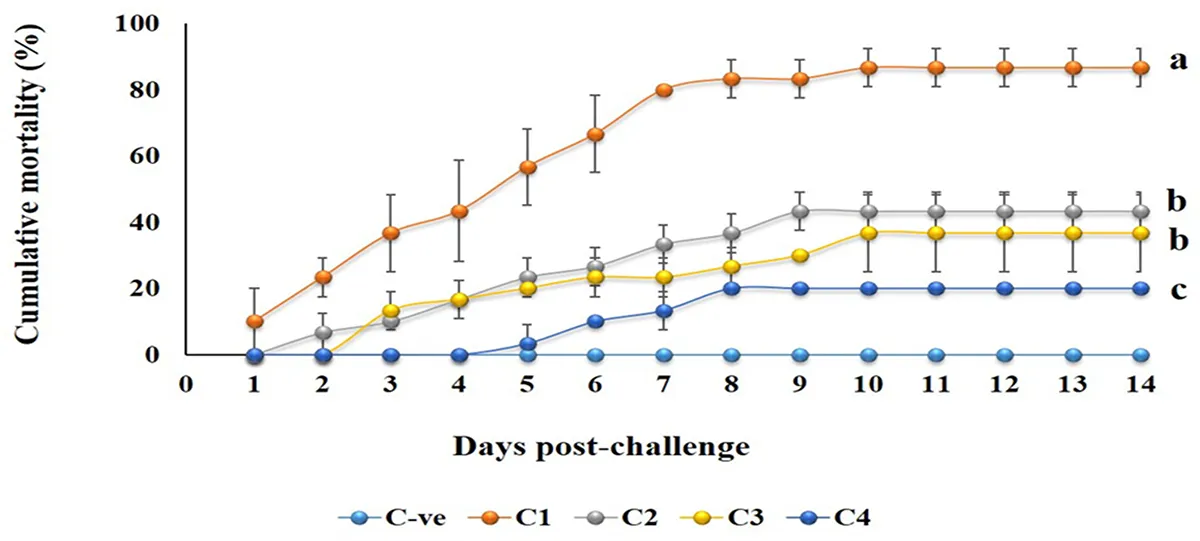 Cumulative mortality (%) over time (Days 0–14) for Pacific whiteleg shrimp, L. vannamei, after challenge with F. solani; shrimp were fed diets supplemented with β-1,3 glucan and fructooligosaccharides (β-1,3 GF) (0; 0.5; 1; 1.5 g/kg, respectively; C1–C4). C-ve is the control group, not infected with fungus.
Shrimp experimentally infected with F. solani showed noticeable clinical signs similar to those of natural infection, appearing as black to brown gills and collapsed and necrotic gill lamellae. Characteristic lesions may be related to granuloma formation or may be caused by fungal enzymes and toxins leading to severe degeneration of shrimp gills. After challenge with F. solani, shrimp fed different levels of β-1,3 GF showed lower cumulative mortality rates compared to those fed the normal basal diet. A clearly higher survival rate was observed for shrimp fed the diet with 1.5 g/kg β-1,3 GF.
Perspective
Supplementation with β-1,3 GF has a clear effect on the immune response of Pacific whiteleg shrimp (L. vannamei) by enhancing total hemocyte count and immune-related enzymes. The beneficial effects of these compounds primarily depend on the content, dosage, and duration of supplementation. Supplementation of β-1,3 GF in the diet at an optimal level (1.5 grams/kg) in shrimp ponds is recommended as it helps enhance growth parameters and immune responses, while also increasing shrimp resistance to invading fungi, especially F. solani.
Dr. Hala F. Ayoub - summarized and translated by Hoang Tan Phat