In aquaculture, feed accounts for 70% of the total cost throughout the farming process, as feed plays a decisive role in the yield, production, and efficiency of fish farming. Therefore, when feeding fish, it is essential to provide sufficient quantity and quality to improve fish farming productivity and reduce production costs.
Therefore, the effective use of feed for each farmed species is always a matter of utmost concern and focus.
1. Using appropriate feed for each aquatic species
- Each fish species has different nutritional requirements, feeding regimes, and foraging behaviors (surface, mid-water, or bottom feeders). Therefore, it is necessary to select the appropriate feed for each cultured species to ensure optimal growth and development.
2. Using appropriate feed according to each fish development stage
- At each stage of fish development, enzyme activity changes. Therefore, the digestibility of nutrients, especially protein and carbohydrates, will vary depending on the fish's age.
- Fingerling stage: high nutritional requirements. To help fish grow well, feed should account for 7-10% of body weight, divided into multiple feedings per day to aid absorption and digestion. This can be 5-6 times/day, choosing feed with high protein content.
- Grow-out stage: protein content and feeding frequency can be reduced compared to the fingerling stage, with rations from 3-5% and feeding frequency reduced to 2-3 times/day. The protein content in the feed is also lower than in the fingerling stage.
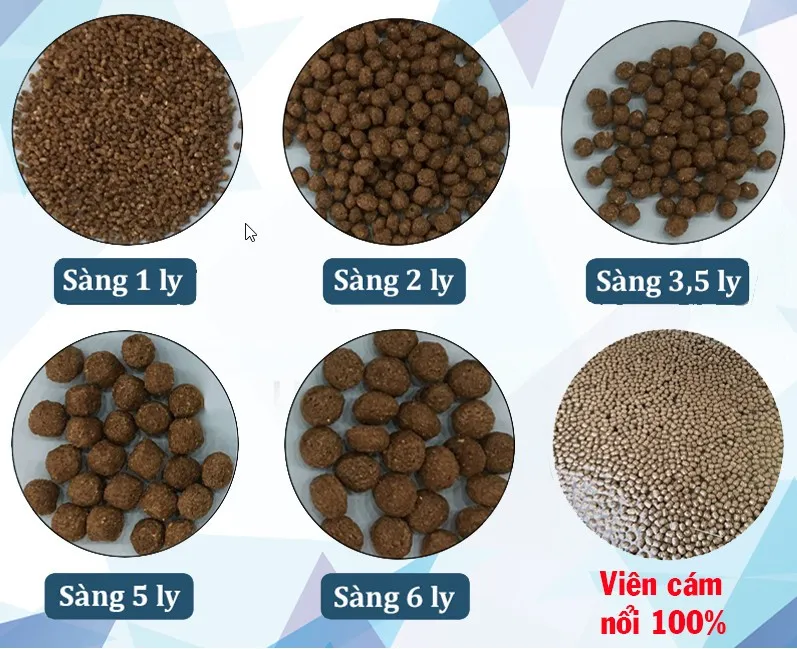
3. Using feed depending on the fish species
- Carnivorous fish: require higher protein content, from 40% or more, and also have higher nutritional requirements compared to herbivorous species.
- Omnivorous or herbivorous fish: protein requirements are 30% or less; for herbivorous fish, protein requirements can be 10-20%.
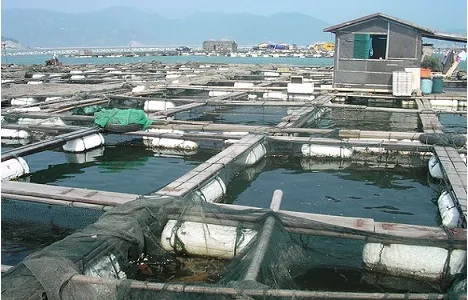
4. Using feed according to fish feeding habits:
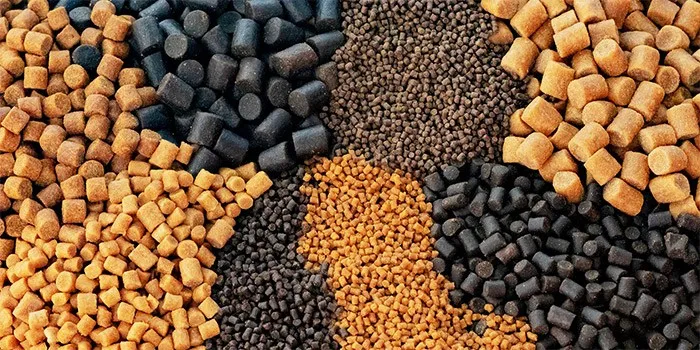
- Depending on the fish species, feeding habits will differ, so it is important to note this to ensure good feed intake:+ For carp, tilapia, red tilapia, pomfret, pangasius, mud loach, etc.: they feed actively at the surface and mid-water, so choose floating pellet feeds to ensure good feed intake.
+ For eels, catfish, snakehead fish, gourami, etc.: they feed actively on sinking feeds due to their bottom-dwelling habits.
=> By understanding the feeding habits of different fish species, farmers can proactively choose appropriate feed types and can combine farming methods to utilize excess feed, save costs, and generate profits from integrated farming.
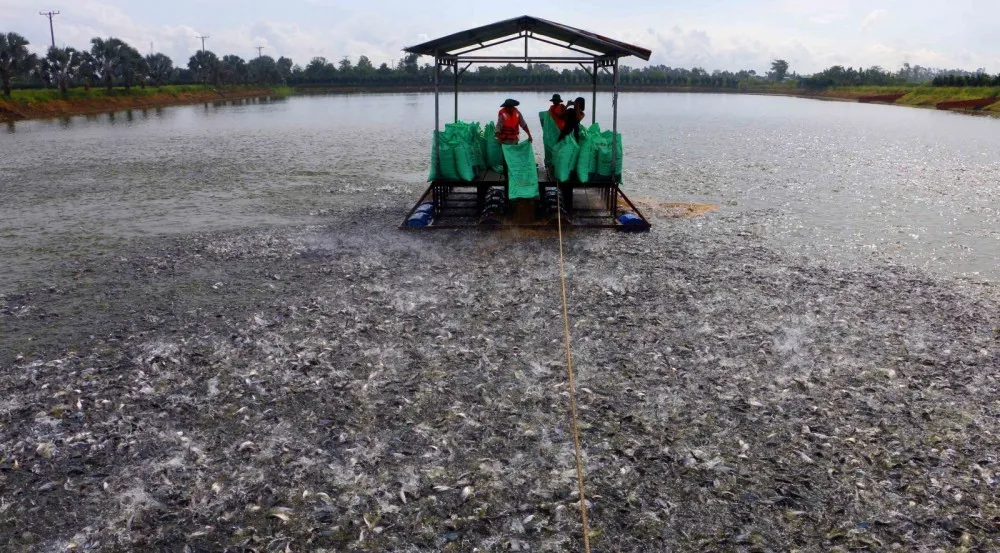
5. Using feed according to the physiological health status of fish
- When fish are stressed, feed digestibility significantly decreases. Therefore, for sick and weak fish, it is necessary to reduce feed intake by 30-50% to avoid excess and ensure the fish can digest it.
- When fish are healthy, they can be fed above the standard amount to promote rapid growth.
6. Adjusting feed use according to environmental conditions
- In a polluted environment, many harmful bacteria will proliferate, causing fish to become sick and stressed, leading to a decrease in their feeding ability.
- The digestive enzyme activity of fish changes significantly with temperature fluctuations. When the temperature rises, fish digestive enzymes tend to increase, and their activity becomes stronger. Therefore, at high temperatures, feed intake should be increased because fish will feed better, metabolize more actively, and grow faster than at low temperatures. Conversely, when the temperature drops, feed intake should be reduced.
- Water pH exceeding permissible limits also affects fish appetite; therefore, when pH fluctuates sharply, fish feed intake should be reduced.
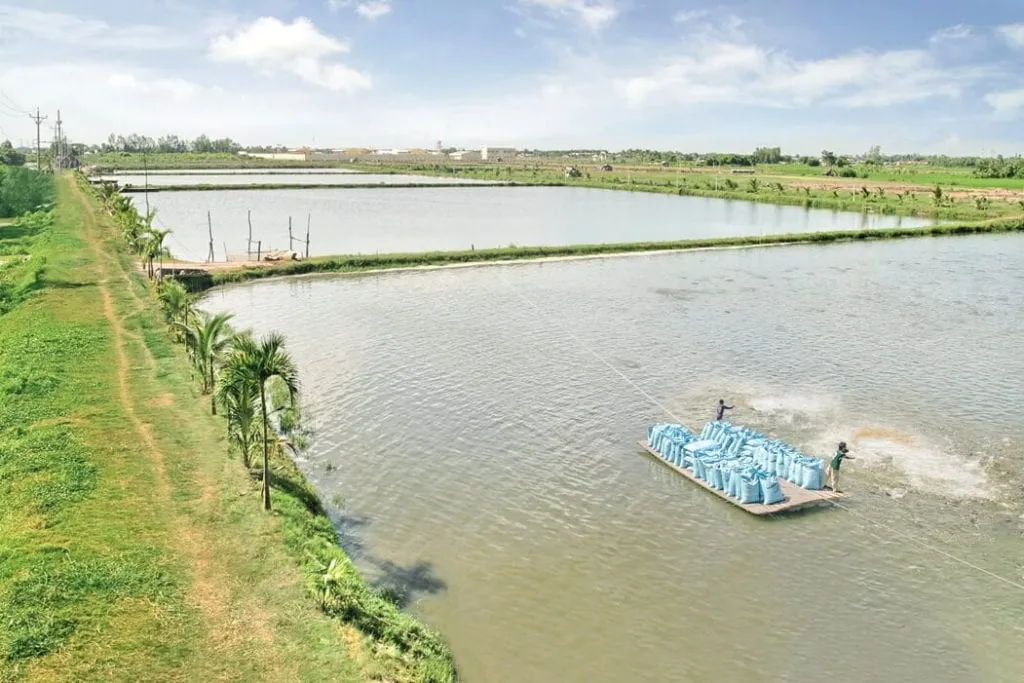
7. Other factors
- Location and site of each pond type
+ In small or large ponds, feed should be distributed evenly throughout the pond to ensure all fish can eat sufficiently and uniformly.
+ For cage farming, when feeding fish, attention must be paid to water currents to prevent feed from drifting away before fish can consume it.
- Feed storage
+ Store in a cool, dry place to prevent feed from becoming moldy, which can be toxic to fish when consumed.
+ Avoid direct sunlight, which can easily lead to nutrient loss in the feed due to high temperatures.
TECHNICAL DEPARTMENT - MINH DUC