Extracts can improve growth, feed utilization, immunity, digestibility, and disease resistance
Plant extracts contain bioactive compounds with several therapeutic properties, such as anti-inflammatory, antioxidant, and anticancer effects. These compounds are gaining increasing attention due to their potential use as natural antibiotics or phytobiotics. They are more biodegradable than synthetic molecules, making them more environmentally friendly and cost-effective, while also being able to promote growth, stimulate appetite, digestion, immunity, and disease resistance in various aquatic animals.
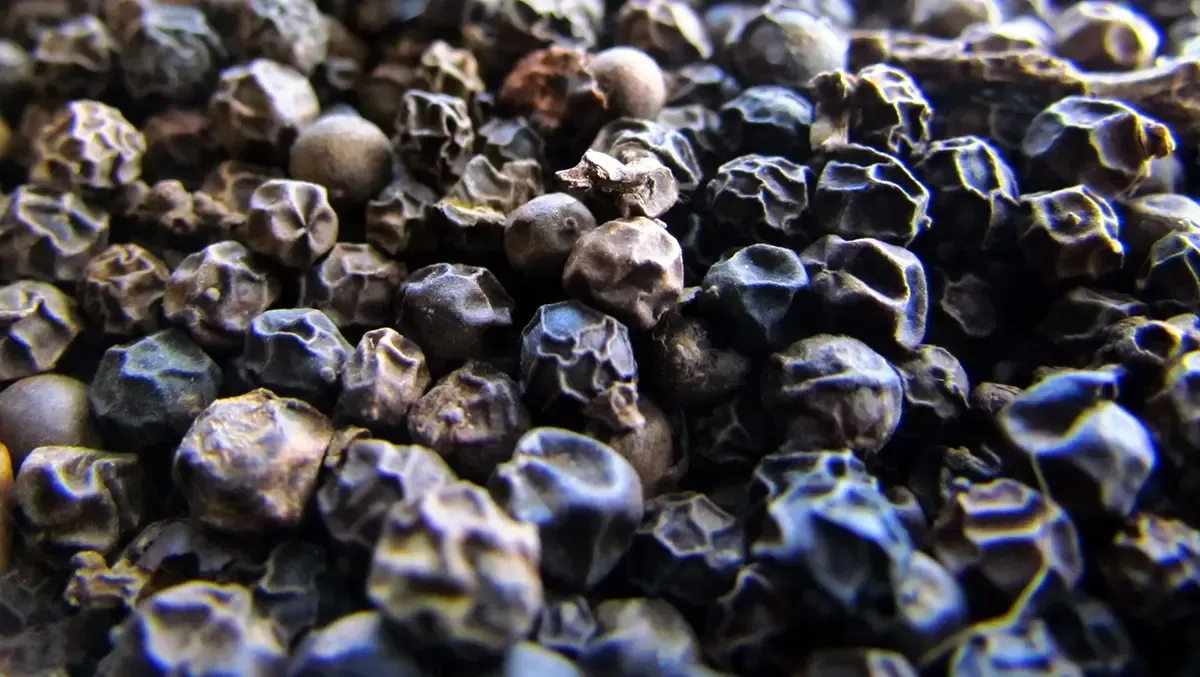
Piperine is a phytobiotic and a polyphenol-derived alkaloid compound extracted from black pepper (Piper nigrum) and long pepper (P. longum). Pepper is widely used as a spice and in traditional medicine worldwide. In aquaculture, piperine has been used as a method to control parasite-related diseases and promote growth, immunity, and disease resistance in various species.
Many plant compounds and extracts have been successfully used as phytobiotics in shrimp feed as potent immunostimulants. Most phytobiotics improve shrimp resistance against pathogenic microorganisms such as Vibrio parahaemolyticus, V. harveyi, and White Spot Syndrome Virus (WSSV). Furthermore, phytobiotics are also known to enhance shrimp growth performance and feed efficiency. However, the effects of dietary piperine on shrimp health and growth performance largely remain unclear.
Study Setup
This study evaluated the effects of dietary piperine on the growth, feed utilization, immunity, digestibility, and disease resistance of Pacific white shrimp purchased from a supplier (Tamra Shrimp, Jeju, South Korea). The study was conducted at the Institute of Marine Science, Jeju National University. Shrimp of size (0.40 ± 0.01 grams) were selected and randomly stocked into 18 tanks of 215 liters, with 25 shrimp per tank (3 replicates). Feed was provided 4 times/day, and the feeding rate was adjusted to 6–10% of the biomass in each tank.
A control diet (Con) was formulated without piperine, and five other diets were supplemented with graded levels of piperine (10% purity) at 0.25, 0.5, 1, 2, and 4 grams per kg (P25, P50, P100, P200, and P400, respectively). The experimental period lasted 53 days. A challenge test was conducted with Vibrio parahaemolyticus after the feeding trial.
Results and Discussion
Dietary piperine supplementation improved growth performance and feed utilization in Pacific white shrimp. Diets containing piperine resulted in significantly higher final body weight (FBW), weight gain (WG), and specific growth rate (SGR) compared to the control diet. The highest values were observed in the P200 group. The FBW, WG, and SGR values showed significant linear and quadratic trends with piperine. Regression analysis of weight gain against dietary piperine levels indicated an optimal piperine level of 2.2 grams per kg.
Shrimp fed diets P50, P100, and P200 had significantly lower feed conversion ratios (FCR) compared to the control group. Protein efficiency ratio (PER) was significantly higher in shrimp fed diets P100 and P200 compared to the control group. IGF-BP gene expression was significantly higher in piperine-treated shrimp, with the highest expression levels observed in the P50 and P400 diet groups. Shrimp survival rate did not differ significantly.
The alkaloid nature of piperine can lead to poor palatability, and researchers have reported lower feed intake in many terrestrial and aquatic farmed species. In the current study, growth performance and feed utilization in the P400 group were lower than in the P200 group. Therefore, the piperine content in shrimp diets should probably be maintained below 0.4%.
The apparent digestibility of dry matter and protein in piperine-fed shrimp was significantly higher than in the control group. It has been reported that dietary piperine can enhance the secretion of several enzymes – including amylase, trypsin, chymotrypsin, sucrase, maltase, and lipase – and its supplementation can increase nutrient absorption. Piperine possesses anti-infective, anthelmintic, and antibacterial properties that can contribute to a healthy gut and improve digestibility, enhancing gastrointestinal function by promoting nutrient absorption, enzyme synthesis, and immune response. Previous studies have also confirmed that piperine improves growth performance, feed utilization, and digestibility, but in our study, the effect of piperine on digestibility was not clearly evident. Only protein digestibility showed a statistical trend, while lipid digestibility did not show any observable trend.
Acute Hepatopancreatic Necrosis Disease (AHPND) is the most dangerous disease in farmed shrimp. Regarding resistance to the pathogenic bacterium V. parahaemolyticus, the control group showed 100% mortality within 31 hours (Figure 1). In contrast, piperine-supplemented shrimp had higher resistance to V. parahaemolyticus and significantly higher survival rates in the P25, P50, and P100 diet groups compared to the control group.
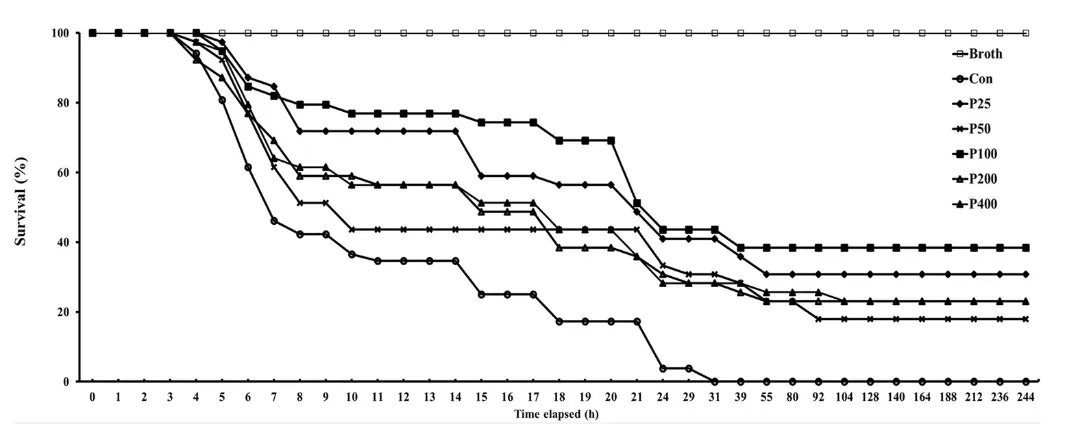
Figure 1: Survival rate of Pacific white shrimp fed experimental diets for 53 days during challenge with V. parahaemolyticus
Based on the experimental results, dietary piperine supplementation up to 1.0 gram per kg can improve shrimp resistance against V. parahaemolyticus. Furthermore, the observed survival trend suggests that the optimal piperine level to promote disease resistance in shrimp is between 0.25 and 1.0 gram per kg. Previous studies have shown that phytobiotics (azadirachtin, camphor, and curcumin) possess antibacterial properties against pathogens, and specifically, black pepper extract has bacterial inhibitory capabilities against various types of bacteria.
Conclusion
The study results showed that dietary piperine significantly enhanced the growth of Pacific white shrimp PL, feed utilization efficiency, digestibility, and non-specific immunity. Dietary piperine can improve shrimp production and has been proven to be an effective immunostimulant for Vibrio control. Based on the study results, the optimal piperine dose is 1–2 g/kg.
Source: Globalseafood
Translated by: Trần Thị Thúy Quyên