
A recent study was conducted to evaluate the impact of salinity on three potential probiotics used in aquaculture.
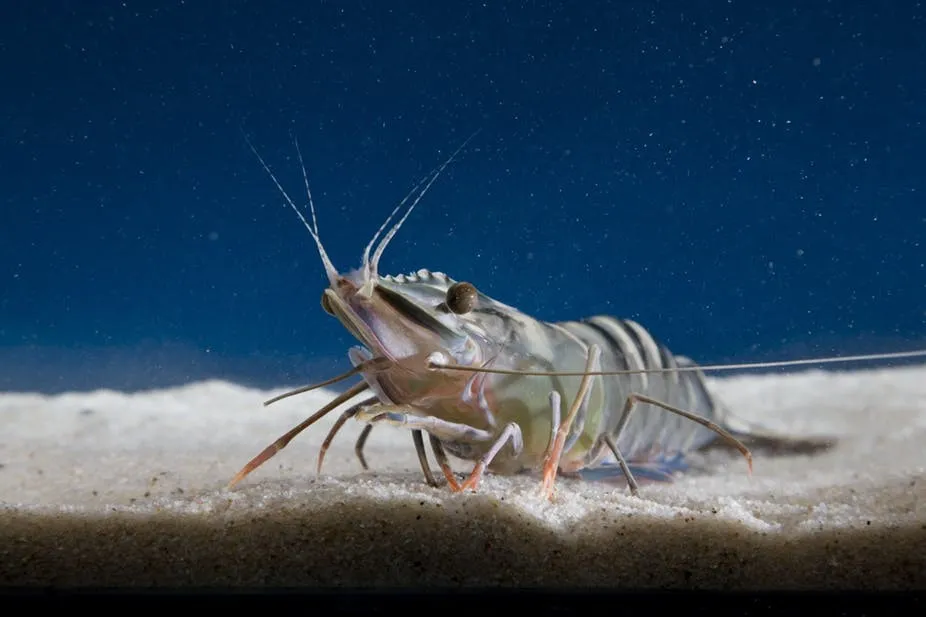
The increasing demand for shrimp has led to a rise in production in several countries worldwide. Intensive and super-intensive farming models with high densities have been facing significant challenges due to disease outbreaks. The use of antibiotics to treat shrimp diseases is widespread and common; however, the overuse of antibiotics causes many negative impacts, including the emergence of antibiotic-resistant bacteria. To mitigate this, probiotics have been applied in aquaculture to enhance disease resistance, improve feed efficiency, maintain water quality, and promote the growth of beneficial organisms in the aquatic environment.
In addition to the basic requirements for using probiotics in aquaculture, such as being safe for farmed animals and not containing plasmid-encoded antibiotic resistance genes, suitable candidates must thrive under saline conditions, typical of shrimp ponds. Potential candidates must also be systematically tested in laboratory and field conditions.
The purpose of this study was to evaluate the growth and survival of three bacteria (with potential for use as probiotics) under two different salinity conditions, to assess their applicability in shrimp farming.
The three microorganisms used in this study included: a lactic acid bacterium Lactobacillus casei NBRC 15883, a yeast Saccharomyces cerevisiae NBRC 0333, and a photosynthetic bacterium Rhodopseudomonas palustris.
Evaluation of Probiotic Salinity Tolerance
Salt tolerance was determined according to the protocol described by Succi et al., with the two bacterial species and yeast cultured in water containing 1% or 2% NaCl. The control group was cultured in normal nutrient water without added salt.
The results showed that the amount of NaCl used did not affect the growth of lactic acid bacteria and yeast, as there was no significant difference between the control and cultures in salt-containing media.
Based on the data analysis of the salinity tolerance of Lactobacillus casei bacteria and Saccharomyces cerevisiae yeast, it can be concluded that salinity did not affect the growth of these microorganisms. The results obtained for S. cerevisiae yeast were also consistent with previous research by Hounsa et al. Within the scope of this study, salinity in shrimp ponds up to 2% NaCl may not have any adverse effects on the evaluated probiotics.
Regarding the salinity tolerance of Rhodopseudomonas palustris bacteria, the results showed that salinity could affect their growth. This was observed in the growth curves obtained from cultures tested with 2% salt, which showed a delayed lag phase compared to cultures at 1% NaCl and the control group. Therefore, salinity may increase the time required for photosynthetic bacteria to adapt to the salt concentration in the environment. This could be interpreted as a negative impact on the applicability of these bacteria in shrimp production. However, after 5 days, the growth curve began its exponential phase, indicating that given sufficient time to develop, photosynthetic bacteria can adapt to the environment and continue their metabolic processes.
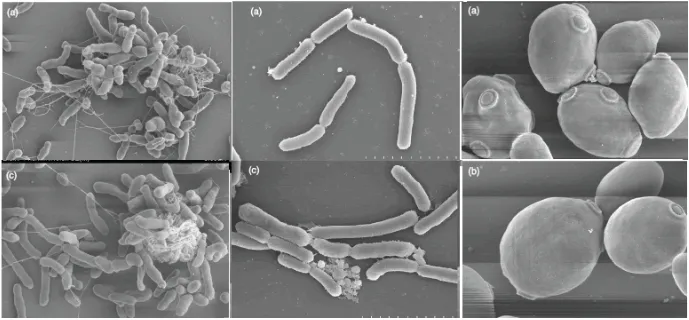
From left to right: Lactobacillus casei (a, c1), Rhodopseudomonas palustris (a, c2), and yeast Saccharomyces cerevisiae (a, b)
High-resolution images obtained via scanning electron microscopy showed no significant changes in the cellular morphology of the microorganisms.
In summary, yeast and Lactobacillus casei bacteria demonstrated high adaptability to the evaluated salinity, while photosynthetic bacteria showed a longer adaptation period. These results suggest that the three evaluated probiotic bacteria have the potential for use in shrimp production systems with salinity levels up to 2%.
This study demonstrates that different salinities will positively or negatively affect the growth of certain bacteria, making this a mandatory study for potential microorganisms applied in aquaculture to ensure that the applied probiotic bacteria can maximize benefits.
Source: tepbac.com