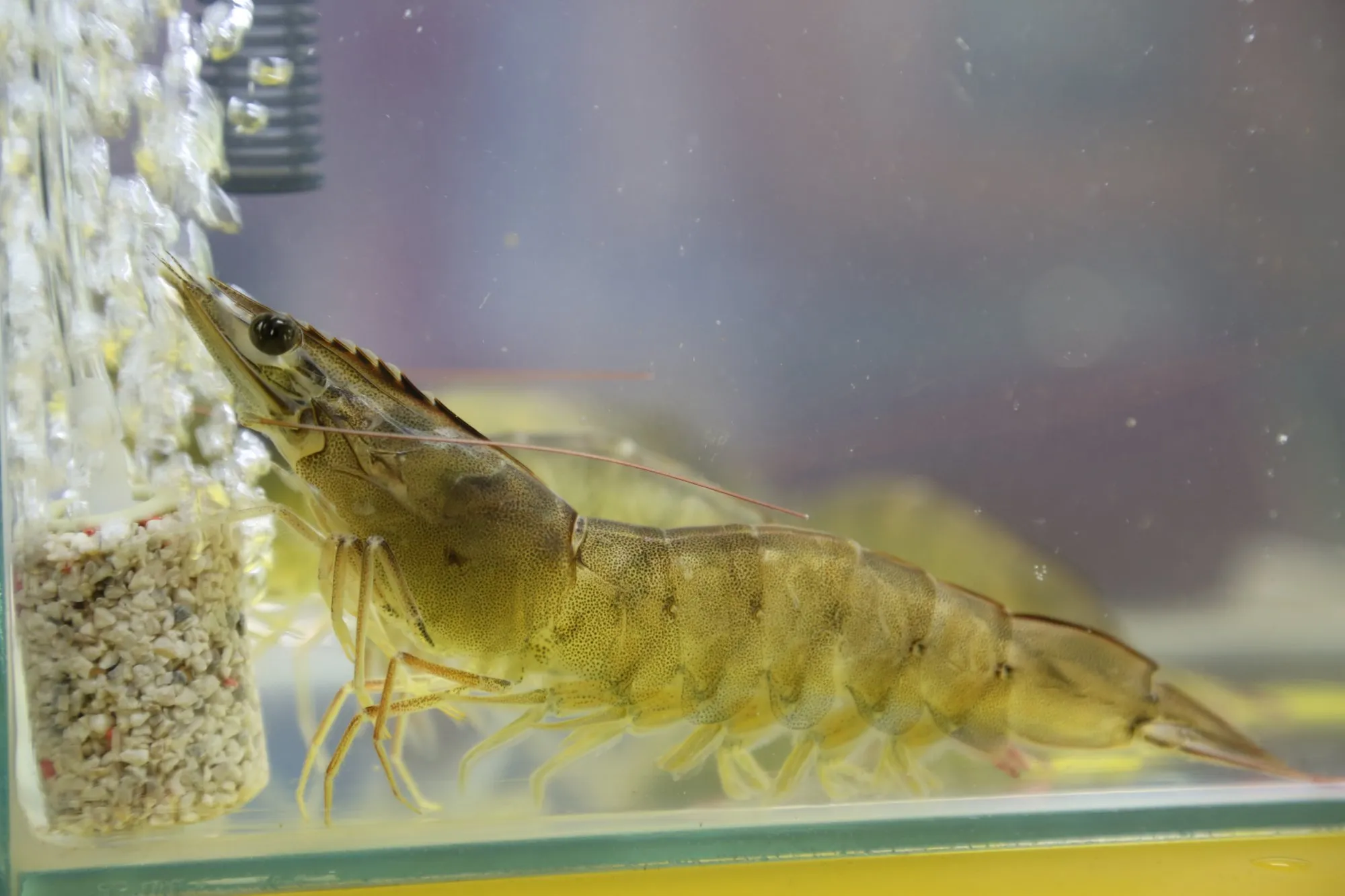
There are always debates about the protein content in shrimp feed. Many believe that shrimp can only absorb 35 – 36% of the protein in their feed, so overfeeding with high-protein feed offers no benefits and can even degrade the pond environment (and, of course, is not good for the farmer's wallet). Evidence for this comes from Ecuador and India – leading countries in shrimp production – where farmers only use feed with 36 - 38% protein. Their success rates are also very high (Ecuador 80%), whereas in Vietnam, the success rate is only 40%. So, the question arises: is it necessary to feed shrimp high-protein feed, especially when some companies have launched feeds with up to 42 – 45% protein content at a much higher price than low-protein feeds? Many factors need to be considered to answer this question.
Different Farming Models
In Ecuador, farmers cultivate shrimp at low densities and in designated farming areas, resulting in relatively high survival rates. Shrimp care regimens are also simpler. In Vietnam, however, with high stocking densities and less optimal conditions regarding water sources and farming area, shrimp naturally require a different feeding regimen.
Advances in Genetics and Breeding
Research on the protein requirements of Pacific white shrimp was conducted more than 30 years ago. At that time, shrimp had not yet undergone selective breeding, so their growth rate was not as high as it is today (back then, a daily growth of 0.18 – 0.22 g was sufficient, but now it must be at least 0.3 g/day). Therefore, it is understandable that the protein requirements of shrimp have gradually increased over time.
Protein Quality and Absorption Capacity
It is important to clearly distinguish between easily digestible protein and difficult-to-digest protein. Some feeds have high protein content, but the actual amount of easily absorbable protein is not significant. Protein consists of long chains of tens to thousands of amino acids linked by peptide bonds. Shorter-chain proteins are more easily absorbed than long-chain proteins. There are various methods to break down peptide chains to make proteins more digestible, such as hydrolysis. Furthermore, the origin of the protein also relates to the shrimp's absorption and digestion capacity. For example, animal-derived protein is more digestible and expensive than plant-derived protein. Therefore, when evaluating feed quality, one should assess the proportion of easily absorbable protein to select the appropriate feed.
When to Feed Shrimp High-Protein Feed
Smaller shrimp have higher protein requirements than larger shrimp. Therefore, in feed lines, feed for small shrimp will have a higher protein content than feed for large shrimp (some farmers use black tiger shrimp feed for small Pacific white shrimp due to its high protein content). However, for Pacific white shrimp, there are periods of rapid growth, known as compensatory growth. When shrimp encounter unfavorable conditions (weather, unsuitable environment, high density, etc.), their growth will be restricted, but when favorable conditions return, they will grow very quickly, compensating for the periods of restriction. During these stages, even large shrimp require high-protein feed to meet their intense growth demands. Faster-growing shrimp that consume less feed (due to the readily available high protein content) will help reduce FCR.
However, supplementing shrimp with high-protein feed is not always beneficial. As mentioned earlier, shrimp's protein absorption capacity is quite limited, so overusing high-protein feed can lead to many consequences, including the shrimp's gut health and the pond water environment. This would then incur additional costs to address these issues. Remember, as long as the environment is clean, well-aerated, and the shrimp are healthy, they can still achieve good growth rates.
It is possible to use feed with a lower protein content of 36 – 38% and then supplement with easily absorbable protein as desired. Choosing forms like hydrolyzed protein or amino acids will yield the best results.
Hoàng Tấn Phát