
Technical Article

WARM WATER REDUCES THE RISK OF WHITE SPOT DISEASE

A new study has shown that shrimp that have the opportunity to move to warmer waters during a White Spot Syndrome Virus (WSSV) outbreak have a significantly higher chance of survival.
Research InsightShrimpOctober 27, 2023👁 37 views
Click to listen to AI-narrated summary (1.2×)
AI Summary

Generate an English summary for WARM WATER REDUCES THE RISK OF WHITE SPOT DISEASE

AI-generated summary based on the full article content below.

Editorial Framing

Why this article matters

    Full Article

    Research shows shrimp can defeat white spot disease by moving to warmer waters

    A new study has shown that shrimp that have the opportunity to move to warmer waters during a White Spot Syndrome Virus (WSSV) outbreak have a significantly higher chance of survival.

    juvenile-vannamei-shrimp

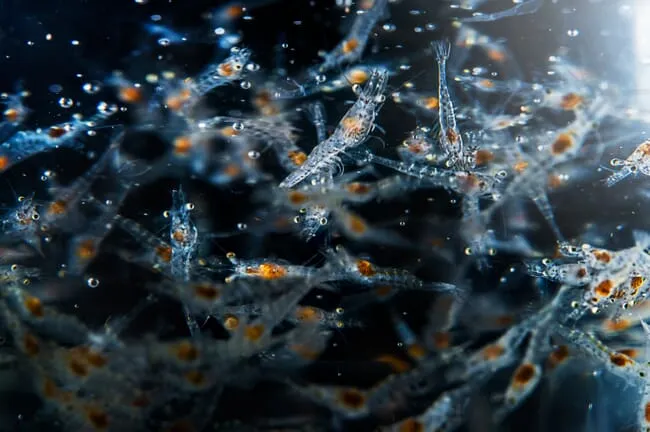
    Juvenile whiteleg shrimp

    Research shows that by moving to warmer waters, shrimp can reduce the replication rate of the White Spot Syndrome Virus (WSSV).

    While warm-blooded animals typically increase their body temperature to limit pathogen infection, in a process known as fever, cold-blooded animals (ectotherms) can achieve similar results by migrating to warmer places, in a process called “behavioral fever”.

    The new study led by researchers at Ghent University examined the existence – and impact – of behavioral fever in whiteleg shrimp Penaeus vannamei infected with WSSV

    In the study, shrimp weighing 15 ± 0.5g were intramuscularly injected with WSSV and kept in a four-compartment system (4-CS) – either one with all compartments at 27°C or one with a thermal gradient (27–29–31–33°C).

    During the first 4 days post-challenge, 94% of WSSV-challenged shrimp died in the 4-CS with a fixed temperature (27°C), whereas only 28% of WSSV-challenged shrimp died in the system with a thermal gradient.

    Behavioral fever is used by shrimp to increase their temperature when infected with WSSV. Behavioral fever prevents WSSV infection and mortality

    “Challenged animals clearly showed a movement towards warmer compartments, while this was not the case for mock-challenged and unchallenged animals. With primary lymphoid organ cell cultures, it was demonstrated that increasing the temperature from 27–29°C to 31–33°C inhibits viral replication,” the researchers explained.

    “It was concluded that behavioral fever is used by shrimp to increase their temperature when infected with WSSV. Behavioral fever prevents WSSV infection and mortality,” they added.

    The researchers noted that, depending on the environment, WSSV infection can cause extremely high mortality rates of up to 100% within 3–10 days, and the virus can replicate in susceptible hosts, such as shrimp, crayfish, and crabs, at temperatures ranging from 16 to 32°C.

    “It has previously been demonstrated in our laboratory that increasing water temperature from 27 to 33°C can prevent viral replication and disease/mortality in WSSV-infected shrimp during the acute infection phase before clinical signs appear. Here we extend these findings by demonstrating the ability of shrimp to use thermal preference by moving towards higher temperatures to reduce the lethal impact of White Spot Syndrome Virus.”

    Source: The Fish Site

    Related Products

    Products linked to this topic

    Product reference for SOILMAX New
    shrimpThần Vương Blue

    SOILMAX New

    Giải pháp điều chỉnh môi trường nuôi siêu thâm canh bằng sinh học

    Product reference for MAX 4000
    shrimpThần Vương Blue

    MAX 4000

    Vi sinh đặc hiệu khử NO2

    Product reference for YUCCA GRO
    shrimpThần Vương Nutrition

    YUCCA GRO

    Hấp thu khí độc NH3 trong ao nuôi

    Product reference for LALSEA BIOREM
    allNguyên liệu

    LALSEA BIOREM

    Khử NH3, xử lý hữu cơ sinh học, hiệu quả ở độ mặn cao

    More Reading

    Related technical articles

    SỰ THAY ĐỔI CỦA HỆ VI SINH ĐƯỜNG RUỘT DO SỰ NÓNG LÊN TOÀN CẦU. ĐIỀU HÒA SỨC KHỎE VẬT CHỦ VÀ TÌNH TRẠNG BỆNH Ở ĐỘNG VẬT BIẾN NHIỆT
    Research InsightShrimpFebruary 28, 2026

    CHANGES IN GUT MICROBIOTA DUE TO GLOBAL WARMING. REGULATING HOST HEALTH AND DISEASE STATUS IN POIKILOTHERMIC ANIMALS

    Tóm tắt nội dung chính: Sự nóng lên toàn cầu làm thay đổi hệ vi sinh vật đường ruột của tôm thẻ chân trắng Thái Bình Dương bằng cách[...]

    Toàn cảnh thị trường tôm thế giới 2025 — Dữ liệu từ Shrimp Insights (Tháng 2/2026)
    Technical articleShrimpApril 9, 2026

    Global Shrimp Market 2025 Overview — Shrimp Insights Bulletin February 2026

    Tổng hợp thị trường tôm thế giới 2025: Ecuador dẫn đầu xuất khẩu (1.39M tấn, +15%), EU tăng nhập khẩu mạnh nhất (+21%), Mỹ biến động[...]

    CÁ HỒI TRONG ĐIỀU KIỆN STRESS: CỦNG CỐ TUYẾN PHÒNG THỦ ĐẦU TIÊN
    Solution TrackShrimpFebruary 27, 2026

    SALMON UNDER STRESS CONDITIONS: REINFORCING THE FIRST LINE OF DEFENSE

    As the aquaculture industry increasingly develops strategies for animal health protection, functional nutrition has become a key fac[...]

    Technical Advisor

    Aquaculture Q&A

    🦐

    Help us serve you better

    Share your name + phone so we remember your pond next time — no repeating yourself.

    • 🔒 Tech team only — never shared with third parties
    • 📨 No spam, no promotional SMS
    • 💾 History saved on your device — clear anytime