Authors: Ana Rodiles, François Cellier, Camille Houdelet & Eric Leclercq – Lallemand Animal Nutrition, France
The aquaculture industry is increasingly seeking sustainable alternatives to antibiotics, especially in intensive farming systems where antibiotics are commonly used. Probiotic preparations in water and aquaculture feed have been widely recognized and proven effective in improving animal health, productivity, and profitability.
Microbial and yeast solutions developed by Lallemand offer promising benefits in improving shrimp health and system stability. This study evaluates the impact of Lallemand's solutions on shrimp performance, water quality, and microbiota in a controlled aquaculture trial.
Experimental Design and Setup
A 41-day aquaculture trial was conducted in Vietnam using Pacific white shrimp post-larvae (initial body weight = 0.5g) reared under high-density conditions (150 individuals/m3), similar to commercial farming conditions, in 16 outdoor circular ponds (50 m3, lined and aerated) with low water exchange using pre-treated water (7-14 ppt; 28 - 30°C).
Four treatments were tested in four replicates, including separate feed supplementation and water treatment: The Control group received basal feed without supplementation, the Antibiotic group (ABX) was fed basal feed supplemented with Oxytetracycline for 10 days (5 g/kg feed, day 10 to day 20), the Lallemand group (LAL) was fed basal feed supplemented with Lalpack Probio and Lalpack Immune (5 g/kg feed each, comprising a probiotic blend including Bactocell and a blend of yeast-derived compounds from Lallemand), and the Antibiotic + Lallemand group (ABX+LAL) combined ABX and LAL feed for 10 days (Figure 1).
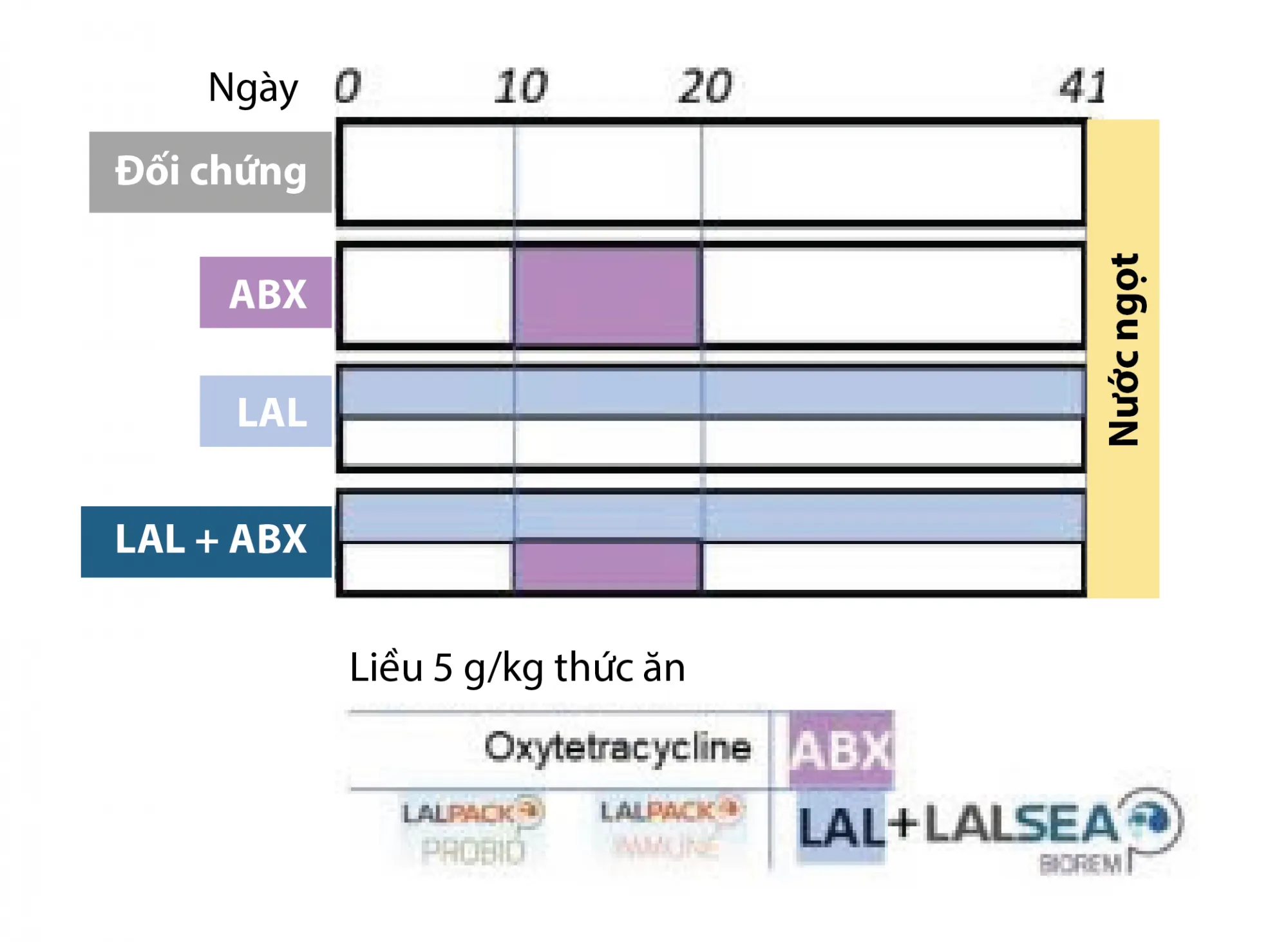
Figure 1. Experimental design for shrimp feeding (n = 4), freshwater challenge (n = 6)
Biological Water Treatment
In the LAL groups throughout the trial, the culture water was treated with Lalsea Biorem (a biological treatment comprising a blend of heterotrophic bacterial strains), applied at 1.2 kg/ha every 4 days in the culture ponds and 2 kg/ha in the water preparation tanks 24 hours before water exchange.
Finally, shrimp were fed 4 times daily using feeding trays. To assess shrimp health at the end of the trial, each treatment was divided into 6 replicates for a non-biotic challenge test, involving an abrupt transfer to freshwater. In summary, shrimp were transferred from culture water (14ppt salinity) to indoor freshwater tanks (0 ppt, 24 aerated 500L tanks, 50 individuals/tank) and mortality rates were assessed every 30 minutes.
Farming performance, lactic acid bacteria (LAB) counts, and total heterotrophic bacteria (THB) counts in water and gut were assessed at the beginning, middle, and end of the culture trial. Additionally, water biochemical analyses were performed every 4 days. Water microbiota was evaluated at the end of the trial, including 16S rRNA amplicon sequencing (ASV) and Picrust2 analysis via Qiime2.
Growth Performance and Survival
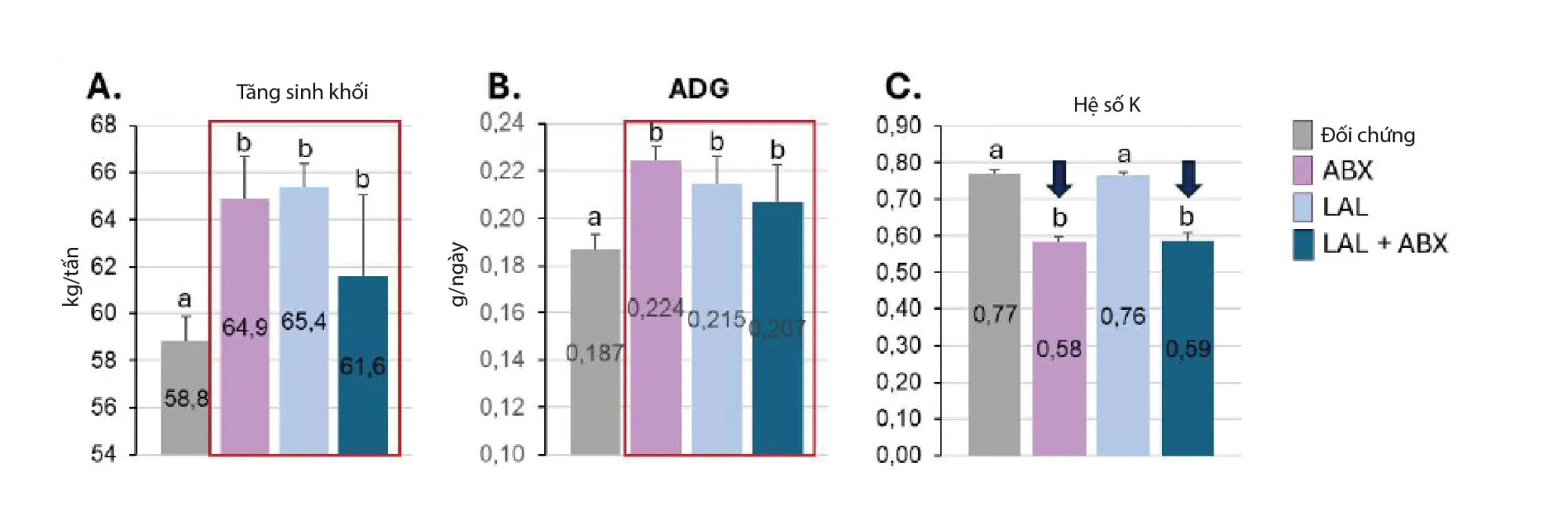
The results showed that during the trial, biomass and average daily growth were significantly higher in all supplemented groups compared to the control group, reaching the highest levels in the LAL group (+11% biomass increase, +15% average daily growth (ADG); Figure 2-A&B). However, shrimp in both ABX-supplemented groups had significantly lower condition factor (K) at the end of the trial. Survival rates were > 85% in all tanks, with no treatment effect.
Tóm tắt nội dung chính: Sự nóng lên toàn cầu làm thay đổi hệ vi sinh vật đường ruột của tôm thẻ chân trắng Thái Bình Dương bằng cách[...] Tổng hợp thị trường tôm thế giới 2025: Ecuador dẫn đầu xuất khẩu (1.39M tấn, +15%), EU tăng nhập khẩu mạnh nhất (+21%), Mỹ biến động[...] As the aquaculture industry increasingly develops strategies for animal health protection, functional nutrition has become a key fac[...]Products linked to this topic
Related technical articles

CHANGES IN GUT MICROBIOTA DUE TO GLOBAL WARMING. REGULATING HOST HEALTH AND DISEASE STATUS IN POIKILOTHERMIC ANIMALS
Global Shrimp Market 2025 Overview — Shrimp Insights Bulletin February 2026

SALMON UNDER STRESS CONDITIONS: REINFORCING THE FIRST LINE OF DEFENSE