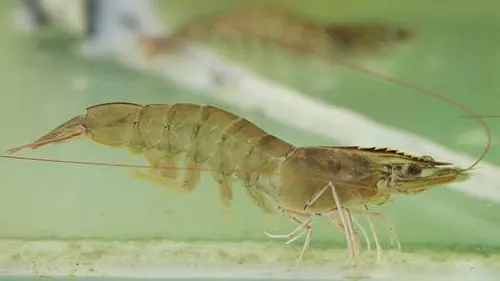
Recent research by Assoc. Prof. Dr. Kim Van Van and Doan Thi Nhinh (2019) in Hung Yen shows that whiteleg shrimp can grow and develop well in freshwater ponds under winter conditions in Northern Vietnam.
In recent years, Vietnam's shrimp farming industry has continuously developed, bringing high profits to farmers, as well as generating significant foreign currency for the country. Among farmed species, whiteleg shrimp have superior advantages such as good tolerance to environmental fluctuations, high stocking density, strong feeding intensity, and rapid growth rate. Therefore, they have been widely developed in coastal provinces, especially in the Southern region, where natural conditions are extremely favorable (warm sunshine all year round, stable temperatures from about 27-35°C, etc.) suitable for whiteleg shrimp growth.
Meanwhile, the long and cold winter in the North is one of the limitations to the development of the aquaculture industry. Pond farming systems often cease production during winter, focusing only on some traditional farmed species such as silver carp, rohu, grass carp, and common carp (Aquaculture Magazine, 2018).
Diversifying farmed species is one solution to exploit the potential for freshwater aquaculture development in this region, with the goal of finding and developing new farmed species with economic value and stable consumption markets, especially targeting species with good cold or heat tolerance. Based on these criteria, whiteleg shrimp is a suitable choice for experimental farming in freshwater.
Whiteleg shrimp (Lipopenaeus vannamei) is a euryhaline species that can tolerate water salinity from 5-45‰. Whiteleg shrimp cultured at low salinity (5-15‰) will grow faster than at high salinity. This is because at low salinity, protein metabolism in the shrimp's body is better, and at low salinity, shrimp are forced to use their total free amino acid pool to compensate for changes in cell volume. Additionally, culturing shrimp at low salinity will limit some viral diseases like White Spot Syndrome Virus (WSSV), Yellow Head Disease (YHD), luminous bacteria, and EMS, which often appear in high-salinity ponds.
There have been several research reports on the acclimation and farming of this species in freshwater worldwide, but there have been no production-scale trials under winter climatic conditions in Northern Vietnam. Therefore, this study was conducted to evaluate the feasibility of acclimating and commercially farming whiteleg shrimp through winter in Hung Yen province, a region characteristic of the Northern climate.
Acclimation and Farming of Whiteleg Shrimp in Freshwater Ponds during Winter
Experiment 1: Whiteleg shrimp acclimation trial.
Whiteleg shrimp at PL 12 stage were acclimated in cement tanks with a salinity of 15 ppt, lined with ceramic tiles inside to prevent algae growth and facilitate cleaning and disinfection.
The water source used for the acclimation process was taken from a tilapia pond, which had been disinfected and fertilized to create natural food sources for the shrimp during acclimation.
The acclimation process was carried out in 3 batches, with 4 tanks used per batch, acclimating shrimp at a density of 14.5-16.5 individuals/L.
After the shrimp were transported to the farm, the bags containing the postlarvae were placed in the acclimation tanks for about 30 minutes to equalize temperature before releasing the shrimp into the tanks. The salinity in the nursery water was reduced at a rate of 2 ppt/day until 0 ppt (within 7-8 days).
During the acclimation process, shrimp were fed 4 times/day with feed containing 40% protein, combined with plankton from the culture pond.
Experiment 2: Whiteleg shrimp farming trial in freshwater through winter.
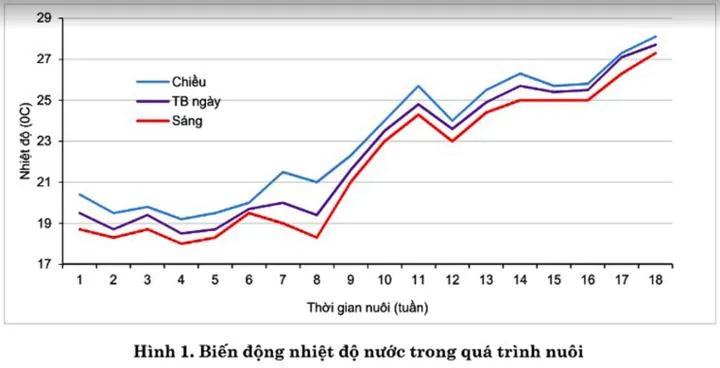
The experiment was conducted in 3 ponds with areas ranging from 3,000-3,600 m2, and a depth (water level in the pond) of 1.7-2 m. PL 12 shrimp postlarvae, after undergoing freshwater acclimation (PL 20 stage), were introduced into the experimental ponds at a stocking density of 62-67 individuals/m2. The feed used in the experiment had a protein content of 30%, and the culture period was 18 weeks.
Results:
Whiteleg shrimp can be acclimated to freshwater at a desalinization rate of 2 ppt/day and commercially farmed in freshwater ponds through winter in the Northern region.
The growth rate of shrimp when farmed in freshwater ponds through winter was not too low, reaching 0.79 g/week, with shrimp reaching a size of 70 individuals/kg after 18 weeks of culture. Economic efficiency was quite high, achieving 88.7 million VND/1,000 m2. Thus, this is a potential species that can be introduced for farming in freshwater areas during winter to have products available for sale in late spring or early summer, which is when aquaculture products typically have higher selling prices than at other times.
The relatively high profit level achieved is due to the comparatively high price of commercial shrimp from winter culture compared to peak seasons. Simultaneously, when farmed in freshwater during winter, common shrimp diseases often seen in brackish water environments did not appear, thus increasing survival rates. Furthermore, this farming process helps utilize pond areas during winter, ensuring stable labor and year-round income for the farm.
The results of this study will serve as a basis for evaluating the potential to expand whiteleg shrimp farming in freshwater environments through winter in the Northern region.
Source: Thuy San 247
Compiled by: Tran Thi Thuy Quyen