Introduction
Water quality management plays a decisive role in shrimp farming, especially for high-density ponds. A shrimp pond is a closed ecosystem where shrimp, along with various microorganisms, plankton, and algae, are always interconnected. They act as decomposers of organic matter, regenerating nutrients and removing excess nutrients, especially nitrogen from uneaten feed and waste products from shrimp. Bacteria play a crucial role in this diverse and complex ecosystem. The method of supplementing selected bacterial systems to improve and manage the aforementioned ecosystem has been applied for many years in aquaculture. This method is called bioremediation, defined as "the treatment of pollutants or waste by the use of microorganisms (such as bacteria) to break down undesirable substances". In this report, we present an effective bioremediation solution that supports the management of organic waste and nitrogen in shrimp ponds, thanks to the selection of suitable microbial strains from laboratory to field validation.
Importance of Microbial Balance
A pond is a closed and complex ecosystem comprising bacteria, plankton, algae, and shrimp. Along with planktonic microorganisms, bacteria constitute the majority of the shrimp pond ecosystem. The microbial system in a pond has four main functions:
- As a link in the food chain (a nutrient source for zooplankton and shrimp).
- Contributing to biological treatment processes (decomposition of organic matter, nitrogen cycle, etc.).
- May contain harmful bacteria or pathogens.
- Beneficial microbial systems help control pathogens through competitive exclusion and inhibition mechanisms.
All of this is a balance between beneficial and harmful microbial systems. Changes in nutrition, water environment (temperature, pH, oxygen), etc., all adversely affect and alter the ecosystem. An imbalance in the microbial system can affect the nitrogen cycle and organic matter decomposition, or lead to the overgrowth of undesirable bacteria or pathogens, consequently impacting shrimp health and growth.
Along with sludge management, the three factors often of concern in shrimp ponds are: organic carbon, nitrogen, and phosphorus. In practice, farmers often focus on nitrogen management, as some nitrogen-containing compounds (free ammonia and nitrite) directly impact shrimp and water quality (e.g., algal blooms).
Through the process of establishing a beneficial microbial system and managing pond bacteria from the outset, bioremediation can help farmers achieve a healthy and balanced pond. The objectives of this method include:
- Promoting the early formation of heterotrophic bacterial systems, which play a crucial role in pond microbial balance and metabolic capacity.
- Supporting the early formation of nitrifying and denitrifying bacterial systems in the pond.
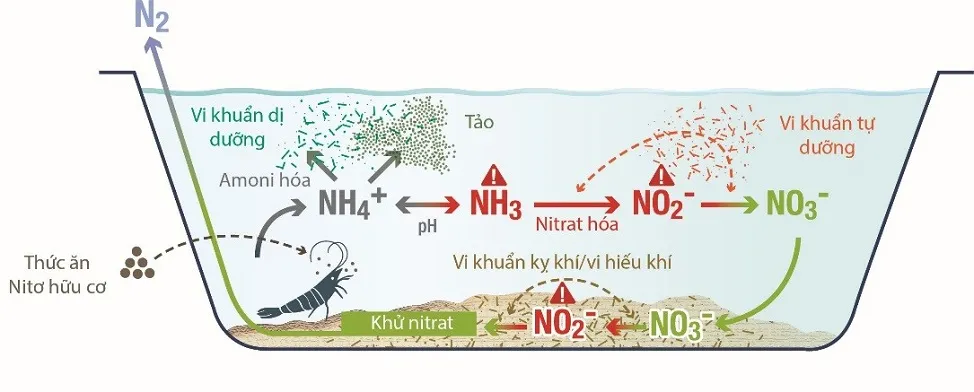
Figure 1. Simplified nitrogen cycle in a shrimp pond
Selecting the Best Strains for Bioremediation
Understanding the two issues mentioned above, researchers at Lallemand Animal Nutrition have studied and selected the best strains from their microbial bank (10,000 marine microbial strains, over 5,000 of which have been genotyped at the Lallemand Aquapharm bank). Using advanced techniques, "SeaRch" technology, to select representative strains that meet various criteria.
Firstly, selected bacteria must be able to survive and thrive in various water environmental conditions:
- Capable of growing in anoxic or low-oxygen conditions.
- Salinity tolerance, from freshwater to high salinity.
Therefore, the selected bacteria must grow well under various salinity and oxygen conditions, and be applicable in different types of ponds.
The second criterion for bacterial selection is the ability to decompose organic matter. Researchers screened for enzyme production capacity and selected strains capable of producing many enzymes that break down fats, proteins, carbohydrates, and fibers.
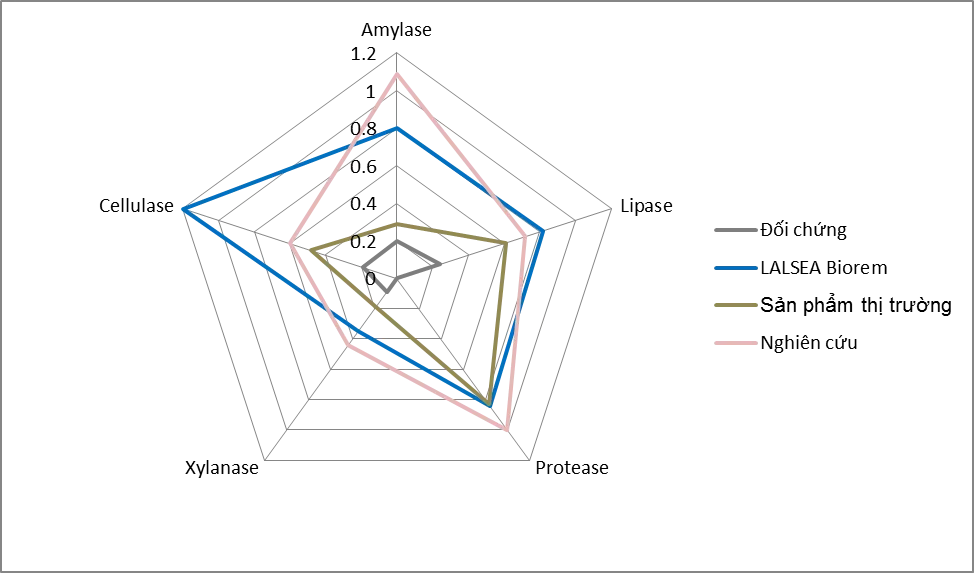
Figure 2. Enzymatic activity of the bacterial mixture. Lalsea Biorem is a combination of selected bacterial strains for use in shrimp ponds
Many experiments have been conducted under various conditions to select the best strains for strong and optimal decomposition activity (Figure 2). The product Lalsea Biorem is a combination of multiple bacterial strains (6 strains from 3 Bacillus species and one strain from Pediococcus acidilactici), which have been selected.
Reducing Toxic Nitrogen
To better study and evaluate the effects of Lalsea Biorem on shrimp ponds, a tank experiment with conditions similar to those in ponds was conducted. The culture tanks were covered with a layer of organic sludge collected near shrimp ponds, and Lalsea Biorem was used at the recommended pond dosage of 800 g/ha/week. In this way, environmental factors and replicates were well-controlled to accurately assess the efficacy of Lalsea Biorem under pond-like conditions.
The experiment was conducted on juvenile Pacific white shrimp (Litopenaeus vannamei; 3.6 ± 0.3 g). Six 1-m³ tanks were set up under the same conditions. During the 9-week experiment, half of the tanks were supplemented with Lalsea Biorem once a week at the recommended dosage.
Tóm tắt nội dung chính: Sự nóng lên toàn cầu làm thay đổi hệ vi sinh vật đường ruột của tôm thẻ chân trắng Thái Bình Dương bằng cách[...] Tổng hợp thị trường tôm thế giới 2025: Ecuador dẫn đầu xuất khẩu (1.39M tấn, +15%), EU tăng nhập khẩu mạnh nhất (+21%), Mỹ biến động[...] As the aquaculture industry increasingly develops strategies for animal health protection, functional nutrition has become a key fac[...]Products linked to this topic
Related technical articles

CHANGES IN GUT MICROBIOTA DUE TO GLOBAL WARMING. REGULATING HOST HEALTH AND DISEASE STATUS IN POIKILOTHERMIC ANIMALS

Global Shrimp Market 2025 Overview — Shrimp Insights Bulletin February 2026

SALMON UNDER STRESS CONDITIONS: REINFORCING THE FIRST LINE OF DEFENSE