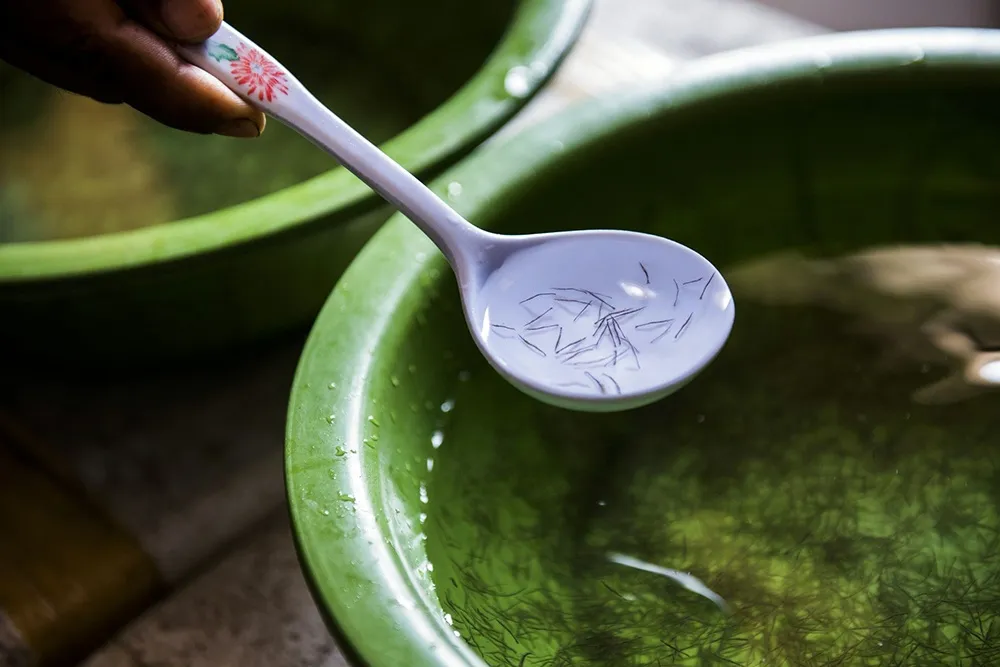
Selecting shrimp postlarvae is a crucial step in the shrimp farming process.
The selection of postlarvae is one of the most important steps in the shrimp farming process, as shrimp quality is a key determinant of success; growth and survival rates, as well as production costs. This article provides guidance on some technical measures for selecting postlarvae and methods for inspecting shrimp postlarvae.
Problems arising from using poor quality shrimp postlarvae:
- Prone to disease outbreaks if postlarvae carry pathogens (White Spot Syndrome Virus WSSV, Acute Hepatopancreatic Necrosis Disease AHPNS, stunting disease, microsporidiosis – EHV, IHHNV disease…)
- Slow growth leading to high farming costs
- Low survival rate
- Poor resistance of shrimp to environmental conditions
- Poor resistance to pathogens.
Factors affecting postlarvae quality
- Quality of broodstock shrimp
- Breeding techniques
- Facilities
- Postlarvae transportation
Methods for inspecting shrimp postlarvae quality:
Visual inspection: Postlarvae should exhibit active swimming, full gut, good coloration, closed antennae, slender and long abdominal segments, full and firm abdominal muscles, full flesh within the shell, and a balanced head and body; shrimp should swim vigorously against the current, adhere well to tank walls; show good reflexes when tapping the container; and have complete appendages.
*Shrimp tail: In a healthy postlarva, the tail should be clearly open. If the tails are closed, it indicates that the postlarva is not fully developed for stocking.
*Size: For whiteleg shrimp, stocking usually occurs at P12 to P15, with a length of 9-11 mm (for Black Tiger shrimp, P15 – P20 with a length of 15-18 mm), uniform size without deformities, balanced shape, and straight antennae extending to the tail.
*Coloration: Good quality PLs have a translucent body with brownish or dark brown pigmentation (Black Tiger shrimp specifically have brown, dark brown coloration). Pink or red coloration in shrimp may indicate stress related to farming or handling. Healthy whiteleg shrimp should have a bright, translucent color.
*Clean shell indicates that the animals typically grow fast and molt frequently. Conversely, slow-growing shrimp are indicated by the presence of protozoa such as Zoothamnium, Vorticella, Epistylis or Acineta, filamentous bacteria, dirt, organic matter, and necrosis (black spots or brown lesions) on the shell.
*Full gut: The fullness of the gut can be determined with the aid of a microscope.
A healthy PL will have a full digestive system. The presence of an empty gut can be the first sign of disease or may be a result of not feeding or stress.
- Microscopic examination:
• Immediately upon arrival of the shrimp, collect 20 PLs from one of the transport containers or bags while monitoring technicians adapt by checking water parameters in the transport containers and bags.
The accumulation of mucus and debris on spines, antennae, and appendages is an indicator of stress. With the aid of a microscope, the spaces between spines and antennae can be checked for the accumulation of debris.
• Opacity of pleopods and tail muscle
A clear sign of stress is a change in the opacity of the tail muscle. Normally, the tail muscle should be translucent with a few pigment spots. However, when stressed, the tail muscle and pleopods can become opaque or completely white. This issue can be quite serious and potentially fatal if left untreated.
• Physical deformities
Although deformities are not directly related to stress, a large number of deformed PLs in a batch of shrimp can be a sign of chronic diseases. Deformities can also be used as an indicator for future survival rate estimates in the pond.
• Muscle-to-gut ratio (6th abdominal segment)
Microscopic examination of the relative thickness of the abdominal muscle and gut in the 6th abdominal segment of the PL tail should be performed to determine the muscle-to-gut ratio. This provides a useful indication of the postlarvae's nutritional status.
• Hepatopancreas condition:
The presence of a large shrimp hepatopancreas with a high number of lipid cells is considered a sign of good health. The hepatopancreas should not be translucent and should have a dark yellow color. A dark hepatopancreas often indicates melanization.
PLs should be checked for melanization, which often occurs when shrimp bite each other or where bacterial infections have occurred.
- Stress test method
Formalin test: Shock with 100ppm Formalin, salinity shock reduced to 5ppt.
- PCR testing
Free from WSSV, TSV, IHHNV, HPV...
Inspecting postlarvae quality upon arrival at the farm:
+ The bags of postlarvae arriving at the nursery pond should be intact, have sufficient oxygen, and healthy shrimp should be swimming evenly dispersed within the bags.
+ Recheck the pH and salinity of any 3 postlarvae bags and the salinity of the nursery pond to implement appropriate acclimatization measures before stocking the shrimp.
Some notes when selecting shrimp postlarvae:
Purchase postlarvae from reputable production facilities, ensuring broodstock shrimp have clear origins, and postlarvae have been tested and are free from the aforementioned pathogens.
Three days before collecting postlarvae, inform the hatchery of the water environmental parameters in the nursery pond (pH, salinity) so that the hatchery can acclimatize the postlarvae to suit the farming conditions.
Some tips for purchasing postlarvae
If the quantity of postlarvae purchased is not too large, consider collaborating with other farming facilities to reduce costs and strengthen bargaining power for postlarvae prices.
Source: Thuysan247