Since the beginning of 2023, shrimp prices have shown no signs of recovery. The reason stems from declining export orders due to the impact of inflation and global economic recession on market purchasing power. Given the current situation, expecting shrimp prices to rise is almost impossible. Therefore, the best solution now is not to wait for the market but to find ways to adapt to the current period of unfavorable shrimp prices.
The Cost Equation
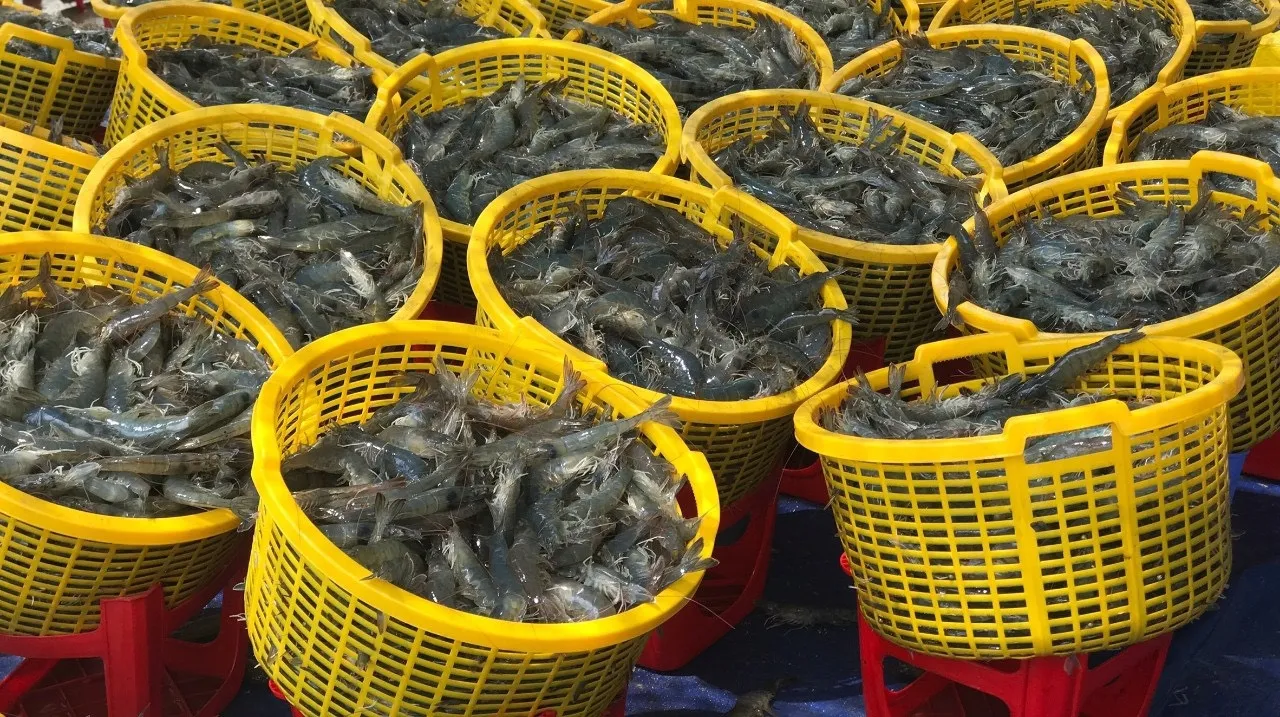
Competition from other shrimp exporting countries is also a reason for declining shrimp prices. Leading shrimp exporters like Ecuador and India have significantly lower shrimp production costs compared to Vietnam. Thanks to the advantage of large land areas, they farm shrimp at low densities (20 – 30 shrimp/m2) but still achieve high yields. This ability to farm at low densities also allows them to save on many costs such as feed (lower protein content – cheaper price), water treatment costs, labor, electricity, etc.
However, under Vietnam's conditions, trying to achieve cost levels like Ecuador is IMPOSSIBLE. Perhaps only integrated models like shrimp-rice farming or extensive farming could achieve such results. A characteristic of Vietnam's shrimp industry is that most shrimp producers are small-scale farmers, and farming at such low densities would not yield enough production for them to recover their investment capital. Most farmers have limited capital, so they accept purchasing feed and medicines on credit at high prices, which further increases production costs. Additionally, challenges such as weather, diseases, and limited farming techniques reduce the success rate of shrimp farming. A success rate of only 40% is also a significant concern when discussing high production costs (if shrimp die early, the investment will naturally be much greater than the revenue obtained).
From Addressing Practical Issues...
The issues mentioned above are not new, but now we must seriously consider them to adapt promptly to the current situation. The necessary changes include:
- Appropriate stocking density: If previously the common stocking density was 200 – 300 shrimp/m2, we should now aim for a moderate level of 120 – 150 shrimp/m2. This density allows for easier environmental management, and shrimp are more likely to reach larger sizes. Especially, risk management and disease control factors become more manageable. Multiple partial harvests to reduce the load on the pond are also a good solution.
- Scaling up production to shorten the supply chain: With fragmented farming, farmers find it difficult to purchase shrimp farming products at good prices. However, when the purchase volume is sufficiently large, it's a different story. Farmers will gain access to direct distributors, reducing intermediaries and thus saving significant costs. Conversely, farmers need to be proactive with their capital. Small-scale farmers can link up into models like cooperatives to purchase together; typically, the purchasing power of about 20 – 25 ponds is enough to secure good prices.
- Choosing an appropriate farming process: The farming process here includes both the design and operation of the farming system. The priority now is a simple farming system that requires fewer resources (electricity, water exchange treatment, etc.), is easy to operate, minimalist in environmental management, and most importantly, can best control stress, risks, and diseases. With a focus on moderate stocking density, a simple farming system will suffice.
...to "Choosing Wisely" for Success
The selection of products for shrimp farming also requires caution. Currently, most farmers choose high-quality products from reputable companies instead of cheap, floating products on the market that do not guarantee quality. The reason is that good products bring significant benefits: better shrimp growth, easier stability of the farming environment, fewer risks, and quick resolution of emerging problems; unlike cheap but low-quality products that do not bring significant effectiveness to the pond. "Value-for-money" products will continue to be trusted by farmers: good broodstock, good feed, good supplements, and good processes help farmers achieve success more easily.
Conclusion
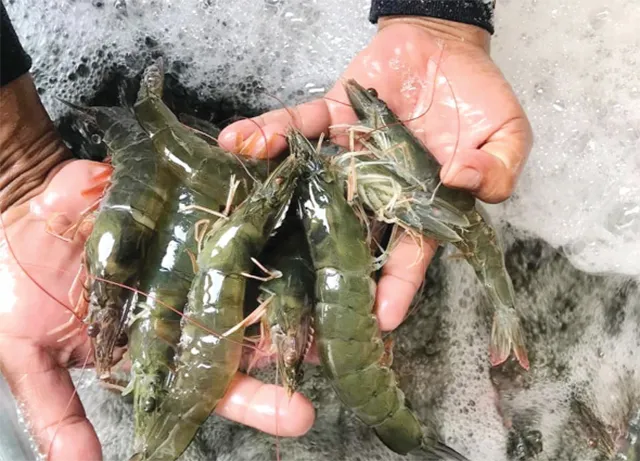
These changes are now necessary to thrive in the new situation. Cutting investments in environmental management or shrimp health is not the right move, as it only reduces a small portion of costs but significantly increases risks. The solutions mentioned above aim for producing a smaller but more stable quantity of shrimp, suitable for the current situation.
Hoàng Tấn Phát