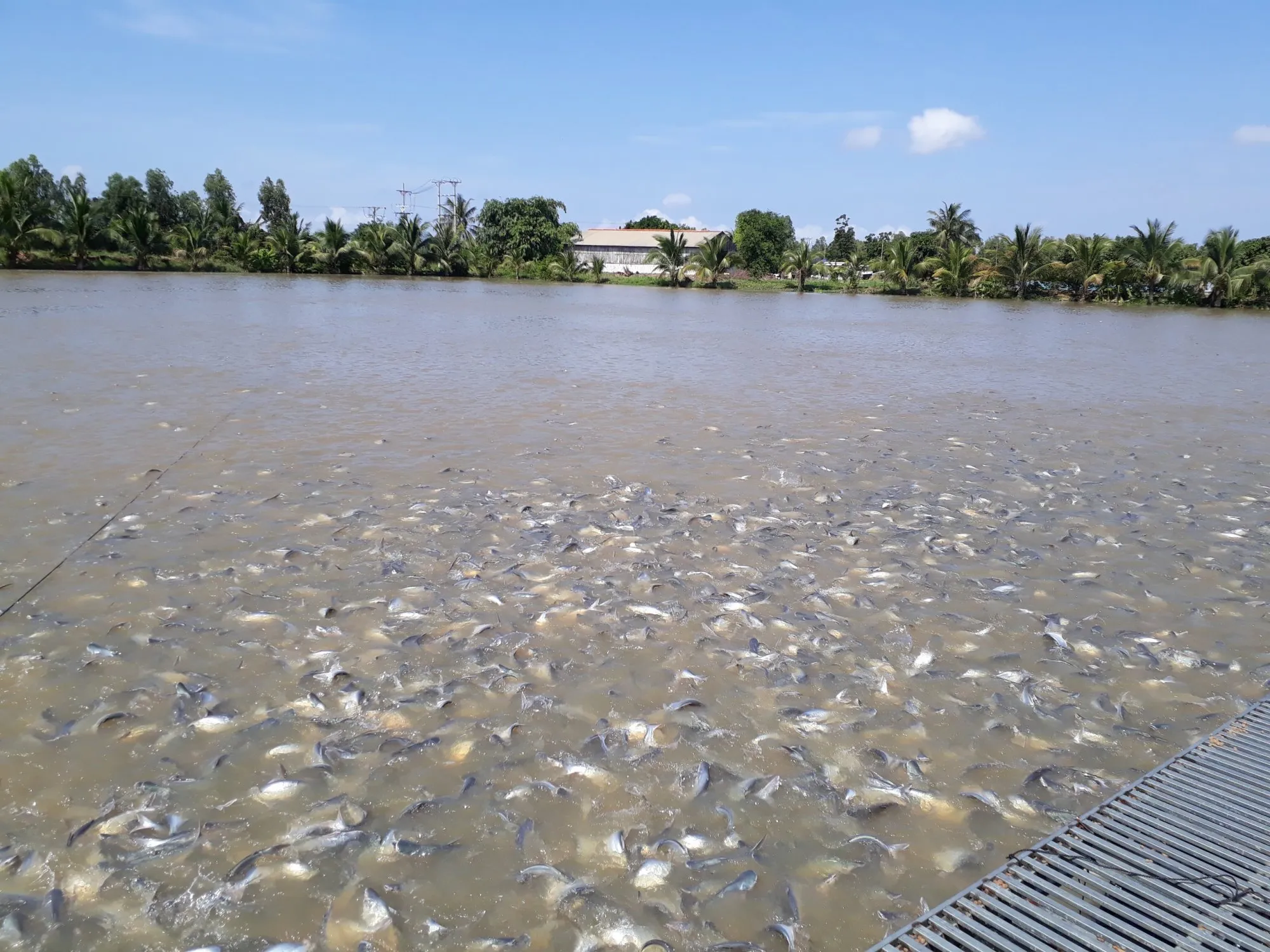
Eutrophication occurs when nutrient concentrations increase in aquaculture systems due to frequent feeding and fish waste, which promotes the excessive growth of phytoplankton (algal blooms).
In some aquaculture systems, phytoplankton serve as the base of the food web, supporting critical nutrient cycling processes while helping to increase productivity.
However, some species produce toxins and unfavorable compounds that cause long-term stress negatively impacting fish health and production. Unlike natural lake systems, where there can be frequent changes in nutrient inflow and outflow, aquaculture ponds are relatively closed systems with most nutrient cycling occurring between algae and bacteria. Therefore, daily aeration of ponds is often required to maintain appropriate water quality.
Researchers have explored chemical or physical methods to control algal blooms in aquaculture ponds, including filtration, nutrient limitation, or the use of algaecides. Currently, the only algaecides approved for use in catfish farming in the United States are copper sulfate (CuSO4) and diuron in special cases. Although both algaecides are effective in controlling algal blooms in ponds, negative outcomes associated with these chemicals persist, including excessive zooplankton mortality, chemical-resistant phytoplankton, and only short-term treatment efficacy. Therefore, pursuing alternative methods for controlling algal blooms in aquaculture can support effective and long-term management.
Although most previous studies suggested that zooplankton cannot control cyanobacteria due to their size, abundance, and biochemical characteristics, recently, cladoceran zooplankton (i.e., Daphnia and Bosmina) have been shown to be capable of controlling and consuming phytoplankton, particularly effective against cyanobacteria, including toxic strains, helping to improve water clarity in eutrophic systems.
A hypothesis has been put forward that if zooplankton density can be increased (by reducing fish predation on zooplankton), it will lead to lower phytoplankton levels and improved water quality. This study was conducted to examine zooplankton and phytoplankton communities, cyanobacterial toxins, and nutrients in nine channel catfish aquaculture ponds in western Alabama, USA.
Analysis results demonstrated that abundant zooplankton in nutrient-rich channel catfish ponds can significantly reduce phytoplankton levels, including cyanobacteria, thereby suppressing algal blooms. Ponds maintained high zooplankton biomass even when pond temperatures exceeded 300C, and concurrently, the impact of zooplankton on phytoplankton was most evident, especially during the winter months (November - April). When phytoplankton growth slowed, zooplankton gained an adaptive advantage, promoting increased survival.
However, a point to note is that ammonia nitrogen levels can be higher in ponds with high zooplankton densities, which could lead to ammonia toxicity in fish. Some suggest that preventive methods for high ammonia include reducing feed, avoiding overfeeding, and increasing aeration, but each farmer should make decisions based on the health and productivity of their ponds.
Additionally, it is interesting to note that Daphnia and Bosmina are small, freshwater crustaceans belonging to the order Cladocera, commonly known as "water fleas" or bo bo. This common name not only refers to the shape and size of Moina but also describes their short, jerky swimming movements in the water. The families Daphnia, Bosmina, and Moina are closely related. They appear worldwide and are collectively referred to as Daphnia. Therefore, Daphnia, Bosmina, and Moina are ideal food for newly hatched fish of most freshwater species that can consume small Daphnia, Bosmina, and Moina as initial feed. When culturing them in ponds as fish feed, it is also necessary to determine an appropriate feeding ratio, because Daphnia, Bosmina, and Moina can quickly grow to a size too large for fish to eat. Furthermore, when Daphnia, Bosmina, and Moina grow larger and their density becomes too high, their "jumping" movements can potentially harm fry.
Overall, this study highlights the interesting dynamics between zooplankton and phytoplankton in eutrophic aquaculture ponds, suggesting a sustainable tool for algal bloom management. Diligent implementation of management practices will lead to significant improvements in water quality.
Source: Belfiore, A. P., Buley, R. P., Fernandez-Figueroa, E. G., Gladfelter, M. F., & Wilson.