Introduction
Proactive monitoring for early detection of pathogens in ponds. This is the most effective way to implement immediate and appropriate interventions to control pathogen spread and minimize negative impacts in Penaeus vannamei farming.
OIE List of Crustacean Diseases 2019
- Acute Hepatopancreatic Necrosis Disease (AHPND)
- Infection with Aphanomyces astaci
- Infection with Hepatobacter penaei
- Hypodermal and Hematopoietic Necrosis Virus Infection
- Infectious Myonecrosis Virus Infection
- Macrobrachium rosenbergii Virus Infection
- Taura Syndrome Virus Infection
- White Spot Syndrome Virus (WSSV) Infection
- Yellow Head Virus Infection
Shrimp Aquaculture Production in the Philippines
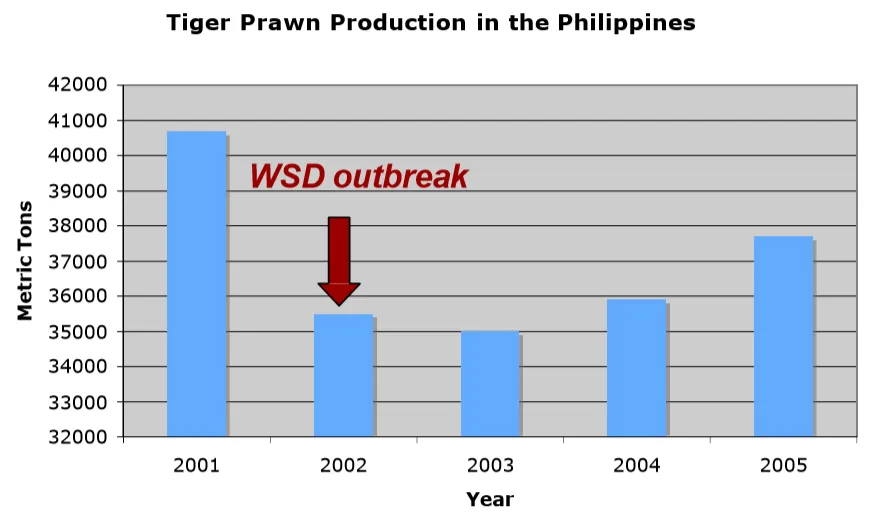
Farmed P. monodon is the Philippines' main export commodity with a production of 50,000 tons in 2015, valued at approximately 300 million USD

Total demand for P. vannamei estimated at approximately 400 million per month
WSSV outbreak in P. monodon, Quezon province (2005)

Production Decrease due to WSSV Outbreak
Production in 2001: 40,700 tons
Production in 2002: 35,300 tons
Production decrease (2001 to 2002): 5,400 tons, equivalent to nearly 1.7 billion
Source: Bureau of Agricultural Research, 2006
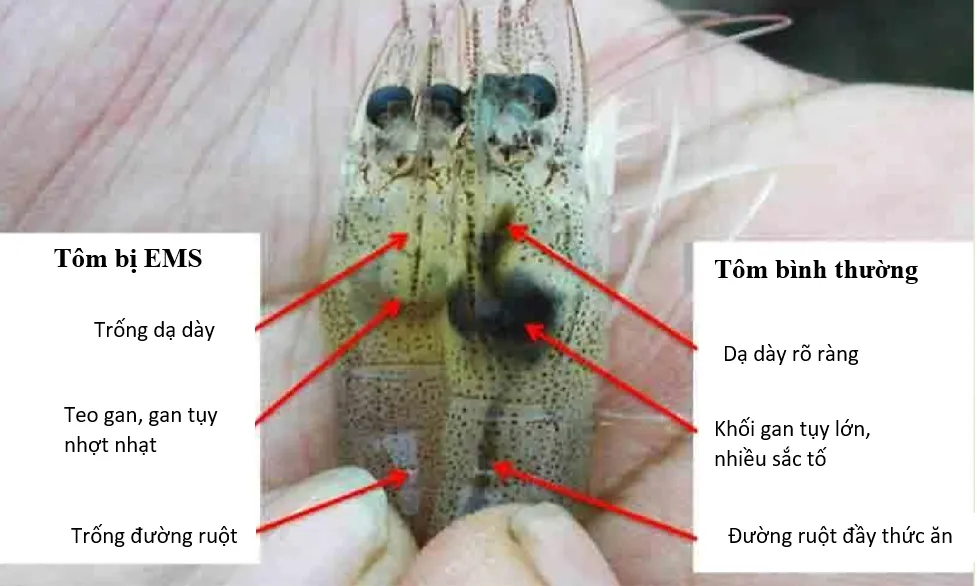
Overall Signs of EMS
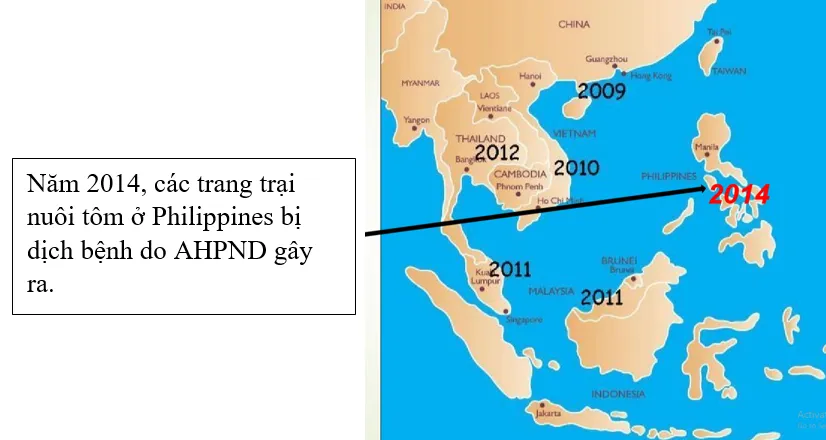
AHPND Pandemic Across Asia
Key Factors for Success and Sustainable Operations
Strict quality control and proper handling:
- Lined ponds
- Pond preparation
- Green water culture system and probiotics
- Culture water
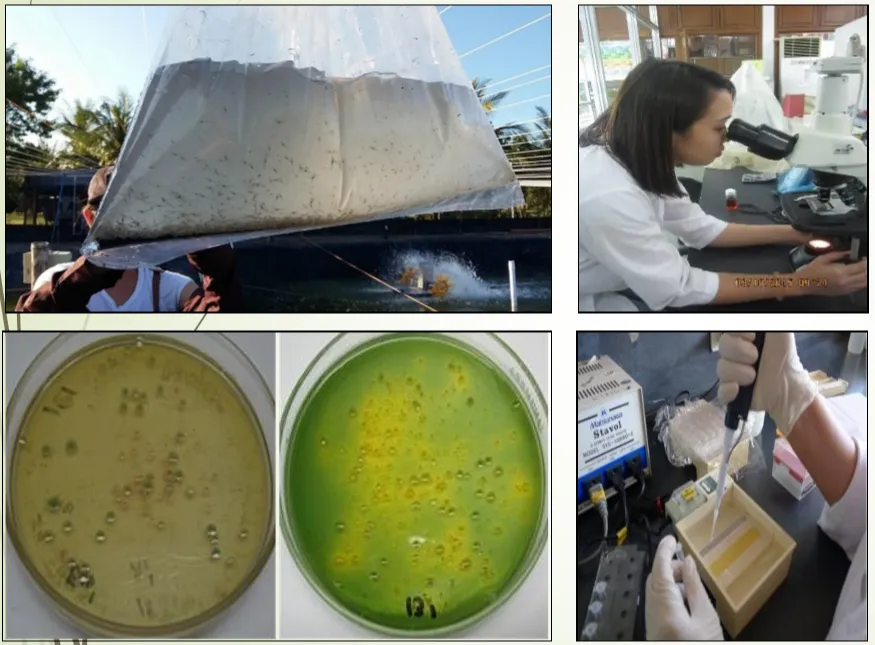
- Stocking disease-free postlarvae
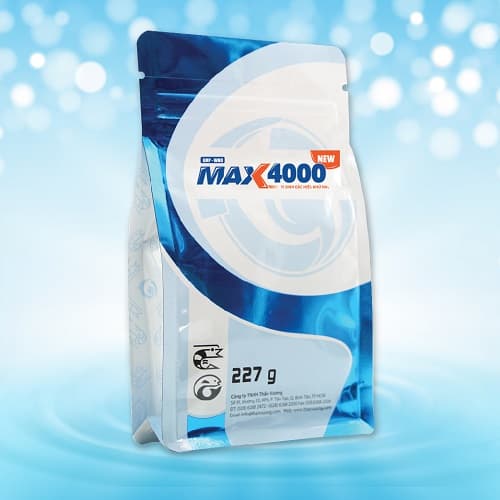
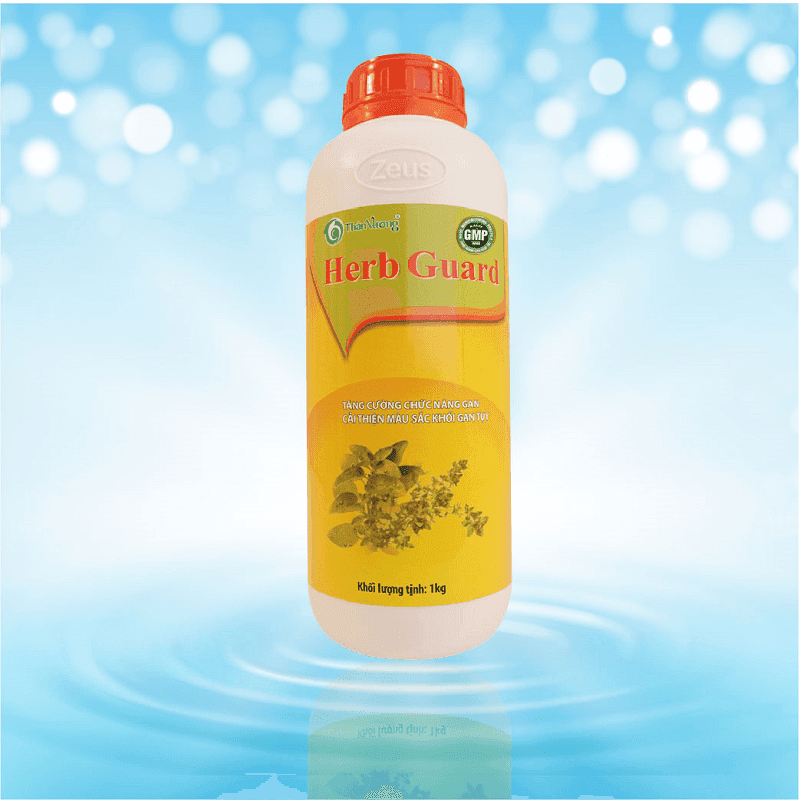
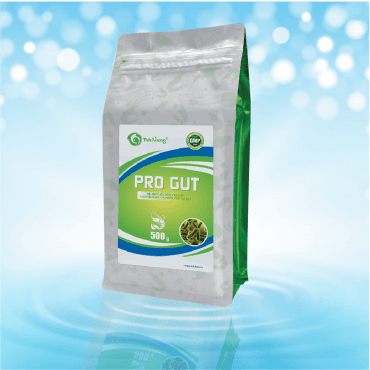
- Feed supplements
- Water management
- Biosecurity
- Shrimp health management
Appropriate screening, selection, and handling of postlarvae
Postlarvae must come from Specific Pathogen-Free (SPF) broodstock.
AHPND PCR analysis for shrimp once a week.
WSSV PCR analysis for shrimp once every two weeks.
Bacterial analysis of water twice a week
Bacterial analysis of shrimp once a week.
Lined Ponds
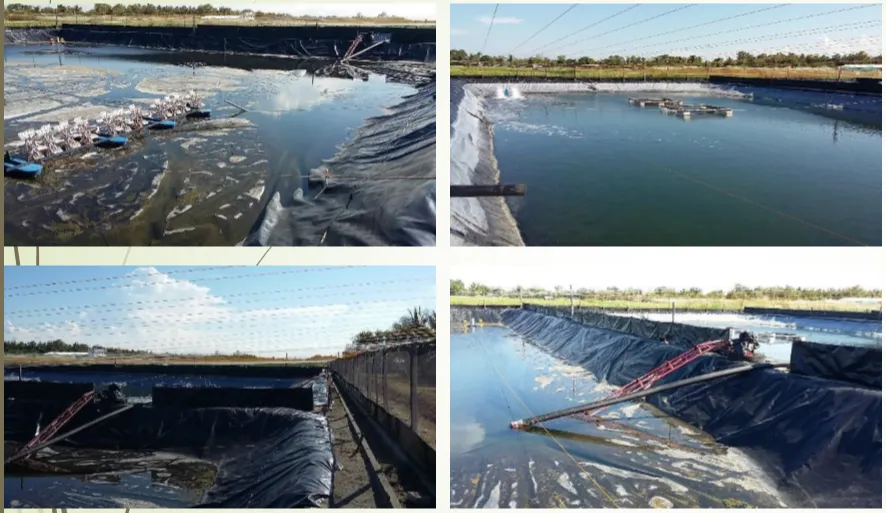
• Prevents cross-contamination of various pathogens
• Avoids water level reduction due to leakage
• Increases the number of stockings per year.
Pond Preparation
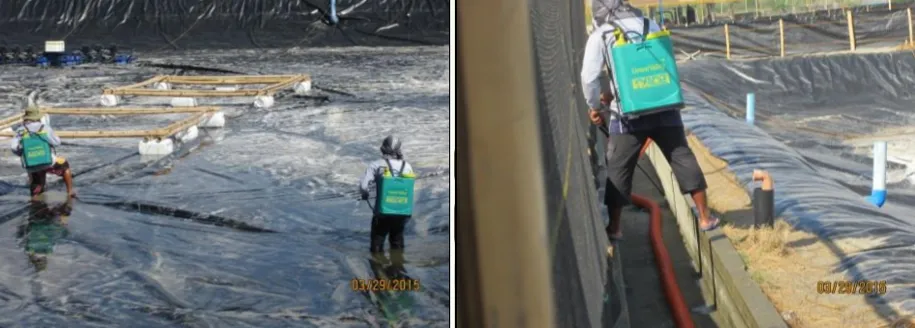
• Pond equipment and liners are disinfected with chlorine (20 - 30 ppm) or commercial disinfectants
• Water pumped into the pond must be disinfected with chlorine (20-30 ppm)
• Disinfected seawater is treated for 3 days with aeration before being used as culture water in the ponds.
Pond disinfection
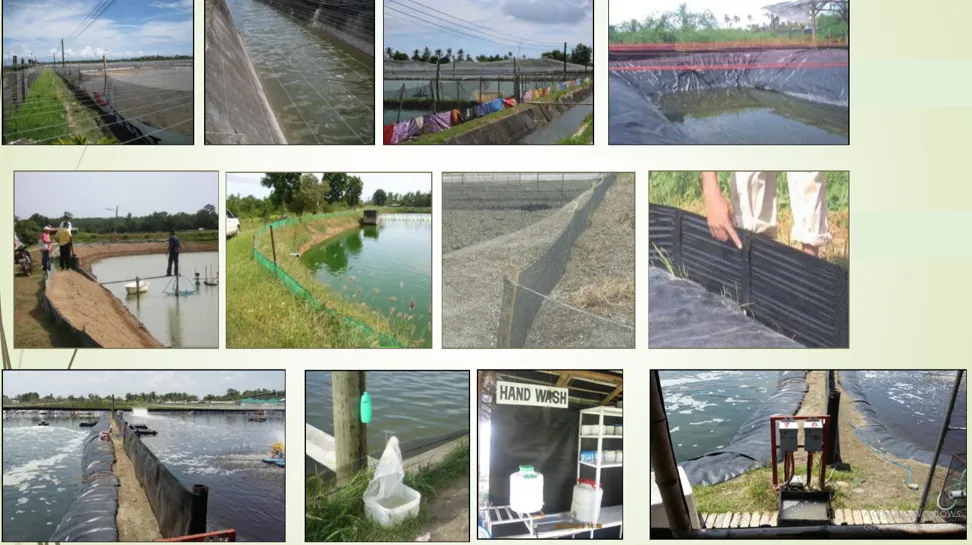
Bird and crab fences, sanitation area – hand and foot disinfection
Water Source
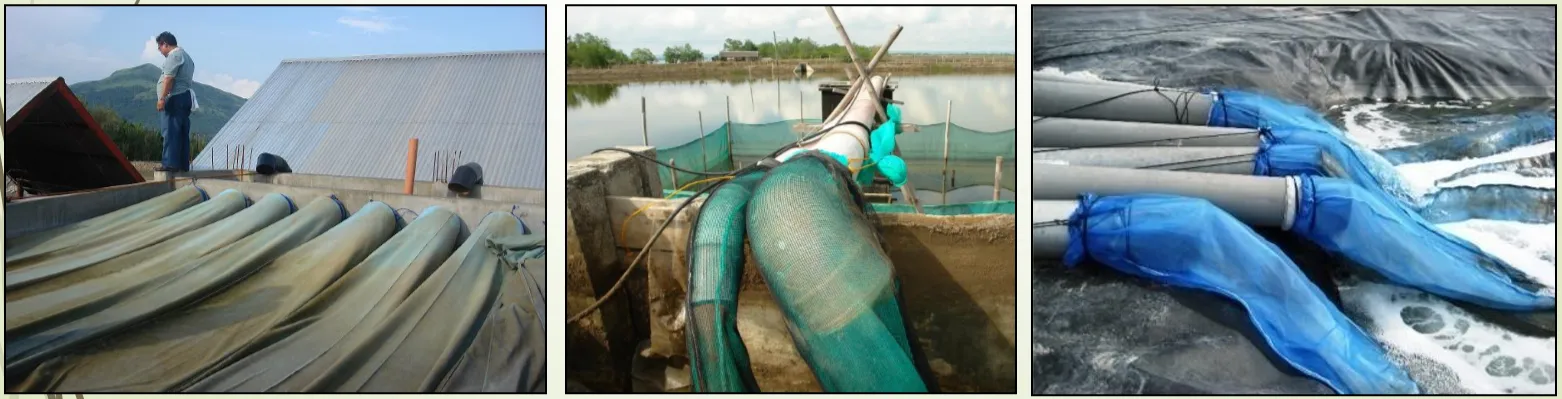
• Disinfect pond water (chlorine at 20-30 ppm)
• Bacterial analysis
• Filter water using filter bags with mesh sizes of 100-250 μm
Green Water Treatment
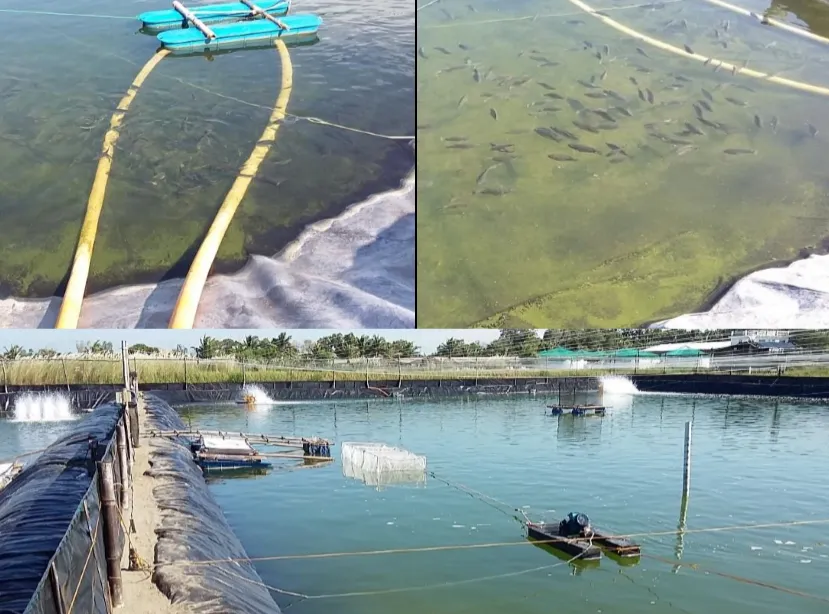
Use disinfected water from treatment ponds
• Treat tilapia with formalin before stocking
• Tilapia at 2 - 3 tons/ha to minimize the growth of pathogenic Vibrio bacteria
• Monitor phytoplankton, bacterial tests (luminous bacteria count, V. parahaemolyticus, Total Vibrio).
• Treated water will be used for shrimp farming.
Stocking
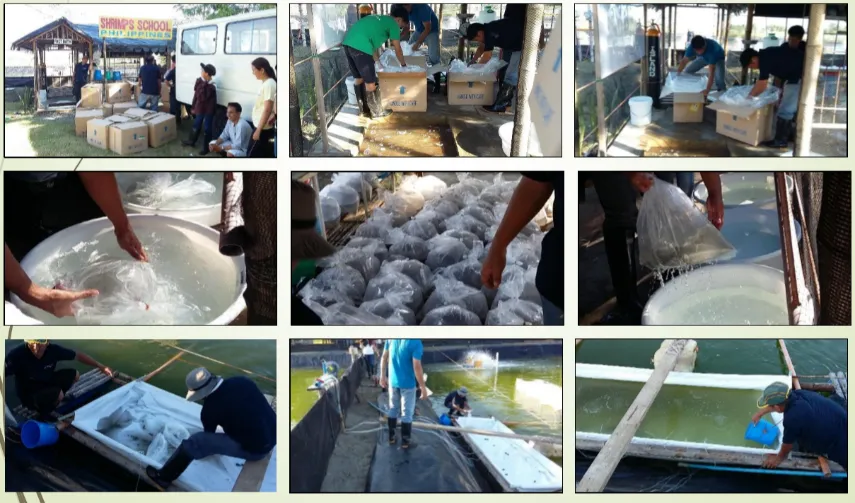
Upon arrival, postlarvae bags are disinfected and rinsed with running water before stocking.
Feeding Management
• Supplement feed with probiotics, immunostimulants, and vitamins for better digestion and gut health.
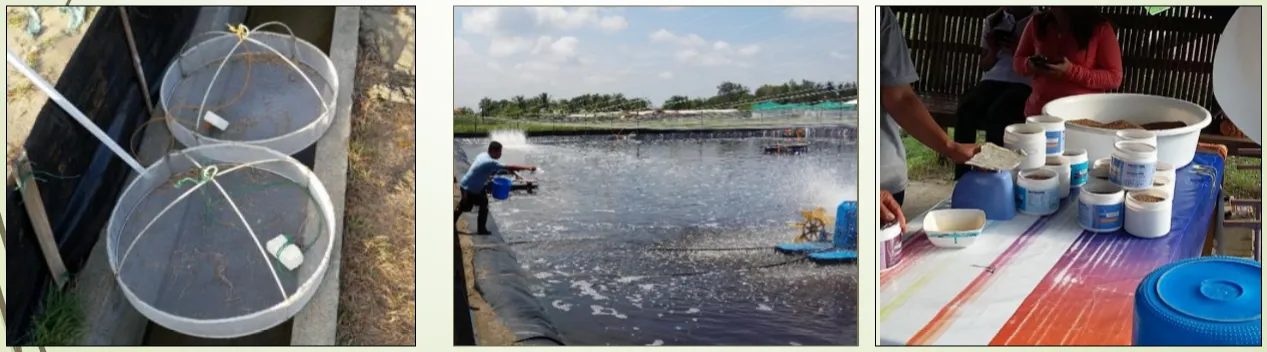
Water Management
Culture water will be sourced from treated green water ponds.
• Monitor physicochemical parameters, phytoplankton count, and bacterial load twice a week (luminous bacteria count, V. parahaemolyticus, Total Vibrio).
• Periodically apply organic disinfectants to reduce bacterial load, and trace elements (5-10 kg/ha) to stabilize algae and microbial populations.
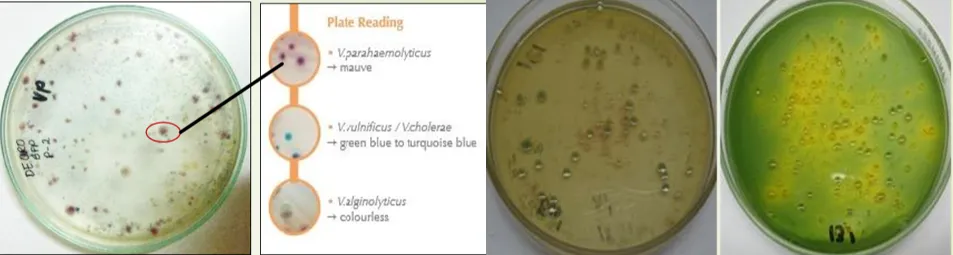
WSSV screening in grow-out ponds by PCR (Kimura et al., 1996)
Pond sampling once every two weeks (Proactive Monitoring)
AHPND screening in grow-out ponds by PCR (Dangtip S. et al., 2015)
Pond sampling once a week (Proactive Monitoring)
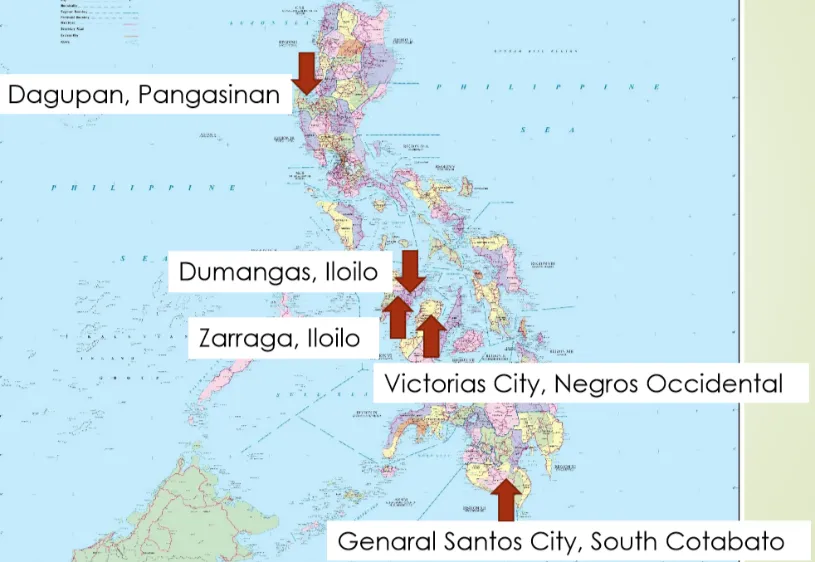
Various locations where the monitoring scheme is implemented