Recirculating aquaculture systems (RAS) use biofilters to keep water clear and clean, but the risk of pathogen contamination remains. For a system to function well, you need a safe and effective disinfectant to kill unwanted pathogens without disrupting the beneficial bacterial flora of the biofilter.
In fish farming, we see three main production methods: open water systems, flow-through farm systems, and closed-loop systems. Closed systems are primarily land-based (onshore) and dominated by recirculating aquaculture systems (RAS).
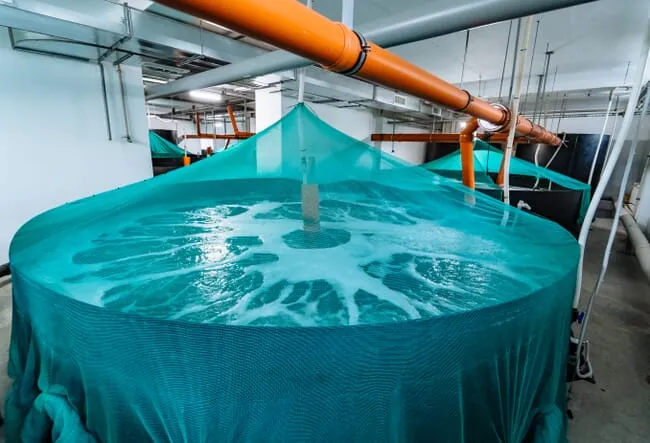
RAS is increasingly being adopted as an efficient way to produce high-quality fish protein and reduce pressure on the environment and water quality. Other benefits more related to the system's production include: better quality control and biosecurity, less waste discharge, shorter production cycles, optimal feeding, better fish health, and easier harvesting.
A complex ecosystem comes with challenges
As a uniquely designed ecosystem, RAS often uses biofilters containing several types of bacteria to control ammonia levels by removing nitrogenous waste from excess animal waste and undigested feed. Nitrifying biofilters are a critical component of most RAS and are a key determinant of operational success. Research shows that RAS biofilters contain complex microbial communities whose composition can be affected (Bartelme et al., 2017).
Although RAS has many advantages, this complex system also comes with challenges regarding the introduction of external pathogens if not well managed. If water quality and biofilters do not function well, it can directly affect fish health and pathogen development. Ammonia levels of 0.2 mg/L can already cause gill irritation in fish. Therefore, the application of water disinfectants to support biofilters is recommended.
RAS requires a safe, mild, and effective disinfectant
Fish producers worldwide are using various disinfection protocols in RAS. But are these different water disinfectants compatible with biofilters? You simply don't want to use a disinfectant that is harmful to the beneficial bacteria in the biofilter. This can disrupt the biofilter and thus lead to more problems and financial losses. Therefore, for optimal successful operation in RAS aquaculture, choosing a water treatment product that is compatible with biofilters is crucial. Chloramine - T is an active ingredient available globally. Using a disinfectant that does not harm beneficial bacterial species in the biofilter is crucial for maintaining water quality and fish health.
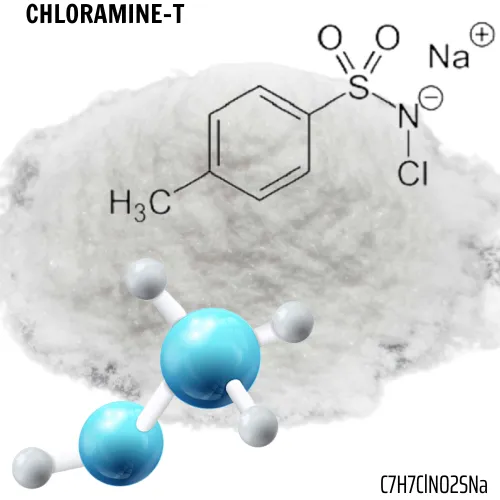
Chloramine - T is a fast-acting disinfectant (oxidizing agent) that has been specifically developed to be potent and safe at the same time. It eliminates all major pathogens in a single application, while being safe for fish, humans, and the environment. It is broad-spectrum, highly effective, and compatible with biofilters, making it a preferred choice for use in RAS aquaculture. Furthermore, this product is non-corrosive, biodegradable, and does not lead to antibiotic resistance.
Studies show the compatibility of Chloramine - T with biofilters
In a study conducted by Virginia Polytechnic Institute in the USA, Chloramine - T was tested for its compatibility with biofilters. The study showed that even at a dose of 20ppm Chloramine - T, nitrate formation (a measure of biofilter quality) was maintained.
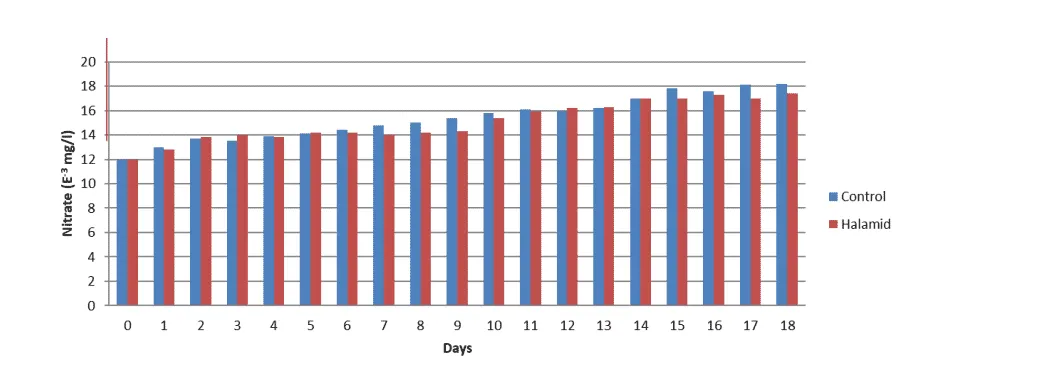
Biofilter activity (measured by nitrate formation rate) is not affected over time when using Chloramine - T
Towards more sustainable aquaculture growth
Fish production is increasing, and this leads to more RAS aquaculture to efficiently and environmentally friendly produce quality products. To support this, we need sustainable, effective, and safe biosecurity measures. The combination of the product's mode of action (oxidation) and application (spreading over time to achieve the highest concentration at the biofilter) makes Chloramine - T ideal for use in RAS and does not affect the biofilter, as shown in this study. Using a disinfectant that does not harm beneficial bacterial species in the biofilter is crucial for maintaining water quality and fish health.
Source: The fish site