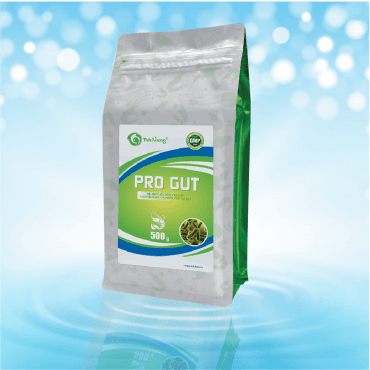
In the past few years, many have come to know that improving the growth performance and survival rate of whiteleg shrimp (Litopenaeus vannamei) relies on supplementing essential nutrients beyond the basic nutritional regimen. There are several functional products available that can contribute to such goals, including growth stimulants, probiotics, prebiotics, immunomodulators, phytogenics, and organic acids to target gut health, stress, and disease resistance in aquatic organisms.
Nucleotides are immunomodulatory compounds, the building blocks of DNA and RNA, and are crucial for many physiological processes in living organisms. In whiteleg shrimp, the use of nucleotides has been studied and reported because they can be supplied through feed and lead to enhanced disease resistance and growth performance throughout the culture period. Dietary nucleotide supplementation has also been shown to improve biological functions and provide several health benefits in other animal species, including immune modulation, resistance to infection, and enhanced growth performance.
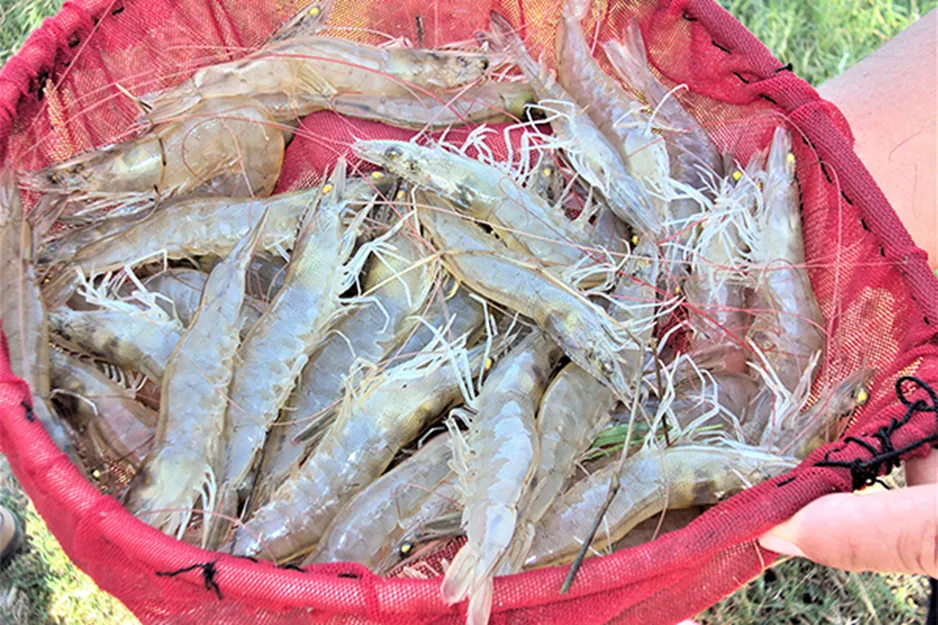 Shrimp fed nucleotide diets showed better performance and profitability and significantly higher survival rates when challenged with Vibrio harveyi. Photo by Darryl Jory.
Results from a recent study by Dr. Romi Novriadi Oriol Roigé Sergi Segarra in Indonesia indicate that the use of dietary nucleotide supplementation improved growth performance and profitability in whiteleg shrimp and enhanced disease resistance. More specifically, in shrimp receiving diets where fishmeal was partially replaced by plant protein sources, nucleotide supplementation led to better harvest weight, percentage weight gain, feed conversion ratio, average daily growth, and higher economic profitability, as well as healthier hepatopancreas and increased survival rates when challenged with V. harveyi. On the other hand, in whiteleg shrimp on diets with regular fishmeal levels, nucleotide supplementation allowed for higher disease resistance without compromising performance, immune response, and profitability, and did not alter sensory parameters.
The main positive impact of nucleotide supplementation in whiteleg shrimp recorded in the above study is the improvement in growth performance. As the trend of reducing fishmeal use continues, this beneficial effect will support the incorporation of nucleotides in whiteleg shrimp farming.
The role of nucleotides and their metabolites in aquatic organisms has been studied for over two decades, and the positive effects of various nucleotide products on growth and feed utilization efficiency in fish and crustaceans have been clearly demonstrated. However, there are still very few reports explaining how nucleotides work or how they enhance shrimp growth performance. Some previous authors have argued that the palatability properties of nucleotides promote rapid feed intake, preventing the leaching of nutrients, allowing shrimp to grow quickly, especially by supporting growth performance, from the complete nutritional properties present in the diet.
Nucleotides regulate immune responses. Additionally, comparable values were observed for other nutritional profiles, including total fat, moisture, carbohydrates, and crude fiber content. The higher protein levels in nucleotide-supplemented groups could be attributed to the ability of dietary nucleotides to influence protein biosynthesis by modulating intracellular nucleotide pools. This is closely related to the role of nucleotides as building blocks of DNA, which is transcribed and translated to form proteins in the shrimp's body.
Nucleotides are immunomodulatory compounds, the building blocks of DNA and RNA, playing a very important role in many physiological processes in living organisms.
Nucleotide supplementation has the potential to partially prevent the development of distinct hepatopancreatic histological changes observed in shrimp fed diets containing 6% and 8% fishmeal. The benefits of dietary nucleotide supplementation may be due to their low molecular weight, which supports optimal digestion and absorption in the hepatopancreas.
Reports on the sensory evaluation of shrimp reared with functional or alternative ingredients are rare. Feed has a better texture and more palatable flavor when nucleotides are supplemented. Therefore, it is possible that the use of nucleotides in the diet can positively influence the sensory attributes of shrimp when fishmeal is reduced, which otherwise would mean a reduction in feed palatability.
Profitability is a critical parameter in shrimp production, and feed-related costs are a major variable in the overall production expenses. Overall, nucleotide supplementation increases profitability for farmers. More specifically, adding nucleotides to shrimp diets with reduced fishmeal content (lower feed protein) will reduce costs more significantly than using feed with high fishmeal content. The disease resistance of shrimp is also higher when using low-protein feed supplemented with nucleotides.
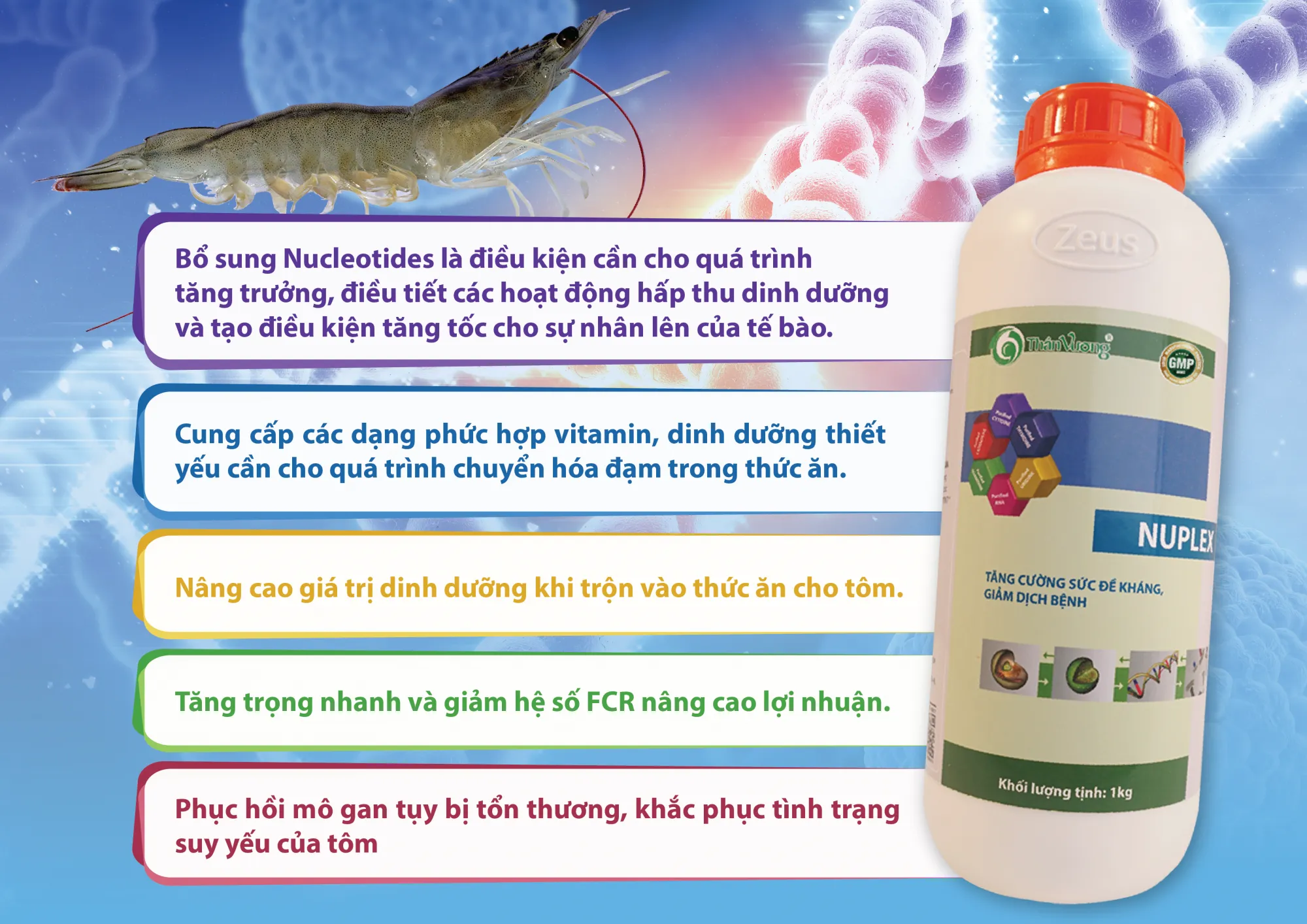
NUPLEX – a product by Thần Vương with ingredients including Nucleotides blended with other vitamins and amino acids. NUPLEX brings the benefits of nucleotide supplementation as analyzed above: increased growth performance, immunity – disease resistance, effective support for feed intake and digestion, and ultimately reduced farming costs.
Hoàng Tấn Phát