In Ecuadorian aquaculture, intensified shrimp farming has emerged as a crucial strategy to meet increasing demand. However, there are significant challenges, primarily concerning health risks. In this context, the presence of pathogenic bacteria causing losses during cultivation has been identified. Notably, Vibrio parahaemolyticus is associated with Acute Hepatopancreatic Necrosis Disease (AHPND). This study evaluates the efficacy of Bacteriophage as a preventive and therapeutic tool in recirculating aquaculture farms, to reduce the presence of V. parahaemolyticus and its impact on shrimp health and production.
Introduction
The intensification of aquaculture production in systems brings environmental impacts that require thorough evaluation and effective mitigation strategies. Any initiative must incorporate measures to minimize impacts and ensure long-term sustainability. In this plan, eutrophication is the most common and perhaps the most underestimated, often leading to an increase in toxic substances or a significant increase in biological substrates that can promote the growth of opportunistic pathogenic bacterial species.
Currently, the most opportunistic pathogenic bacterial group in shrimp farming is Vibrio sp. Among the most important species associated with significant losses in larvae, post-larvae, and adult shrimp are: V. parahaemolyticus, V. vulnificus, V. harveyii, V. anguillarum, V. splendidus, V. alginolyticus (Chatterjee & Haldar, 2012).
Vibrio species are opportunistic; they can benefit from nursery and grow-out pond conditions and become hosts from the beginning of the cycle (Xiao et al., 2017). They are capable of causing harm at any developmental stage. Currently, Acute Hepatopancreatic Necrosis Disease (AHPND) (Saavedra-Olivos et al., 2018), leads to mass mortality in shrimp in China, Vietnam, Thailand, and the Philippines. In Mexico, Soto-Rodríguez et al. (2015) identified V. parahaemolyticus as the main causative agent of AHPND.
Recently, bacteriophage solutions have been introduced into aquaculture as an alternative for the prevention and treatment of bacterial infections. As AHPND has become increasingly important in recent years, protocols for using bacteriophages have been developed (Han, Tang & Corbin, 2018). Bacteriophages are viruses that infect and replicate within bacteria. They are characterized by their specificity, self-replication, and self-limitation (Kasman, 2022). The lytic effect of bacteriophages on bacterial populations is significant, eliminating bacteria quickly and efficiently.
In Ecuador, significant efforts have been made focusing on identifying effective and safe conditions for the application of bacteriophages in aquaculture. This approach considers microbiological factors related to the target species, including the type and concentration of bacterial strains, the health status of cultured organisms, and the prevalence of bacteria in the pond. Previous studies have highlighted the need for using a combination of bacteriophages to improve treatment success rates against V. parahaemolyticus (Gonzales-Gomez et al., 2023). Aguilera et al. (2023) demonstrated the efficacy of using a combination of 18 specific bacteriophages to control V. parahaemolyticus in commercial aquaculture operations in Ecuador.
Methods
Isolation and Identification of Vibrio sp and lytic bacteriophages
Based on the study by Aguilera et al., 2023, Vibrio sp and lytic bacteriophages were sourced through biological prospecting from ecosystems associated with shrimp production in Ecuador. This process involved isolating bacteria on Vibrio-specific culture media, followed by species-level identification using biochemical tests and confirmation via 16S sequencing using Oxford Nanopore technology. The activity of bacteriophages was evaluated according to the method described by Yang et al. (2020); a total of 18 bacteriophages, specific for V. parahaemolyticus, were selected with the aim of developing a cocktail of different strains, capable of covering a wide range of hosts.
Preventive Trials
A total of 11 nursery ponds were selected from recirculating farms located in the Gulf of Guayaquil. This included both land-based and island-based water exchange farms, with 6 ponds designated as the treatment group and 5 as the control group. Additionally, 22 grow-out ponds were selected at various locations, including land-based recirculating farms and island-based water exchange farms, with 15 ponds assigned to the treatment group and 7 to the control group.
In the treated ponds, the bacteriophage cocktail was administered in feed at a concentration of 9 ml/kg. This application was carried out throughout the nursery cycle, with an average duration of approximately 20 days. Whereas for grow-out ponds, the treatment was performed during the first 15 days after stocking. Twice a week, random post-larvae samples were taken for examination. Analysis was performed on TCBS and CAV media. Additionally, the presence of Vibrio in the water was evaluated, and results were expressed as Colony Forming Units per gram (CFU/g).
Therapeutic Trials
Therapeutic trials were conducted at farms where Vibriosis was detected, indicated by the presence of clinical signs (with a prevalence greater than 2% in the population) and high concentrations of V. parahaemolyticus (greater than 1×10⁴ CFU/g) as assessed by microbiological analysis of hepatopancreas samples on TCBS and CAV media. A total of 12 grow-out ponds were selected from farms located in the Taura and Yaguachi areas of Guayas province. In the treated ponds, the bacteriophage cocktail was administered in feed at a dosage of 9 ml/kg for 7 consecutive days in ponds with V. parahaemolyticus concentrations exceeding 1×10⁴ CFU/g. For ponds with concentrations greater than 1×10⁵ CFU/g, the dosage was administered for 14 consecutive days.
Results and Discussion
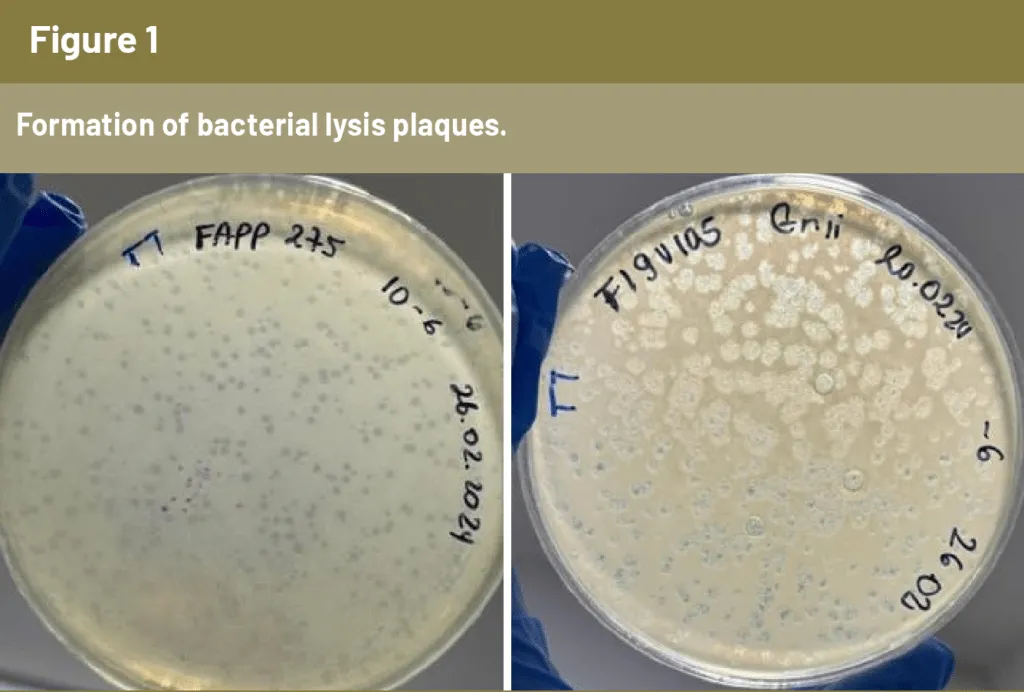
Figure 1. Bacterial proliferation
The initial infection level of Vibrio sp in the analyzed shrimp farms was high, especially in farms using recirculating water systems in the Gulf of Guayaquil. The practice of water reuse leads to the accumulation of organic matter and nutrients and can provide an ideal environment for bacterial growth.
According to the practical results of applying preventive treatment, a significant reduction in V. parahaemolyticus bacterial concentration was clearly observed in all farms.
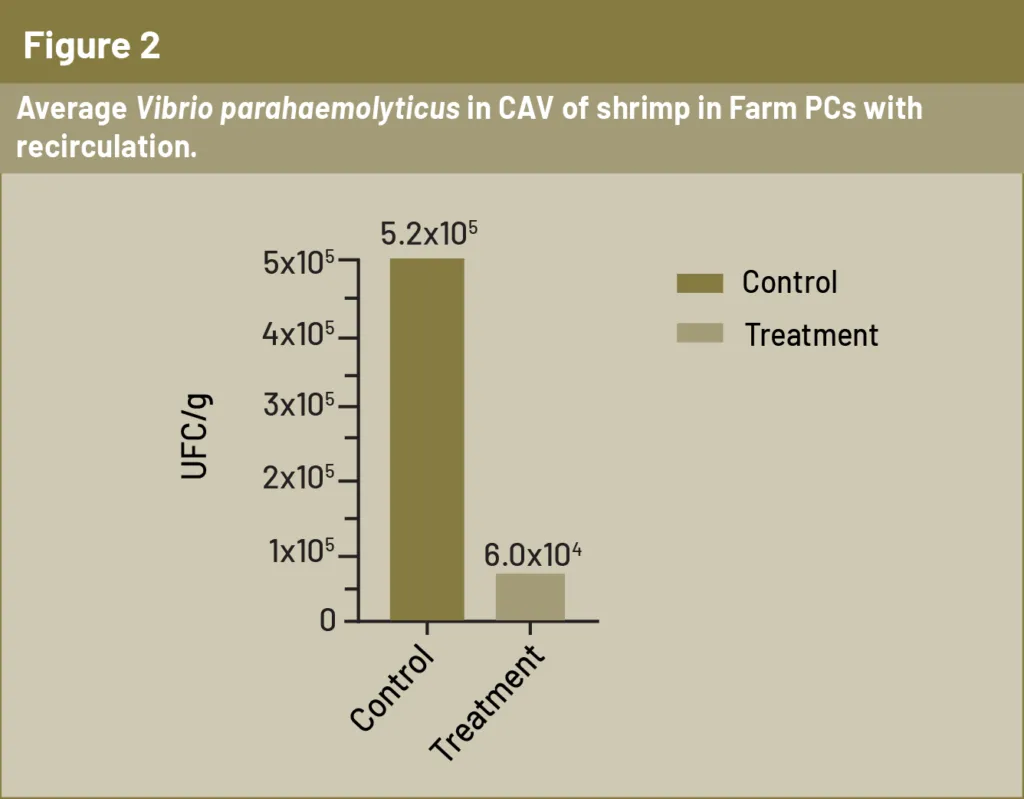
Figure 2. Average Vibrio parahaemolyticus density on CAV medium in recirculating aquaculture systems
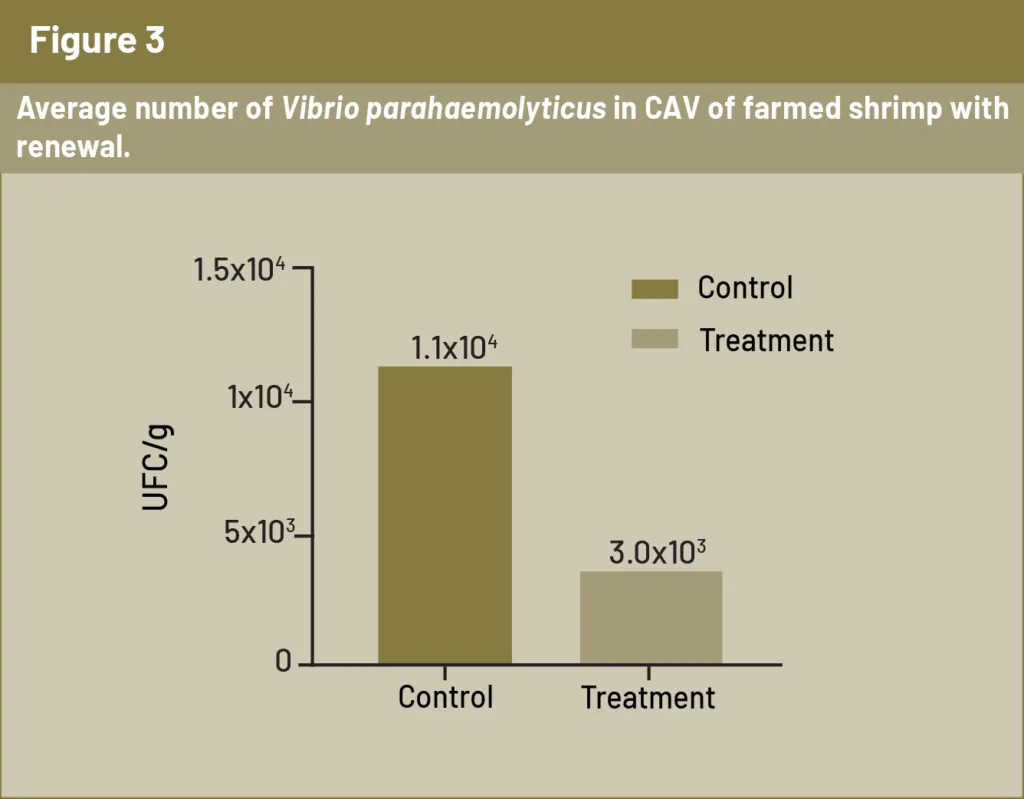
Figure 3. Average Vibrio parahaemolyticus density on CAV medium after treatment
The parameters showed a positive impact in the treated ponds. (Table 1). This impact was particularly notable in recirculating farms in the Gulf of Guayaquil.