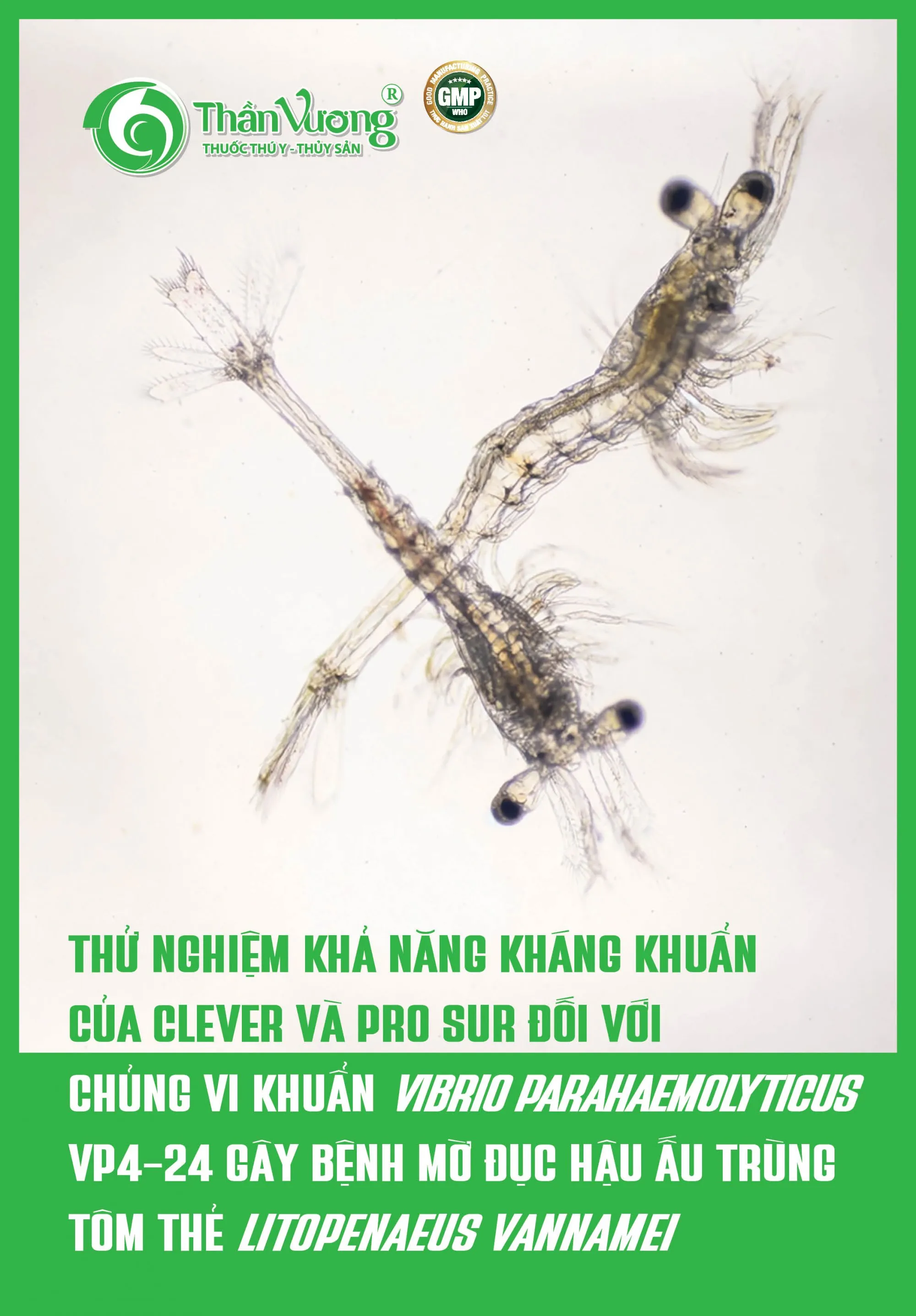
Translucent Post-larval Disease (TPD) in whiteleg shrimp (Litopenaeus vannamei) caused by the bacterial strain Vibrio parahaemolyticus Vp4-24” is one of the major challenges for the current shrimp farming industry. This study aimed to evaluate the antibacterial activity of two biological products, Clever and Pro Sur, against the V. parahaemolyticus TPD strain. The experiment was conducted using agar disc diffusion and test tube methods, employing different product concentrations to determine the zone of inhibition and colony growth. The results showed that both products exhibited good antibacterial efficacy, with Pro Sur at 1.5% concentration demonstrating a strong inhibition zone (2.3 cm). The study confirms the potential application of biological products in preventing and controlling TPD, aiming to reduce antibiotic use in aquaculture.
1. Introduction
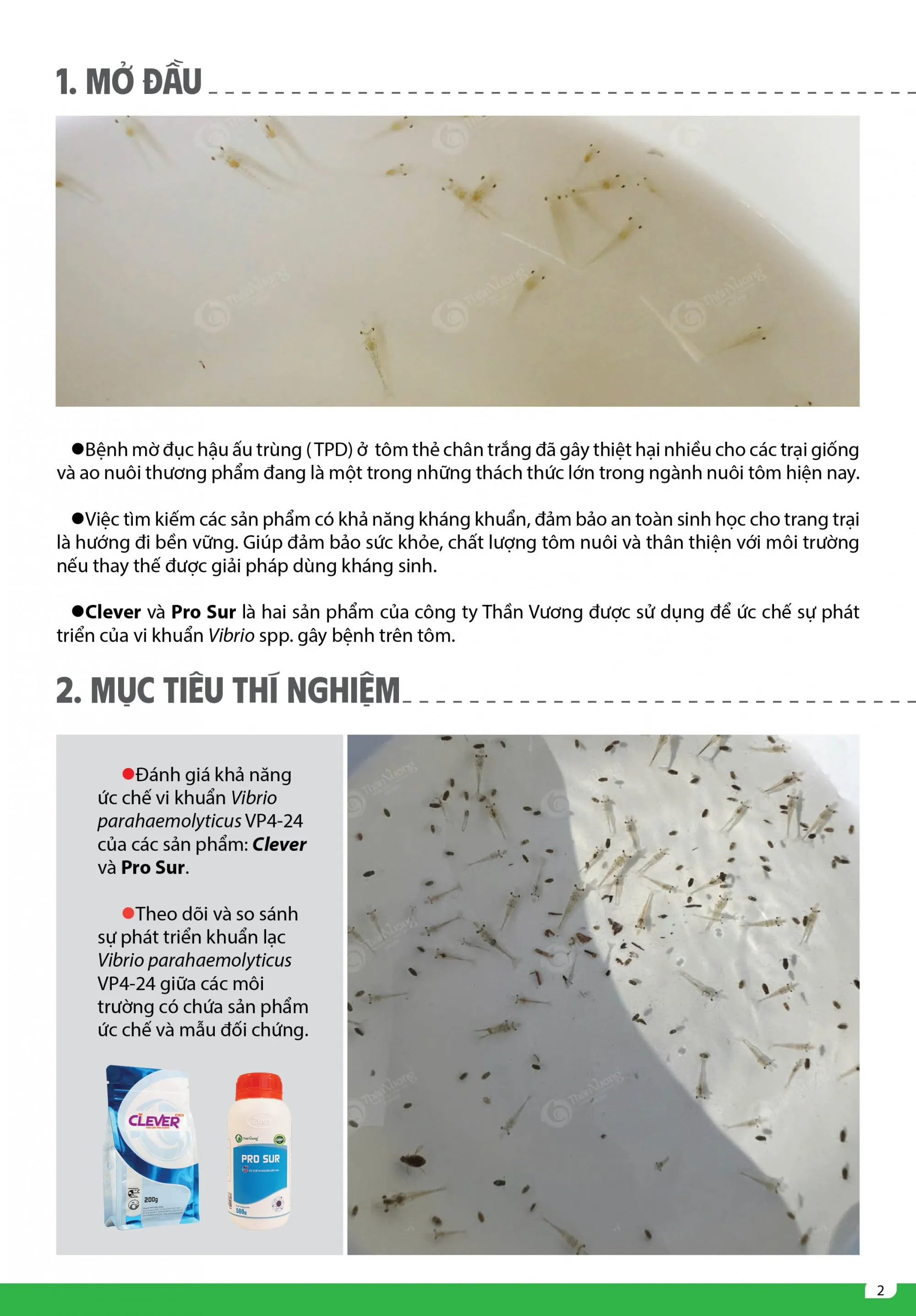
Translucent Post-larval Disease (TPD) in whiteleg shrimp (Litopenaeus vannamei) caused by the bacterial strain Vibrio parahaemolyticus Vp4-24. Amidst restrictions on antibiotic use due to concerns about residues and antibiotic resistance, biological products with antibacterial properties are becoming a sustainable trend. This study aims to evaluate the antibacterial efficacy of two commercial products, Clever and ProSur.
2. Experimental Objectives
- To evaluate the inhibitory capacity of Clever and Pro Sur products against Vibrio parahaemolyticus TPD.
- To compare colony growth between samples with products and control samples.
3. Materials and Methods
3.1. Microorganisms
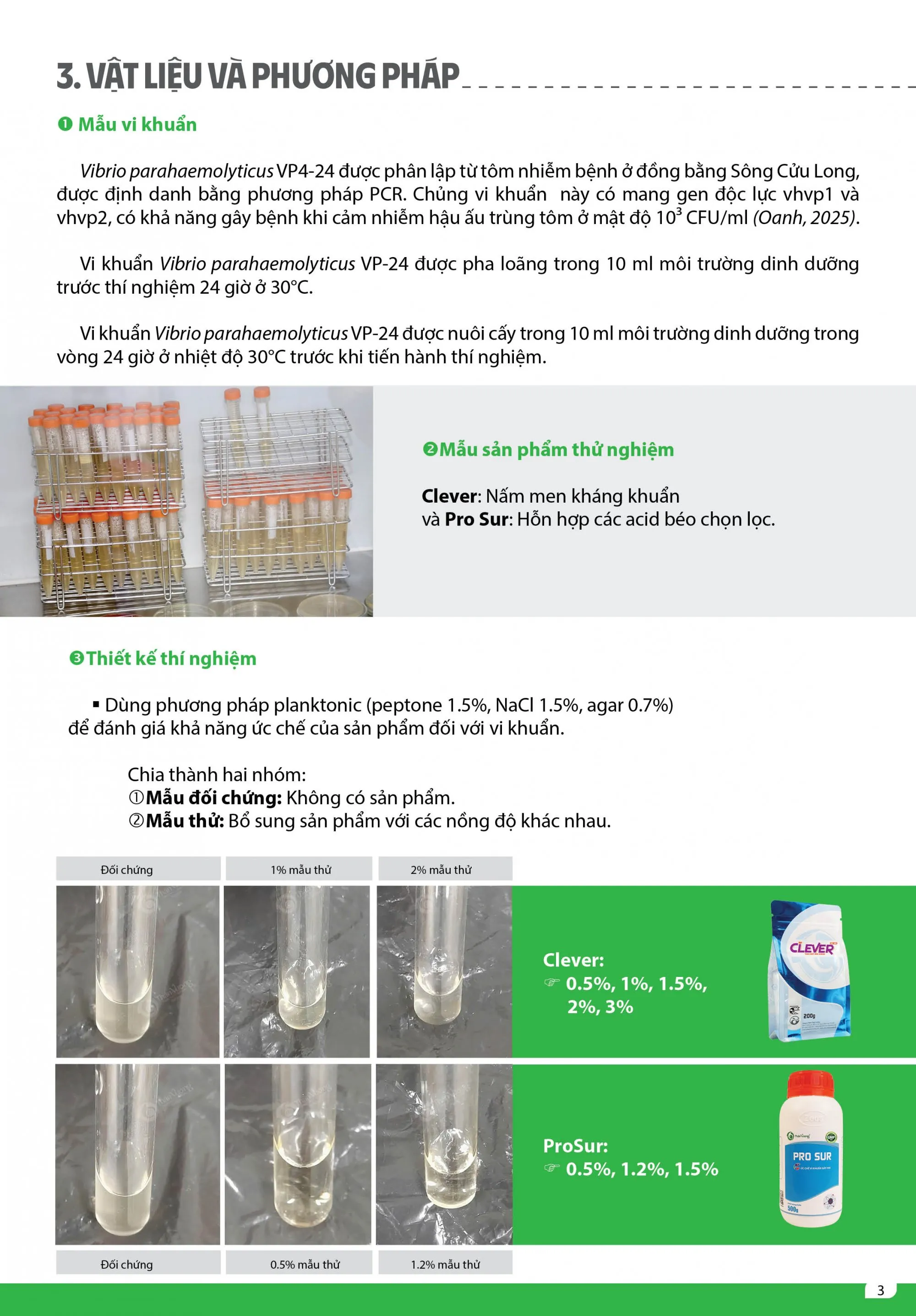
The Vibrio parahaemolyticus bacterial strain causing TPD was cultured in a nutrient medium at 30°C in 10 ml overnight.
3.2. Test Products
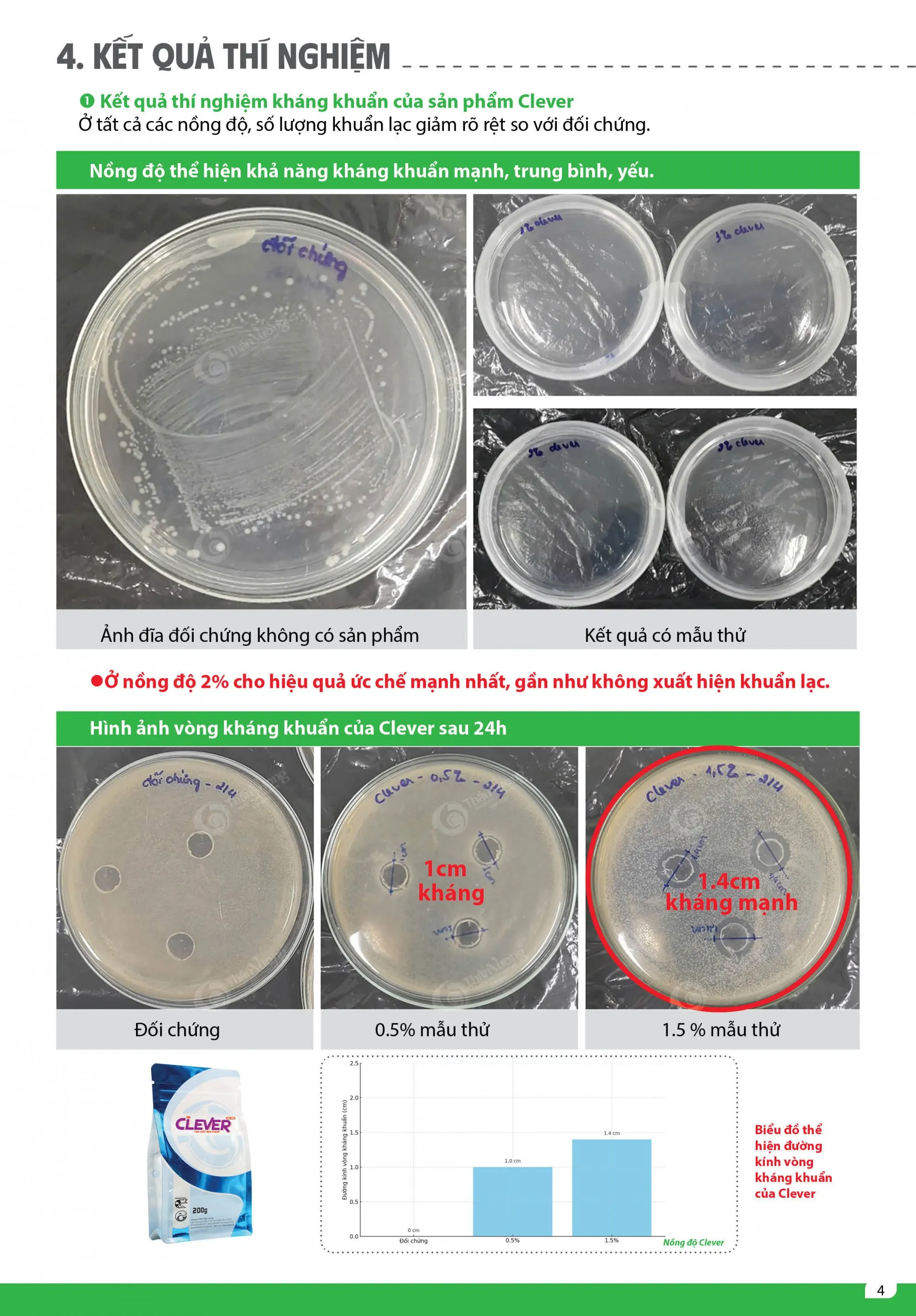
• Clever: powder form, used at concentrations: 0.5%; 1%; 1.5%; 2%
• ProSur: liquid form, used at concentrations: 0.5%; 1.2%; 1.5%
3.3. Experimental Design
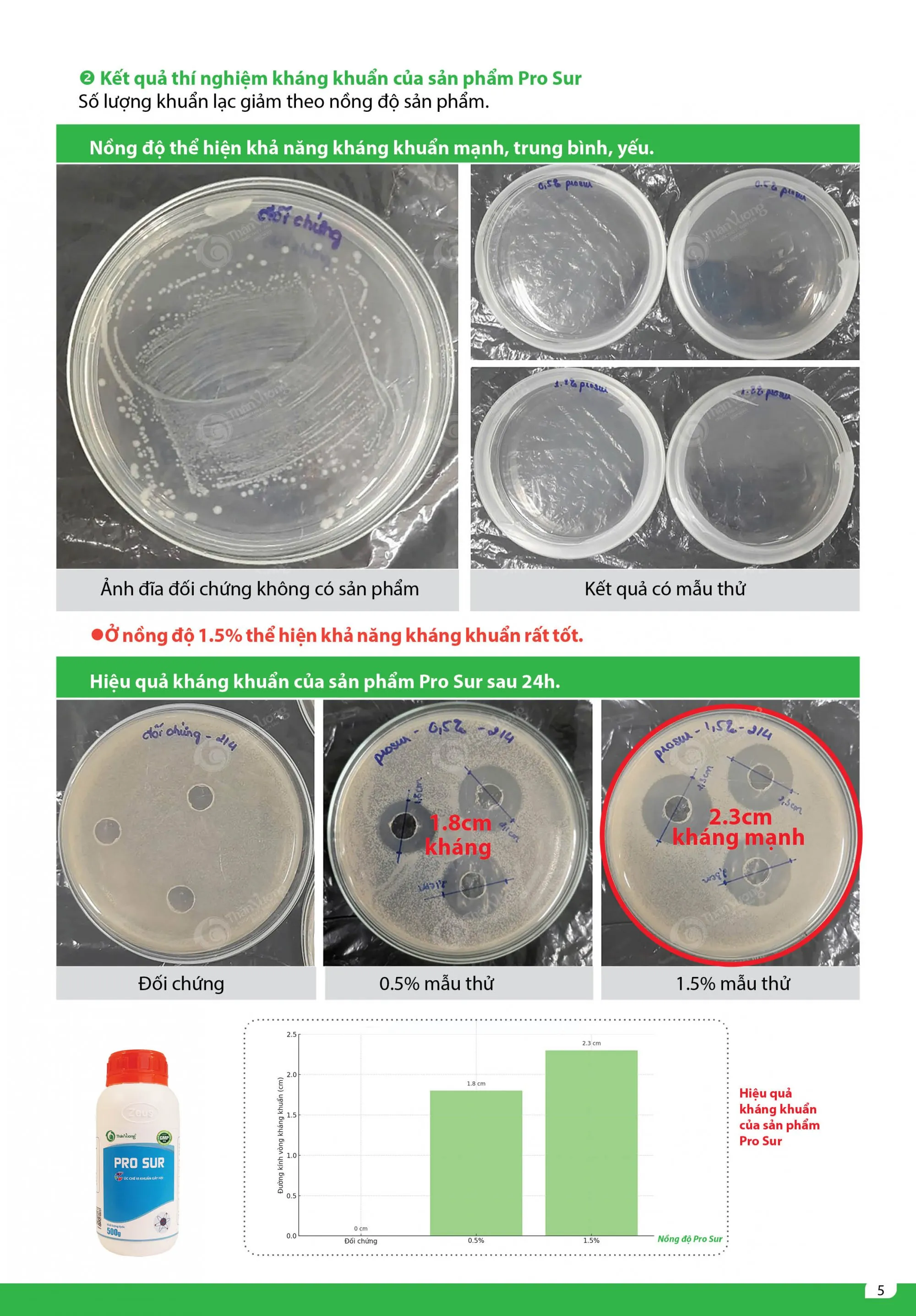
• Agar disc diffusion method: measuring the diameter of the inhibition zone
• Test tube method: observing turbidity and bacterial growth
• Control group: no product used
• Each treatment was replicated at least 3 times.
4. Experimental Results
4.1. Inhibitory Efficacy of Clever Product
• 0.5%: inhibition zone 1.0 cm
• 1.5%: inhibition zone 1.4 cm
• 2%: strong antibacterial efficacy, with almost no colony formation
4.2. Inhibitory Efficacy of ProSur Product
• 0.5%: inhibition zone 1.8 cm
• 1.5%: strong inhibition zone up to 2.3 cm
4.3. Control Comparison
• Control plate: strong and clear colony growth
• Product plate: clear inhibition zone, especially at concentrations ≥ 1.5%
4.4. Field Observations
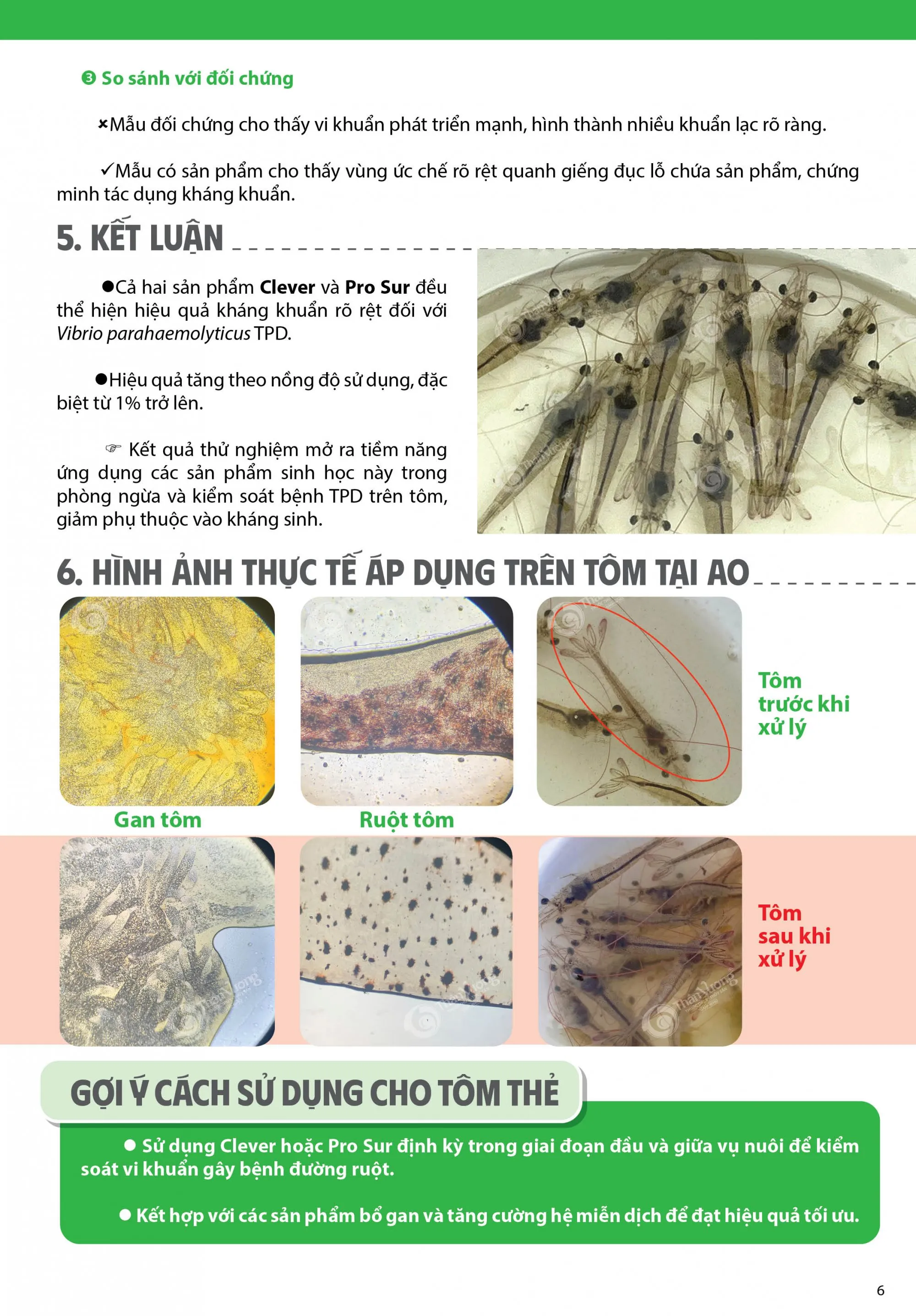
• Shrimp using the products showed clear intestines and hepatopancreas, with few disease symptoms
• Control shrimp suffered from hepatopancreatic necrosis, opaque intestines, and white feces.
Discussion
The results showed that both Clever and ProSur products effectively inhibited the growth of V. parahaemolyticus causing TPD. ProSur demonstrated superior efficacy at 1.5% concentration, evidenced by a larger inhibition zone and higher solution clarity. This is a positive sign for the application of biological solutions to replace or reduce antibiotics in shrimp disease prevention.
5. Conclusion
• Both Clever and Pro Sur exhibited good antibacterial activity against V. parahaemolyticus causing TPD.
• ProSur was more effective at 1.5% concentration with an inhibition zone of up to 2.3 cm.
• This study opens up practical application directions for biological disease prevention in whiteleg shrimp.
6. Recommendations
• Combine products that support liver function and boost immunity to achieve optimal disease prevention efficacy.
References
1. FAO (2022). Antimicrobial resistance and aquaculture.
2. Lallemand Animal Nutrition. (2021). Biological control in shrimp farming.
Please contact the Than Vuong team for more detailed information.
Author: Than Vuong Lab
Contact email: info@thanvuong.com