← Than Vuong Aquaculture
Than Vuong — GMP-WHO
Than Vuong · Aquaculture Veterinary Medicine · GMP-WHO

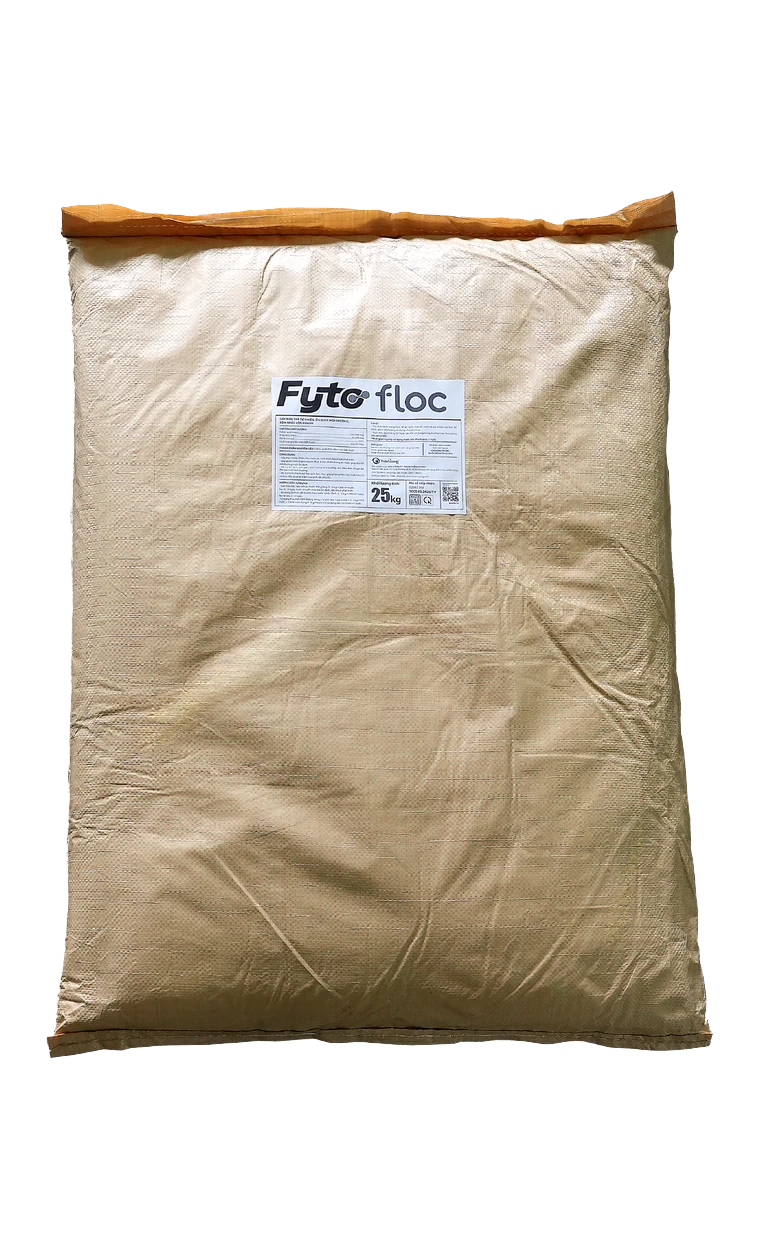
FYTO FLOC

Natural tea-color water conditioner — stabilizes the pond environment, healthy fast-growing shrimp. Concentrated fulvic acid on a yeast base, colors the pond through nutrition, not chemicals.

TCCS 02:2026/TV Circulation cert. 02062369 Packaging 25 kg
FYTO FLOC bag
SCROLL
As stated on the label

Three numbers on the label — nothing added, nothing left out

Quality specifications registered under TCCS 02:2026/TV.

0mg/kg
Fulvic acid (min)
Main active ingredient — organic source for diatoms & beneficial microbes
0mg/kg
K₂O — from KCl (min)
Mineral potassium for algae photosynthesis
0% max
Moisture
Dry powder, easy to store, dissolves easily
Ingredients
Fulvic acid
KCl
Carrier (inactivated yeast) q.s. 1 kg
Mechanism — technical

From one dose to a "meal" for the whole pond

Fulvic acid and potassium dissolve fast in water; the inactivated-yeast base is an organic substrate — diatoms and beneficial microbes can use it right away.

Apply FYTO FLOC

Apply FYTO FLOC

Fulvic acid + K₂O dissolve fast, spread evenly through the water column

Diatoms bloom to tea color

Diatoms bloom to tea color

Stimulated to grow — water turns a natural tea color

Biological floc system

Biological floc system

Beneficial microbes multiply, breaking down organic waste

Stable pond — healthy shrimp

Stable pond — healthy shrimp

Abundant natural food, less pH swing, cleaner bottom

Natural tea-color water, stimulates diatom growth

Builds a natural food source, stabilizes the bottom — environment

Stabilizes pH, reduces environmental swings

Builds a biological floc system, breaks down organic waste

Proof

Not just talk — drag to compare, see for yourself

Images from Than Vuong's demonstration pond and lab.

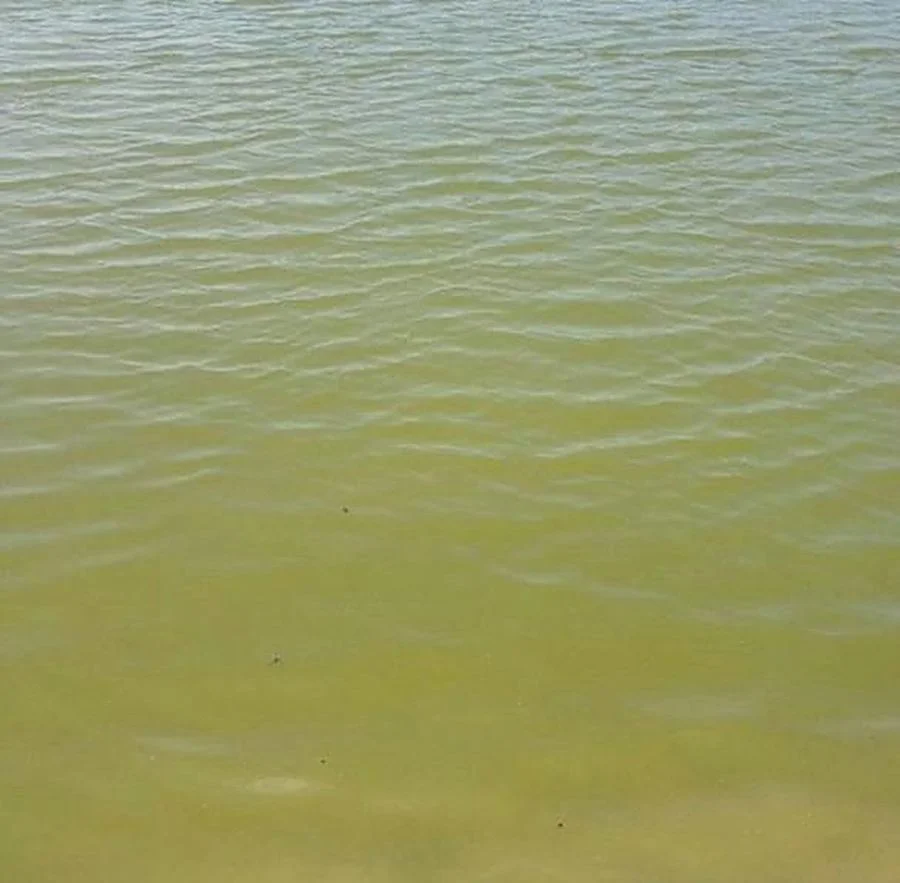
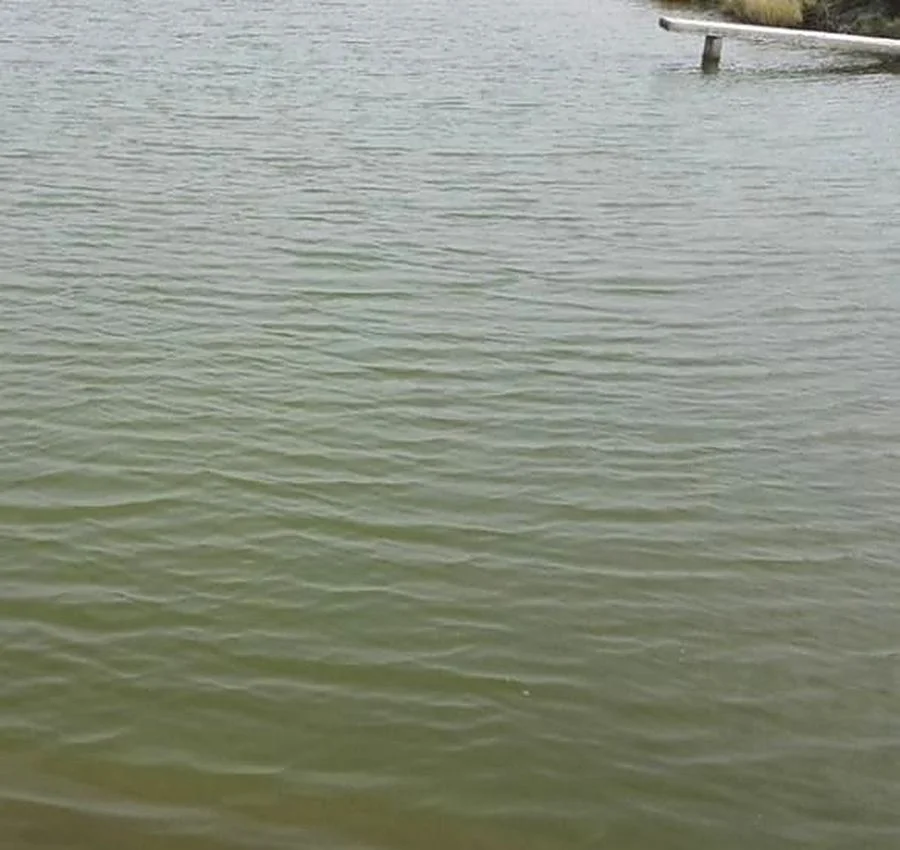
Water after coloring Water before coloring
Before — pale water
After 3–4 days
DRAG THE SLIDER TO COMPARE BEFORE / AFTER
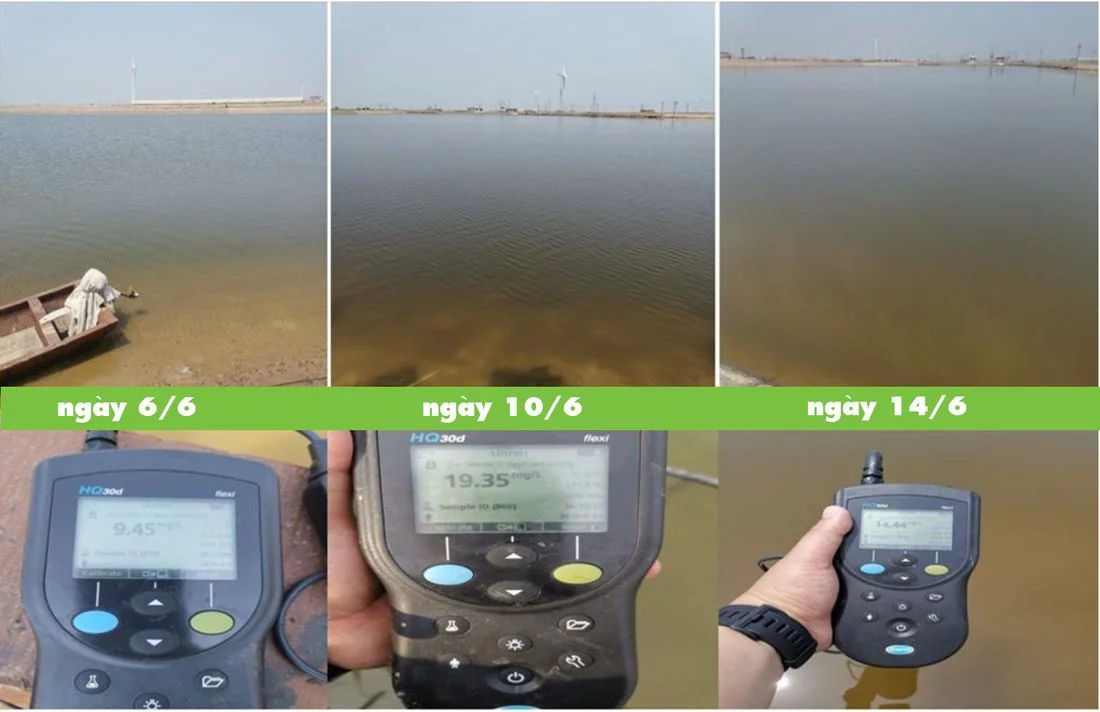
Measuring dissolved oxygen at the pond
Real-pond monitoring — dissolved oxygen improves gradually across measurements after coloring.
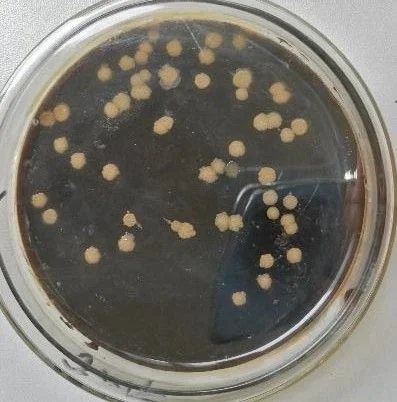
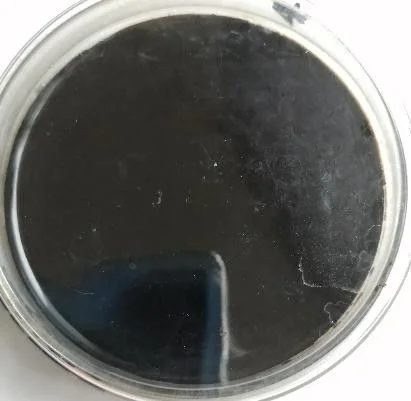
FYTO FLOC agar plate
FYTO FLOC baseDense microbial colonies — a usable microbial nutrient source
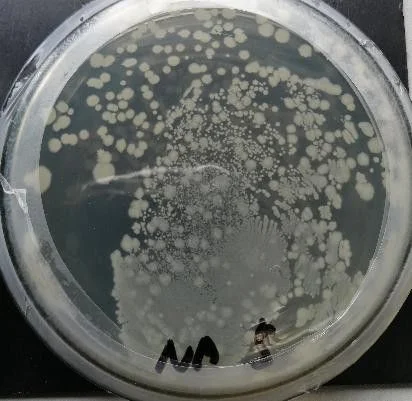
Standard nutrient agar plate
Standard nutrient agarLab positive control
Fulvic mineral agar plate
Fulvic mineralAlmost no microbial growth
Usage instructions — per label

Three uses, one dosage framework

Initial coloring
3–5 kg / 1,000 m³
Repeat after 3–5 days until color holds
Maintain water color
3 kg / 1,000 m³
Repeat 4–5 times/month throughout the crop
Probiotic brewing
1–2 kg + 1 probiotic pack
Mix with 100 L water, aerate 4–6 hours then apply
1 probiotic pack + 1–2 kg FYTO FLOC
+ 100 L water → aerate 4–6 hours

Apply on a sunny morning, keep paddlewheels running for even distribution. Read the label carefully before use.

Video

Introduction video, part 1

Full technical documentation

Why it's needed, how it's different, and dosage by pond size

The root cause of common pond issues, the production process, a comparison with molasses & humic minerals, a dosage table for 6 pond sizes, a season-long usage schedule, and frequently asked questions.

Why FYTO FLOC

Three familiar worries for shrimp & fish farmers

If your pond is facing one of these three, this section is for you.

1

Water is hard to color

You apply fermented feed or bran — water stays clear, or a poor algae bloom forms then crashes. Post-larvae lack natural food in the very first week.

2

Toxic gases build up

NH₃, NO₂, H₂S rise gradually from mid-crop onward. Water changes cost money and bring in disease risk from outside.

3

Dependence on chemicals

Chemical treatment also kills off beneficial microbes. The pond grows "weaker" over time, and treatment costs keep climbing.

All three share one root cause: the pond's beneficial microbial community is weak because it's starved. FYTO FLOC is exactly the feed that nourishes that microbial community.
The product

What is FYTO FLOC?

A nutrient concentrate obtained by fermenting Saccharomyces cerevisiae yeast on a molasses base, then filtering out the spent yeast and drying it into a powder.

Not a probiotic

This is FEED for microbes and algae — there is no living bacteria in the bag. No risk of dead cultures, no cold storage needed, stays effective long-term.

Not raw molasses

Molasses is only the input material. Through fermentation, the yeast has already "cooked" the sugar into protein, vitamins, minerals and other valuable compounds.

Ready to use the moment it hits the pond

Nutrients are already dissolved in water — microbes and algae can take them up immediately, no need to wait for decomposition.

1 · Molasses

Main raw material, rich in fermentable sugar

2 · Inoculation

Saccharomyces cerevisiae yeast

3 · Fermentation

Yeast "cooks" the sugar into protein, vitamins, valuable actives

4 · Filtering

Keeps the nutrient-rich liquid fraction

5 · Drying

Finished as a powder product

How is this different from applying raw molasses to the pond? Molasses is "uncooked rice" — microbes must convert it themselves before it's usable. FYTO FLOC is "cooked rice" — already fermented at the factory, ready to use the moment it enters the pond.
Detailed composition

What's in every kg of FYTO FLOC?

Four main nutrient groups — kept simple and memorable.

35–60%
Protein & amino acids
Of which 12.78% is immediately absorbable protein (free amino acids) — algae and microbes can use it right away
46.4%
Biological fulvic acid
Generated during fermentation, highly soluble: helps detoxify water, eases stress on shrimp and fish during weather shifts
Complete
Chelated minerals & trace elements
Ready-dissolved N, P, K plus easily-absorbed trace minerals — works well in brackish ponds
Included
Functional actives
Anti-stress compounds (betaine) and other supportive actives generated during fermentation
What sets it apart

How is it different from molasses and humic minerals?

Three things farmers commonly apply to ponds — three very different natures. The lower the C/N ratio, the easier for microbes to "eat".

C/N ratio — the lower, the more protein-rich
FYTO FLOC6.72
Molasses21.89
Humic minerals34.31
010203040
FYTO FLOC — a STARTER meal for the microbial communityC/N ≈ 6.7

Has sugar plus protein, minerals, and vitamins — a full course meal. Microbes multiply the moment they consume it.

Molasses — bulk sugar supplementC/N ≈ 21.9

Sugar only, almost no protein — like plain rice with nothing to go with it. Cheap, and can be used alongside FYTO FLOC, each playing a different role.

Humic minerals — color onlyC/N ≈ 34.3

Extracted from coal, hard as rock — microbes can barely consume it. Only tints the water, doesn't feed the microbial community.

Extended benefits

One application — three things happen in the pond

Three benefits that chain together like a production line.

Benefit 1

Coloring — feeding beneficial algae

  • Enough ready-dissolved N, P, K for algae
  • Green algae blooms — a beautiful banana-leaf color
  • Suppresses harmful blue-green algae from taking over
  • Stable water color, fewer sudden algae crashes
Benefit 2

Feeding natural live food

  • Daphnia, Moina, rotifers multiply
  • Free live feed for post-larvae and fry
  • Healthier seed stock, higher survival rate
  • Saves on feed in the first few weeks
Benefit 3

Reduces toxic gas — builds biofloc

  • Nourishes a strong "pond-cleaning" microbial community
  • Microbes "consume" NH₃, NO₂, H₂S toxic gases
  • Toxic gas turns into feed for shrimp and fish
  • Fewer water changes, less chemical use
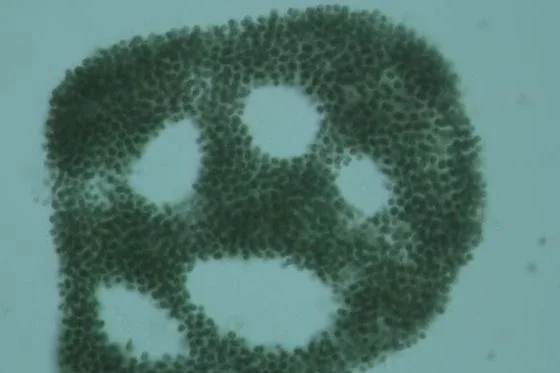
Blue-green algae, Microcystis
BEFORE · BLUE-GREEN ALGAE (MICROCYSTIS)

Produces toxins, makes water slimy; mass die-off at night pulls oxygen down sharply — a familiar culprit behind shrimp gasping at the surface.

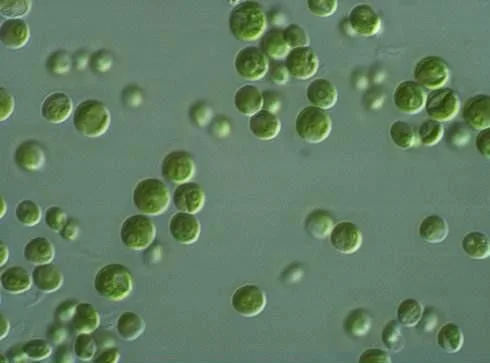
Green algae, Chlorella
AFTER · GREEN ALGAE (CHLORELLA)

Safe for shrimp and fish, gives a stable banana-leaf-green water color — and doubles as good feed for Daphnia and Moina.

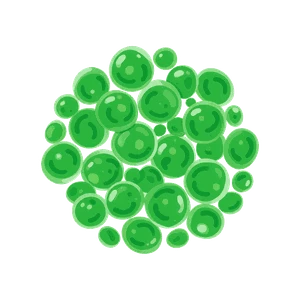
Green algae

Green algae

Gives a nice water color, releases oxygen during the day, feeds Daphnia and Moina

Rotifers

Rotifers

The smallest live feed — sized right for fry and freshly-stocked post-larvae

Moina (water fleas)

Moina (water fleas)

Multiply fast once the pond has enough algae — the main feed for fry and small shrimp

Copepods

Copepods

Rich in protein and good fats for post-larvae and fry

Required condition for biofloc formation: the pond must have paddlewheels or aerators running evenly — without enough oxygen, floc particles sink to the bottom. And to be clear: FYTO FLOC is a water-care product, NOT a disease treatment.
Dosage lookup by pond size

How many m³ in your pond — how many kg to apply?

Pre-calculated for 6 common pond sizes, based on the 3–5 kg initial dose and 3 kg / 1,000 m³ maintenance framework.

Water volumeReference pondInitial · per applicationMaintenance · per applicationMaintenance · per month
500 m³500 m² · 1.0 m deep1.5 – 2.5 kg1.5 kg6 – 7.5 kg
1,000 m³1,000 m² · 1.0 m deep3 – 5 kg3 kg12 – 15 kg
2,000 m³2,000 m² · 1.0 m deep6 – 10 kg6 kg24 – 30 kg
3,600 m³3,000 m² · 1.2 m deep11 – 18 kg11 kg43 – 54 kg
6,000 m³5,000 m² · 1.2 m deep18 – 30 kg18 kg72 – 90 kg
12,000 m³1 ha · 1.2 m deep36 – 60 kg36 kg144 – 180 kg
Quick formula: divide your pond's water volume by 1,000, then multiply by the dose. Example: a 3,000 m² pond, 1.2 m deep ≈ 3,600 m³ → initial dose 11–18 kg/application, maintenance 11 kg/application.

Complete usage guide

Four steps to apply it right + a season-long schedule

1 · Weigh the correct dose

Calculate based on pond water volume. Weigh it out on the bank — don't estimate by scoop or can.

2 · Dissolve completely

Dissolve in a bucket of pond water, stir until fully dissolved before applying. Don't scatter dry powder.

3 · Spread evenly across the pond

Stand upwind and apply, then run paddlewheels to mix it evenly through the whole pond.

4 · Apply on a sunny morning

Algae "feed on sunlight" right away, while oxygen levels in the pond are rising.

✕ Never use together with disinfectants or antimicrobials (chlorine, iodine, potassium permanganate, BKC…). After disinfecting, wait a full 3 days before applying.

Suggested schedule for a 3-month shrimp crop

Example: a 3,000 m² pond, 1.2 m deep — about 3,600 m³ of water. Adjust to match your own pond.

Pond prep
11 – 18 kg · 1 time

5–7 days before stocking. Let the water reach a good, stable color before stocking post-larvae.

Month 1
11 – 18 kg · 2–3 times

Maintain water color, feed Daphnia/Moina for the young shrimp.

Month 2
11 kg · 4–5 times

Switch to light, even applications — the pond starts accumulating more waste.

Month 3
11 kg · 4–5 times

The month toxic gas rises fastest — keep the same rhythm, don't stretch out the interval.

FAQ

Questions farmers ask most

How is it different from molasses? Molasses is much cheaper.

Molasses is like uncooked rice — microbes have to "cook" it before they can use it. FYTO FLOC is ready-cooked rice, complete with protein, minerals, and vitamins. If you're already using molasses, keep using it: molasses supplies bulk, FYTO FLOC kickstarts and enriches.

Is it a probiotic?

No. This is FEED for microbes — there is no living bacteria in the bag, so there's no risk of dead cultures, no cold storage needed, and it stays effective long-term.

What diseases does it treat?

To be honest: it doesn't treat any disease — this is a water-care, pond-care product. Good water means less stress and less disease for shrimp and fish — prevention over cure.

After disinfecting the pond, how long before I can apply it?

Wait a full 3 days after disinfecting or applying antimicrobials — during those 3 days keep paddlewheels running to clear residue, then apply FYTO FLOC or your probiotic.

Partner with us for your pond
Hotline 0867 957 568

Than Vuong's technical team advises on dosage for your exact pond volume — free of charge.